


A Practical Guide to Comparing In-Ground Pool Costs

Comprehensive Breakdown of Swimming Pools In-Ground Prices in 2026
In 2026, typical swimming pools in-ground prices range from about $45,000 to $100,000 or more for a complete installation, with vinyl liner pools often starting around $45,000 to $65,000, fiberglass pools commonly falling between $55,000 and $85,000, and concrete or gunite pools frequently running $70,000 to $100,000 or higher depending on size, site conditions, and finishes. These ranges reflect 2026 national installation cost data, but overall project pricing still varies based on regional labor rates, geology, and shell construction. Navigating a comprehensive pricing guide for custom in-ground pools helps clarify why two seemingly identical backyards can yield drastically different quotes.
Material Comparison and Swimming Pools In-Ground Prices by Type
The core material chosen for an in-ground installation dictates not only upfront investment but also structural durability, shell longevity, and lifetime maintenance demands.
- Vinyl Liner Pools: Vinyl pools offer the most accessible upfront entry point. Built using steel or polymer wall panels set into the ground with a custom-fitted vinyl membrane over a sand or vermiculite base, these structures adapt well to cold-weather freeze-thaw cycles. However, vinyl liners require periodic replacement over the life of the pool.
- Fiberglass Pools: Fiberglass designs arrive on-site as pre-manufactured, single-piece shells. The smooth gelcoat finish resists algae growth and drastically reduces chemical demand. Because installation happens rapidly once excavation is complete, labor disruption is minimized, making it an efficient middle ground for upfront cost and long-term upkeep.
- Concrete (Gunite) Pools: Gunite or shotcrete pools provide total design flexibility, allowing custom shapes, integrated tanning ledges, and deep-end configurations. Concrete structures require intensive on-site labor, rebar framework, pneumatic application, and lengthy curing periods. They also require ongoing chemical monitoring and eventual replastering.
| Pool Material Type | Relative Upfront Investment | Shell Longevity & Replacement Cycle | Annual Maintenance Demand |
|---|---|---|---|
| Vinyl Liner | Entry-Level | Liner lasts 7–15 years; structure lasts decades | Moderate (chemical balancing & liner upkeep) |
| Fiberglass | Mid-Range | Shell lasts 25+ years; non-porous gelcoat | Lowest (minimal chemical & scrubbing needs) |
| Concrete / Gunite | Premium | Structure lasts 50+ years; replastering every 10–15 years | Highest (frequent chemical balancing & resurfacing) |
Size, Dimensions, and Cost Per Square Foot
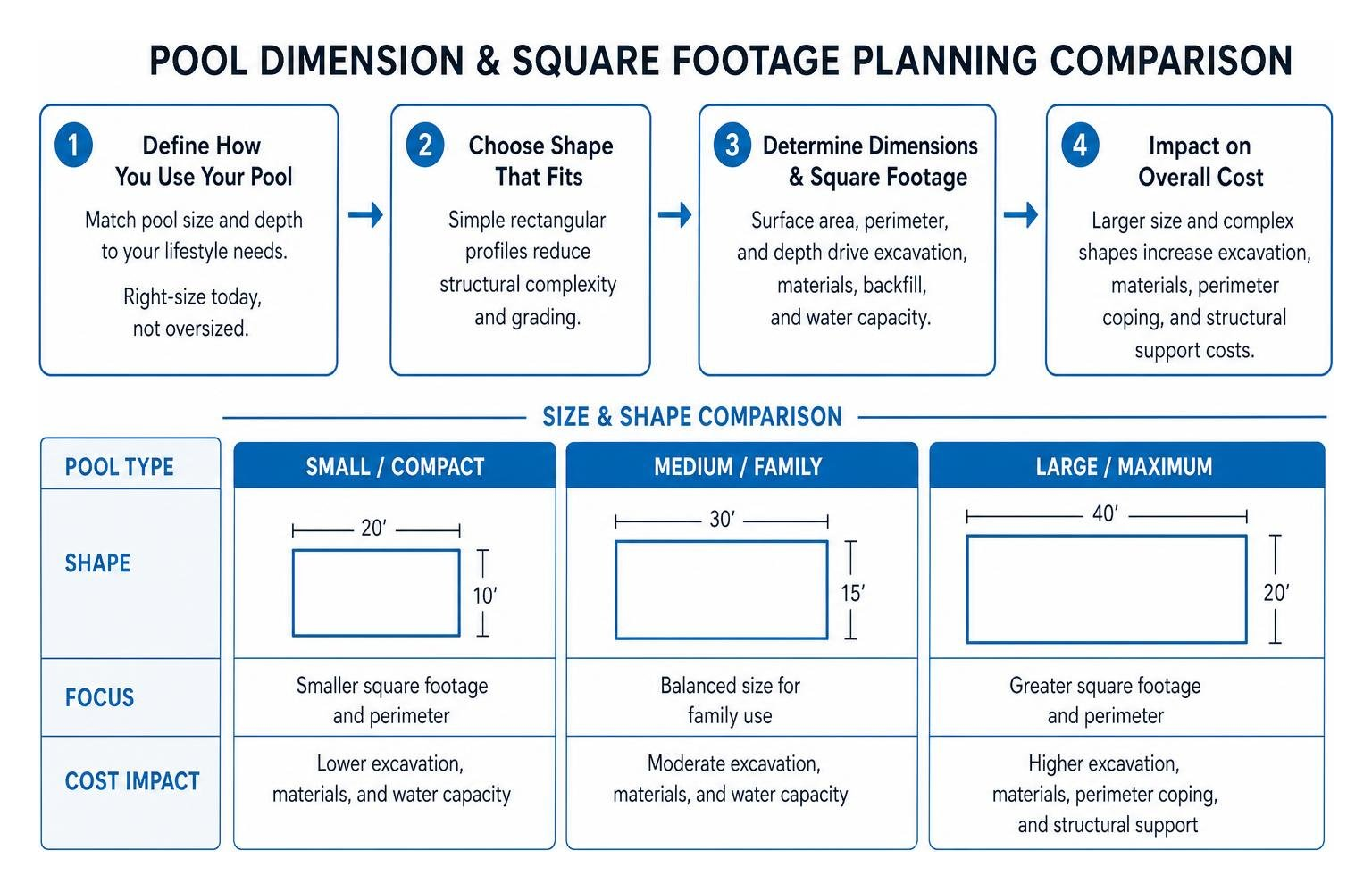
Surface area, perimeter dimensions, and pool depth significantly influence overall excavation, materials, and backfill requirements. While smaller cocktail pools and plunge designs minimize initial spending, larger family sizes increase perimeter coping, structural support, and water capacity.
Opting for simple rectangular profiles rather than complex, freeform shapes keeps structural forms uniform and reduces grading complexity. Homeowners can implement smart strategies to lower pool expenses early by aligning pool dimensions with actual lifestyle needs rather than simply maximizing square footage.
Hidden Installation Expenses and Site Preparation Factors
The price tag on a pool contract often expands when site preparation begins. Evaluating local state-by-state price factors reveals that regional geography dictates substantial site preparation variables. In Northeastern Pennsylvania, installers frequently navigate rocky terrain, varying frost-line depths, and sloping yards.
- Geotechnical & Soil Work: Encountering heavy rock layers requires heavy machinery with hydraulic breakers. Similarly, high groundwater levels or dense clay require specialized drainage beds and crushed-aggregate backfill to prevent shell shifting.
- Municipal Permitting & Engineering: Local building codes mandate zoning reviews, safety inspections, and site plan approvals before digging starts.
- Mandatory Safety Barriers: Local ordinances enforce strict barrier codes, requiring self-closing, self-latching perimeter safety fencing around the pool area.
- Surrounding Hardscapes: Concrete patios, paver coping, and deck drainage are required to bridge the gap between the pool edge and the lawn.
- Access Limitations: Narrow residential lots or mature trees can require specialized mini-excavators or temporary crane access, adding to equipment logistics.
Strategic Budgeting, Long-Term Value, and Affordable Alternatives

A comprehensive pool plan balances initial construction costs against ongoing operational expenses and lifestyle benefits. Deciding between a standard in-ground build and an adaptable hybrid alternative allows property owners to create an outdoor retreat tailored to their yard’s specific contours.
Long-Term Maintenance Costs vs. Swimming Pools In-Ground Prices
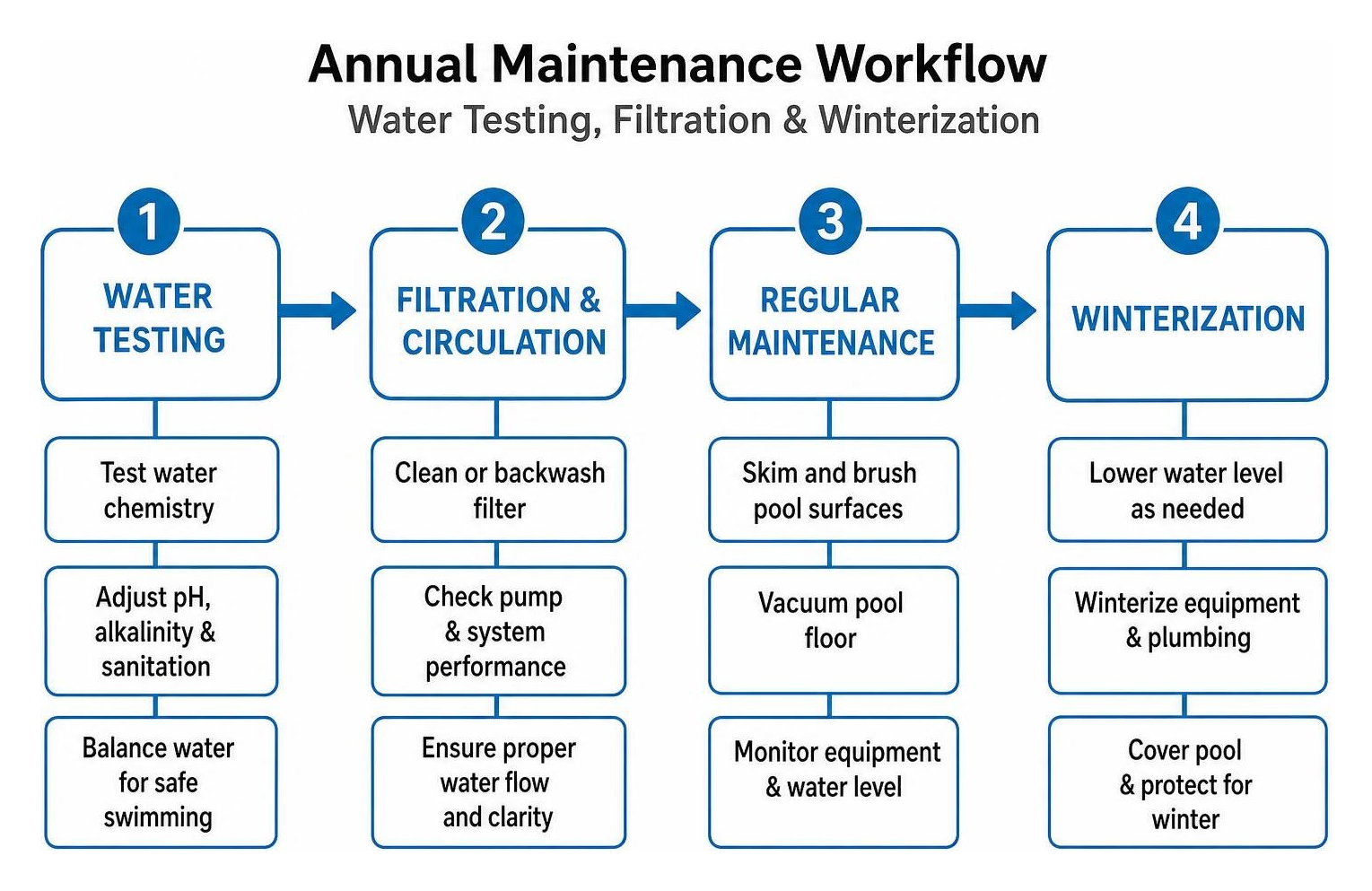
A pool’s price tag extends far beyond the day it is filled with water. Operational expenses include sanitization supplies, pump electricity, seasonal opening and closing services, and heating utility expenses.
Consulting a detailed annual pool upkeep guide illustrates how shell type directly shapes ongoing bills. Fiberglass gelcoats resist algae adhesion, requiring fewer sanitizers and shorter filtration cycles. Concrete surfaces, being porous, demand higher chemical volumes to stabilize pH and alkalinity. Meanwhile, vinyl pools require budgeting for periodic liner replacements to maintain aesthetic appeal and watertight integrity.
Affordable Hybrid and Semi-Inground Alternatives
Not every backyard layout suits standard, deep-excavation inground construction. Steep slopes, rocky outcroppings, or high water tables can make traditional excavation impractical. Hybrid stealth and semi-inground pool systems provide a cost-effective alternative.
These systems use durable, corrosion-resistant wall panels that can be buried completely or partially recessed into a hillside. Exploring versatile semi-inground and above ground pool options allows homeowners with uneven topography to build custom surrounding multi-level decking at a fraction of the excavation cost, while completing installation in a matter of days rather than months.
Maximizing Return on Investment and Professional Installation
Beyond daily recreation, installing a well-crafted swimming pool enhances property appeal and lifestyle value. Learning how inground installations increase home value helps homeowners view their backyard transformation as a long-term property improvement.
While some homeowners contemplate DIY excavation to save on upfront labor, pool installation involves complex electrical bonding, precision grading, hydraulic plumbing, and structural backfilling. Minor errors in base leveling or plumbing alignment can result in cracked shells, shifted foundations, or code violations.
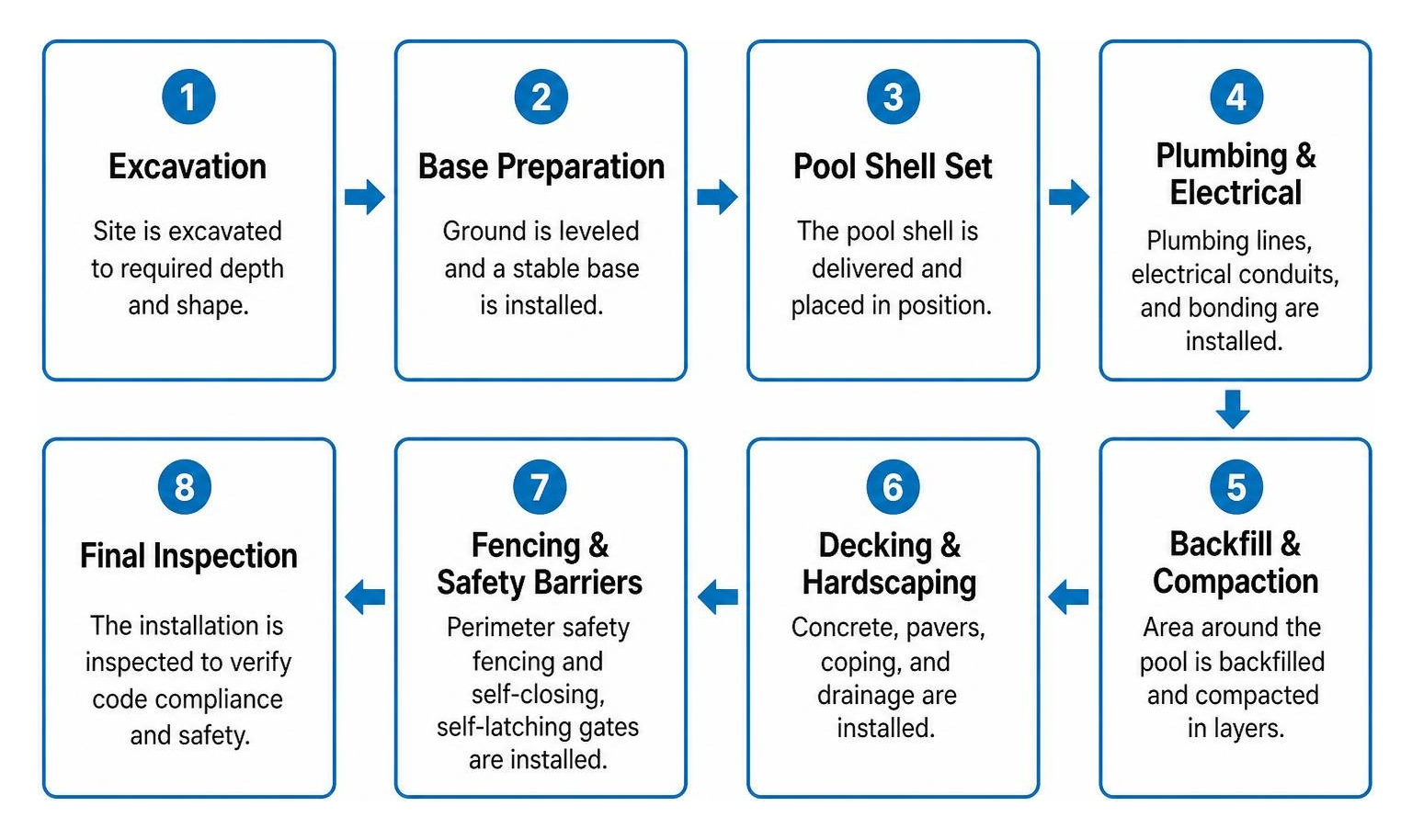
Working with an experienced contractor protects manufacturer warranties, ensures building code compliance, and delivers a safe, long-lasting pool. Aqua Leisure Pools and Spas provides complete sales, installation, and ongoing maintenance support across Northeastern Pennsylvania—including showroom locations in Wilkes-Barre, Dickson City, and Bartonsville. Homeowners ready to explore tailored professional inground pool solutions can schedule comprehensive dream backyard consultations to design an outdoor living space tailored to their space, style, and budget.
Posted by Aqua Leisure Pools & Spas in Pools