


Add Lights to Your Above Ground Pool and Extend Swim Time After Dark

Add Lights to Your Above Ground Pool for Safer, Longer Evenings
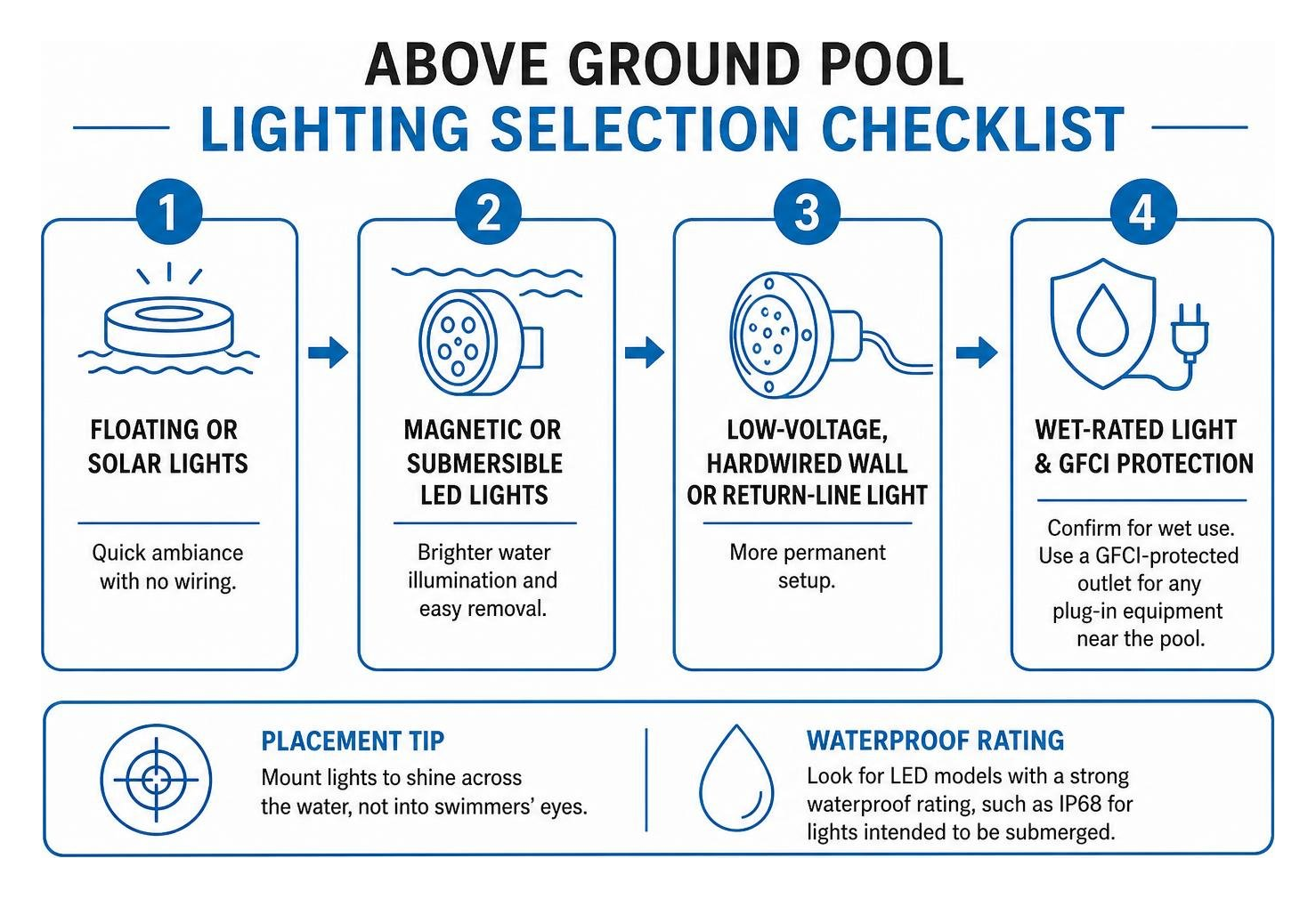
Adding lights to an above ground pool can be simple, safe, and fully DIY-friendly when you choose the right fixture. Start by matching the light to your pool and your goal:
- Choose floating or solar lights for quick ambiance with no wiring.
- Use magnetic or submersible LED lights for brighter water illumination and easy removal.
- Pick a low-voltage, hardwired wall or return-line light when you want a more permanent setup.
- Confirm the light is made for wet use, and use a GFCI-protected outlet for any plug-in equipment near the pool.
For adding lights to above ground pool walls, look for LED models with a strong waterproof rating, such as IP68 for lights intended to be submerged. Plan placement so the light shines across the water, not into swimmers’ eyes.
The payoff is more than a great nighttime look. Pool lighting helps define edges, improves visibility around the water, and makes an evening dip feel more inviting. A soft white or blue glow can create a calm retreat, while color-changing LEDs can make family nights and backyard gatherings more festive.
Adding lights to above ground pool word guide:
- above ground pool light installation
- above ground pool wall light
- above ground through wall pool lights
Different Ways of Adding Lights to Above Ground Pool Setups

When exploring above ground pool wall light options, pool owners quickly discover that modern LED technology has transformed backyard illumination. LED pool lights consume up to 80% less energy than traditional halogen fixtures and boast lifespans reaching 50,000 hours. Deciding which fixture fits your pool structure requires balancing lumen output, ease of setup, power delivery, and your aesthetic goals.
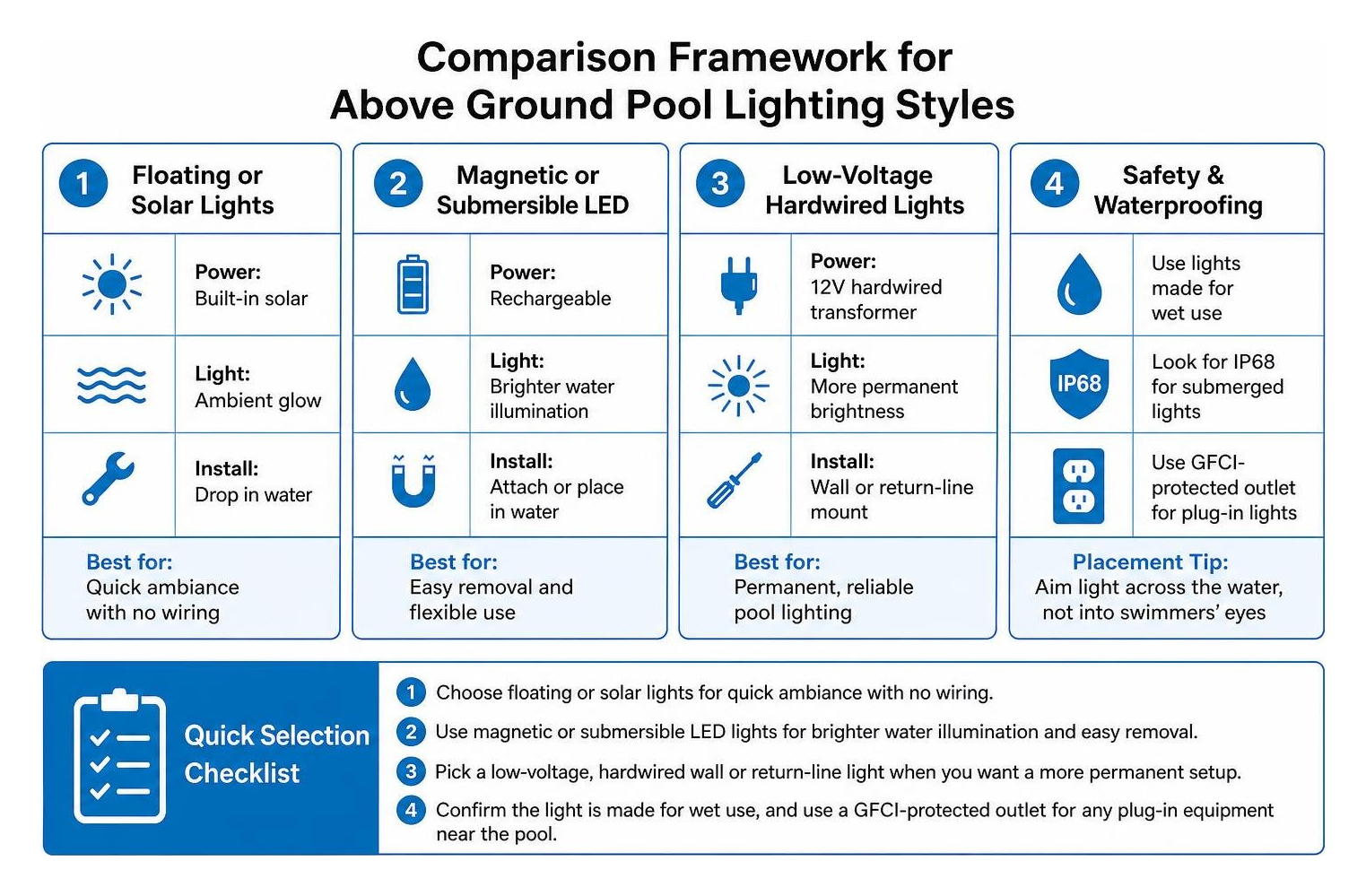
| Light Type | Power Source | Lumen Output | Installation Effort | Best For |
|---|---|---|---|---|
| Magnetic Submersible | Rechargeable Battery / Inductive | Medium (300–800 lm) | Very Low (Minutes) | Steel wall pools, temporary party lights |
| Solar Floating | Built-in Solar Cell | Low to Medium (100–300 lm) | Zero (Drop in water) | Ambient surface mood, hassle-free charging |
| Perimeter Rope / Strip | Low-Voltage (12V/24V) Plug-in | Medium to High (500–1,200 lm) | Low (Clips / Ties) | Top rail illumination, architectural glow |
| Through-Wall / Return Jet | 12V Hardwired Transformer | High (1,000–2,500+ lm) | Moderate (Plumbing integration) | Permanent, full-pool brilliance |
Magnetic and Submersible Fixtures for Adding Lights to Above Ground Pool Liners
Magnetic and submersible puck lights are among the most popular DIY solutions on the market today. For pools with steel walls, magnetic lights attach directly through the vinyl liner. The interior lamp locks magnetically onto the metal wall or pairs with an exterior magnetic base placed on the outer wall. For soft-sided or resin-frame pools, many fixtures include waterproof suction cups or liner-safe adhesive plates.
When shopping for submersible units, an IP68 waterproof rating is essential. This rating certifies that the unit remains watertight under continuous submersion beyond 1 meter. Modern units feature rechargeable lithium-ion battery packs (ranging from 2,000mAh to 5,000mAh) that run for 10 to 24 hours per charge.
Submersible fixtures frequently incorporate color-changing RGB LEDs. Handheld RF remotes allow swimmers to cycle through solid tones, smooth transitions, flashing party sequences, or music-sync modes without leaving the patio chair.
Solar and Floating Lighting Options
If running power cords across the lawn seems unappealing, our best solar pool lights guide details how photovoltaic lights provide zero-effort nighttime charm. These fixtures float freely across the water surface or tether along the pool perimeter, collecting energy during the day.
Most solar models feature built-in dusk-to-dawn sensors, automatically illuminating the pool surface as daylight fades. A 4 to 6-hour charge in direct Pennsylvania sunlight typically yields 6 to 8 hours of soft ambient glow.
For creative backyard hosts, quick craft projects like DIY pool noodle floating lights offer an affordable way to float waterproof LED tea lights across the surface during summer parties. Floating globes, disc lights, and illuminated lanterns soften dark water surfaces and create a welcoming ambiance for evening gatherings.
Hardwired Return Line and Through-Wall Fixtures
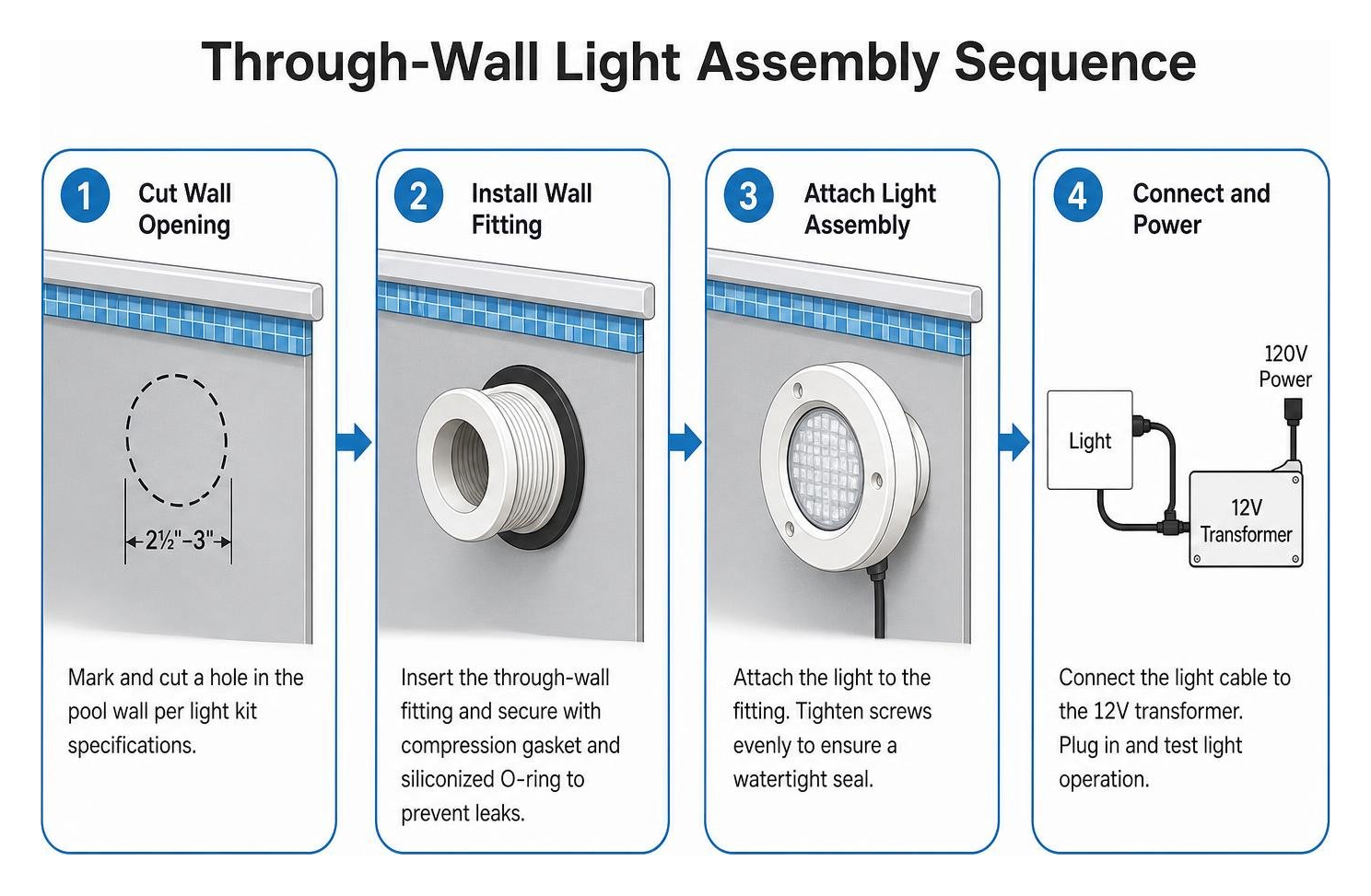
For homeowners seeking the uniform brilliance of an inground pool, through-wall pool lights deliver commercial-grade performance. These units replace standard water return fittings or install into dedicated cutouts in the pool wall.
Because water directs light forward, through-wall fixtures offer powerful lumen outputs that illuminate the entire swimming footprint. These systems run off dedicated 12V low-voltage transformers that step down household 120V power to safe operating voltages. Quality through-wall kits feature heavy-duty compression gaskets and siliconized O-rings to prevent liner leaks around the penetration point.
Step-by-Step Guide: Adding Lights to Above Ground Pool Walls Safely
Installing perimeter rope lights or low-voltage LED strips along the top rail creates a clean, modern halo effect without cutting into the pool wall. Following a safe rope light installation process ensures both electrical safety and clean visual lines.
- Measure the Circumference: Use a flexible tape measure to determine the exact perimeter along the top ledge. For a standard 24-foot round pool, the circumference is roughly 75.4 feet ($C = \pi \times D$).
- Clean the Mounting Surface: Wipe the underside of the top rail or vertical uprights with isopropyl alcohol to remove dust, pollen, and chemical residue.
- Mount Retaining Clips: Secure UV-resistant mounting clips or adhesive channels every 12 to 18 inches under the top rail lip. Spacing clips evenly prevents sagging and creates consistent illumination.
- Install the LED Rope / Strip: Snap the IP65 or IP67 wet-location rope light into the clips. Avoid sharp 90-degree bends; radius the corners gently around pool post caps.
- Waterproof End Caps and Splices: Seal all factory cut lines, connectors, and end caps with 100% silicone sealant and marine-grade heat-shrink tubing.
- Route Wiring to Power: Direct the lead wire down a vertical pool post using exterior-rated zip ties, keeping cords elevated and protected from foot traffic and lawn mowers.
Electrical Safety, GFCI Requirements, and Placement Planning
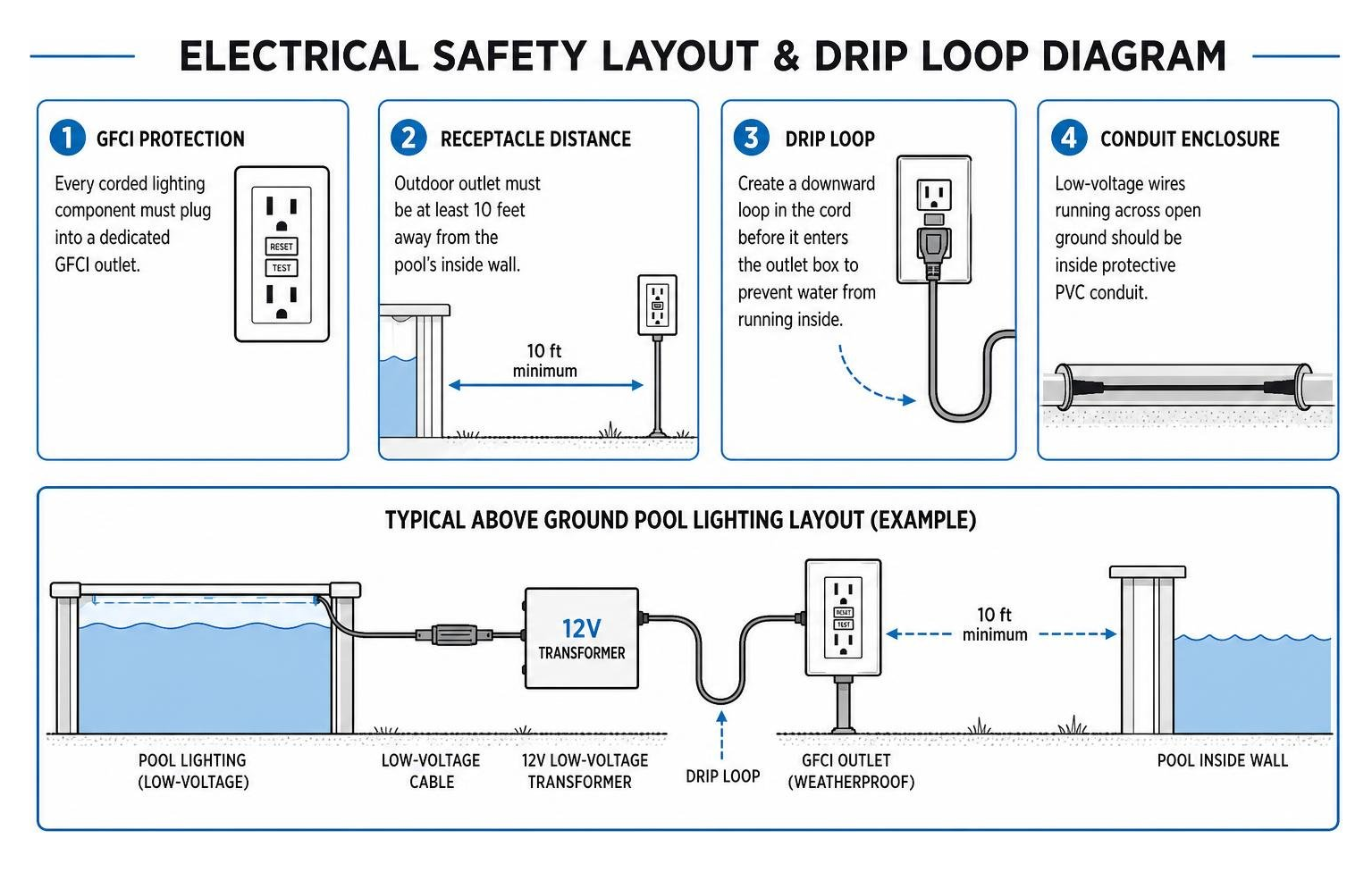
Safety is paramount whenever mixing water and electricity. The National Electrical Code (NEC) mandates strict guidelines for pool equipment installations:
- GFCI Protection: Every corded lighting component must plug into a dedicated Ground-Fault Circuit Interrupter (GFCI) outlet. A GFCI cuts power within milliseconds if current leakage occurs.
- Receptacle Distance: General outdoor outlets must sit at least 10 feet away from the pool’s inside wall.
- Drip Loops: Always create a downward loop in power cords before the plug enters the outlet box. This prevents rain from tracking along the wire into the electrical socket.
- Conduit Enclosures: Low-voltage wires running across open ground should sit inside protective PVC conduit.
Fixture positioning is just as crucial as electrical compliance. Reviewing proper pool light installation techniques helps prevent common design pitfalls:
- The Anti-Glare Rule: Never face wall-mounted lights toward your outdoor patio, deck stairs, or home windows. Mount fixtures facing away from primary seating areas so swimmers look into a soft glow rather than a blinding point source.
- The 2-to-4 Spacing Guideline: For standard residential pools (18-foot to 28-foot diameter), 2 to 4 evenly spaced lights provide balanced illumination without creating harsh shadows or washed-out zones.
- Depth Placement: Submersible wall fixtures perform best when mounted 8 to 10 inches below the water surface. This depth keeps the light submerged while making bulb changes and lens wiping manageable from the pool deck.
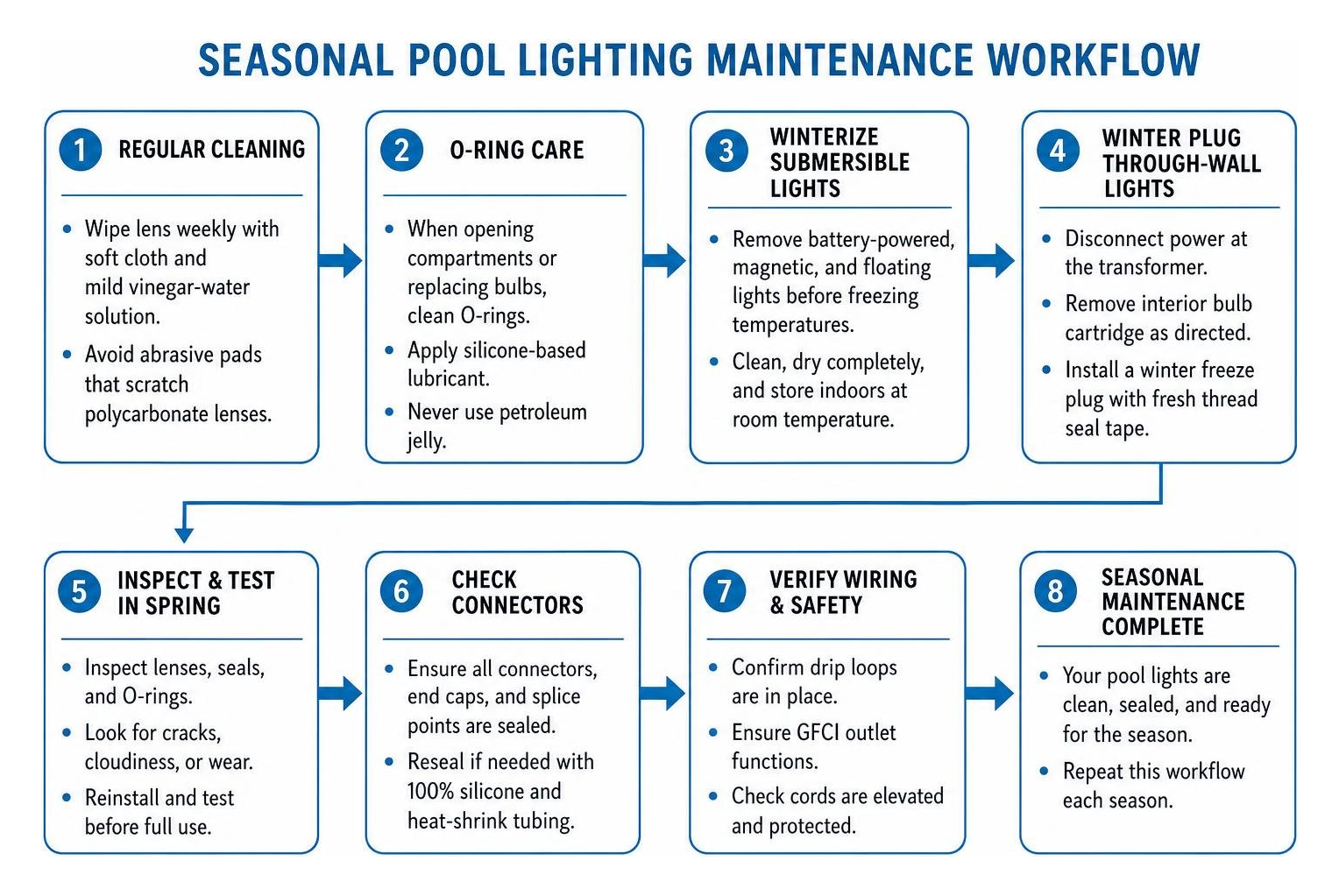
Cleaning, Seasonal Maintenance, and Winterizing Your Pool Lights
Above ground pool lights endure intense UV rays, pool sanitizers, and freezing winter temperatures in regions like Northeastern Pennsylvania. Consistent maintenance preserves light brightness and fixture seals year after year:
- Lens Calcification & Algae Removal: Minerals and algae accumulate on lens covers over time. During your weekly pool cleaning, wipe the lens with a soft microfiber cloth and a mild vinegar-water solution. Avoid abrasive scouring pads that scratch polycarbonate lenses.
- O-Ring Care: Whenever opening battery compartments or replacing bulbs, clean the rubber O-rings and coat them with silicone-based lubricant. Never use petroleum jelly, which degrades rubber and compromises watertight seals.
- Winterizing Submersible Fixtures: Freezing water expands and can crush submerged plastic housings. Before freezing temperatures arrive in Pennsylvania, remove battery-powered, magnetic, and floating lights from the water. Clean them thoroughly, dry them completely, and store them indoors at room temperature.
- Through-Wall Winter Plugs: For through-wall return lights, disconnect power at the transformer, remove the interior bulb cartridge according to the manufacturer’s manual, and install a winter freeze plug with fresh thread seal tape.
Whether you need assistance choosing the perfect lighting setup, troubleshooting an existing transformer, or selecting a brand-new swimming pool for your backyard, the local professionals at Aqua Leisure Pools and Spas are ready to help. Homeowners throughout Wilkes-Barre, Scranton, Dickson City, Doylestown, and Bartonsville can visit our local showrooms to explore our above ground pools and accessories and build their ideal nighttime retreat.
Posted by Aqua Leisure Pools & Spas in Pools