


Compare Pool Installation Costs: A Complete Guide

What Shapes Your Pool Installation Budget?
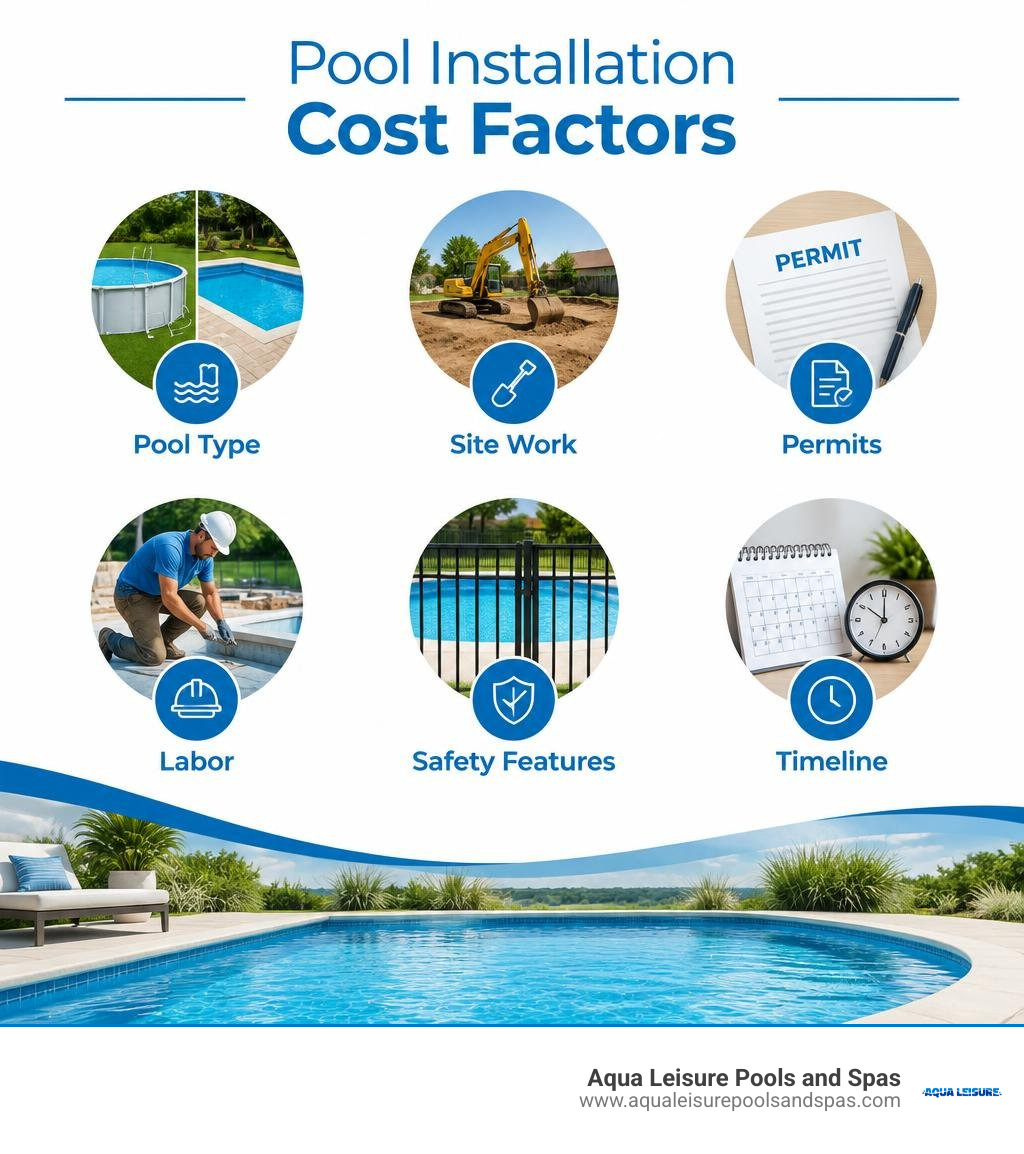
Pool installation costs depend on the pool type, your yard, and the work needed to make it safe and ready to use. Start by choosing between an above-ground and an in-ground pool. Then check your site, local permit rules, and space for required safety features. Plan for more than the pool itself: ground preparation, labor, electrical work, fencing, and ongoing care can all affect your budget.
An above-ground pool may be ready in a day if the site is prepared. In-ground projects take weeks or longer, depending on the material, weather, and site conditions. This guide compares those choices so you can set a realistic budget and timeline before work begins.
Comprehensive Cost Breakdown for Pool Installation
Investing in a swimming pool transforms your property into a private retreat, but the total expenditure depends heavily on structural engineering, materials, and long-term durability. Comparing the primary pool types side-by-side helps clarify which model fits your property goals and schedule:
| Pool Type | Typical Installation Timeline | Key Durability & Maintenance Factors | Structural Considerations |
|---|---|---|---|
| Above-Ground | Single day to a few days | Liner lifespan of 5–9 years; exterior steel or resin walls require rust protection | Requires level, undisturbed soil and patio block support |
| Vinyl Liner In-Ground | 4 to 8 weeks | Liner replacement every 7–12 years; smooth non-porous surface | Steel or polymer wall panels with a concrete or vermiculite base |
| Fiberglass In-Ground | 1 to 3 weeks (structural shell), 3 to 6 weeks total | 25 to 40+ year lifespan; lowest chemical and algae maintenance | Factory-manufactured shell set into an excavated sand/gravel bed |
| Custom Concrete | 4 to 12 weeks (or several months) | 40 to 60+ year lifespan; requires replastering every 10–15 years | Heavily reinforced rebar grid with sprayed shotcrete or gunite |
Evaluating these variables early ensures that your project stays aligned with both your immediate budget and future home value.
Above-Ground Pool Installation Pricing and Factors
Above-ground pools remain one of the most accessible backyard additions because of their straightforward engineering and fast assembly. Choosing among quality above ground pools allows homeowners to enjoy a refreshing swim without an extensive construction footprint.

For a successful DIY or professional assembly, following detailed above-ground assembly guidelines is essential. The entire process hinges on exact groundwork:
- Foundation Stability: Patio blocks (typically 12″ x 12″ x 1″) must be sunk flush with the soil beneath each bottom plate to support the vertical uprights.
- Masonry Sand Base: A clean layer of masonry sand is distributed inside the ring, forming an interior cove along the bottom rim to protect the vinyl from pinching against the steel frame.
- Liner Fitting: Liners expand best when left in direct sunlight for a short time before installation. Working barefoot or in soft socks inside the pool helps smooth wrinkles toward the edges while water gradually fills the base.
- Frame Stabilization: Once the wall is set in the bottom rim and bolted securely, top rails and stabilizer rails lock the structure into an upright cylinder.
When the base is prepared and the weather is calm, a standard above-ground pool can be assembled and ready for filling in a single day.
In-Ground Pool Installation Costs by Material
For homeowners looking to create a permanent architectural centerpiece, in-ground pools offer unmatched design flexibility and longevity. Reviewing an in-depth built-in pool cost evaluation reveals that material selection drives long-term ownership expenses as much as initial labor.
- Fiberglass Shells: These one-piece structures are manufactured off-site and delivered directly to the property. Because their smooth gelcoat finish naturally resists algae growth, they require fewer chemicals over their multi-decade lifespan. A complete installation moves quickly, often wrapping up in just a few weeks.
- Vinyl Liner Pools: Offering lower initial material costs, vinyl in-ground pools use modular steel or thermoplastic wall panels. They allow for customizable shapes and provide a soft, comfortable floor beneath the water.
- Custom Concrete: Shotcrete or gunite builds provide limitless aesthetic customization, from built-in tanning ledges to integrated rock waterfalls. However, they require extensive structural reinforcement, several weeks of plaster curing, and periodic resurfacing.
Investing in premium in-ground pool construction delivers turnkey outdoor living spaces tailored to your exact property layout.
Site Preparation, Excavation, and Permitting Expenses
Site preparation is the foundation of any pool project. A pool cannot simply be placed on uneven terrain; the entire perimeter must sit on firm, undisturbed soil that is within 1 inch of level across the whole surface.
Before bringing in heavy machinery, builders must map out property boundaries and local zoning setbacks. Adhering to established European garden pool planning and utility standards and local Pennsylvania building codes protects underground utilities and neighboring properties.
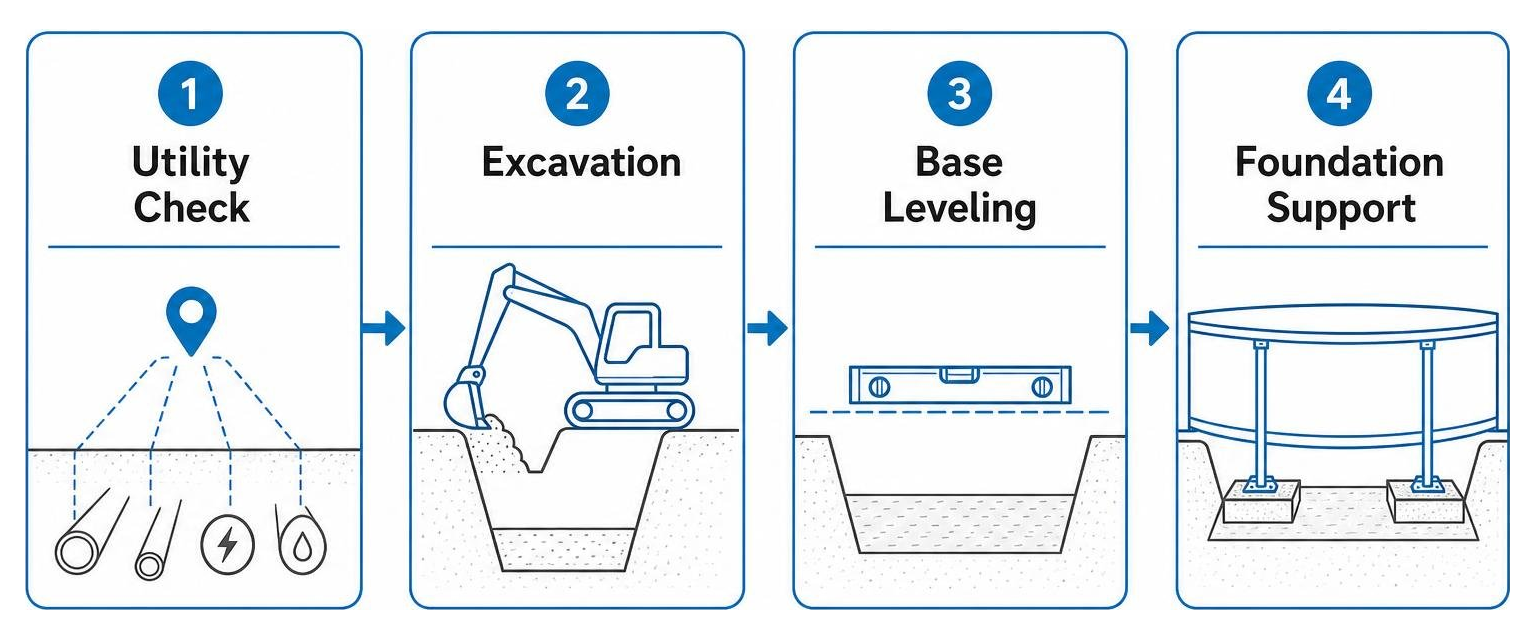
Homeowners should review a comprehensive pre-construction installation checklist to address key site requirements:
- Utility Clash Checks: Locating buried gas, electric, water, and sewer lines before digging prevents costly utility interruptions.
- Soil Management: Excavating heavy, clay-rich soil requires specialized machinery and proper soil grading to maintain stability around the structure.
- Municipal Permitting: Securing electrical, building, and safety barrier permits ensures full code compliance before work begins.
- Site Clearances: Maintaining safe distances from property boundaries, mature tree roots, and overhead electrical wires prevents environmental and structural hazards down the road.
Labor, Plumbing, Electrical, and Finishing Add-Ons
Completing a pool installation requires integrating several critical mechanical and safety systems:
- Plumbing and Circulation: Rigid PVC pipe networks connect the main drains and skimmers to the filtration pump. Filtration systems must be sized properly to turn over the pool’s entire water volume every 4 to 8 hours.
- Licensed Electrical Work: Pumps, salt systems, automation panels, and heat pumps require dedicated breakers and rigorous equipotential bonding grids to eliminate stray electrical currents.
- Safety Barriers and Fencing: Most municipalities mandate self-closing, self-latching safety fences of at least four to five feet in height to protect children and pets.
- Surrounding Hardscapes and Backfill: Surrounding the perimeter with pea gravel, compacted soil, concrete decking, or paver patios provides structural backfill stability and finishes the outdoor aesthetic.
- Water Chemistry Balancing: Once water is delivered, testing and balancing total alkalinity, pH, calcium hardness, and sanitizer levels within the first 24 hours protects pool equipment and liner surfaces.
Maximizing Long-Term Value and Next Steps
A well-planned pool installation not only provides endless family entertainment but also adds substantial lifestyle appeal and property value to your home.
Seasonal Timing and Money-Saving Tips
Strategic planning can help stretch your pool budget further. Exploring smart pool purchasing savings reveals that seasonal scheduling plays a major role in project efficiency.
There are significant benefits of scheduling fall pool installations. Building during late summer or autumn allows homeowners to take advantage of off-peak equipment rates and greater contractor availability. The soil is typically drier and easier to excavate than during spring rains, and completing construction ahead of winter ensures your pool is balanced and ready for swimming on the very first warm day of summer.
Professional Support and Maintenance Essentials
Maintaining a swimming pool throughout the year safeguards your investment against environmental wear and freeze damage. Proper winterization is especially vital across Northeastern Pennsylvania:
- Winter Freeze Protection: Blowing out plumbing lines, installing freeze plugs, and adding winterizing chemicals protect pipes from splitting when temperatures drop.
- Corrosion and Leak Inspections: Regularly inspecting skimmer gaskets, top ledges, and return fittings prevents hidden leaks and structural corrosion.
- Water Balance and Testing: Routine sanitizer checks prevent mineral scaling on pump impellers and prolong liner elasticity.
Working with an experienced full-service provider makes project execution seamless from initial concept to ongoing care. Aqua Leisure Pools and Spas provides end-to-end sales, design, installation, and seasonal maintenance across Doylestown, Dickson City, Wilkes-Barre, and Bartonsville. Homeowners can browse materials, equipment, and water features when they schedule a consultation at local pool showrooms to bring their dream backyard oasis to life.
Posted by Aqua Leisure Pools & Spas in Pools