


Liquid Winterizer for Pools: Protect Your Water All Season Long

Why Use a Liquid Winterizer for Pools?
A liquid winterizer helps keep pool water clean while the pool is closed. Depending on the formula, it can limit algae, scum lines, and scale buildup. Clean and balance the water first, then add the label’s dose for your pool size and circulate it before closing. It does not protect pipes or equipment from freezing.
That small step can make spring opening easier. You will still need to winterize the plumbing, secure a cover, and check the pool during the off-season.
How Liquid Winterizer for Pools Works and Protects Off-Season Water
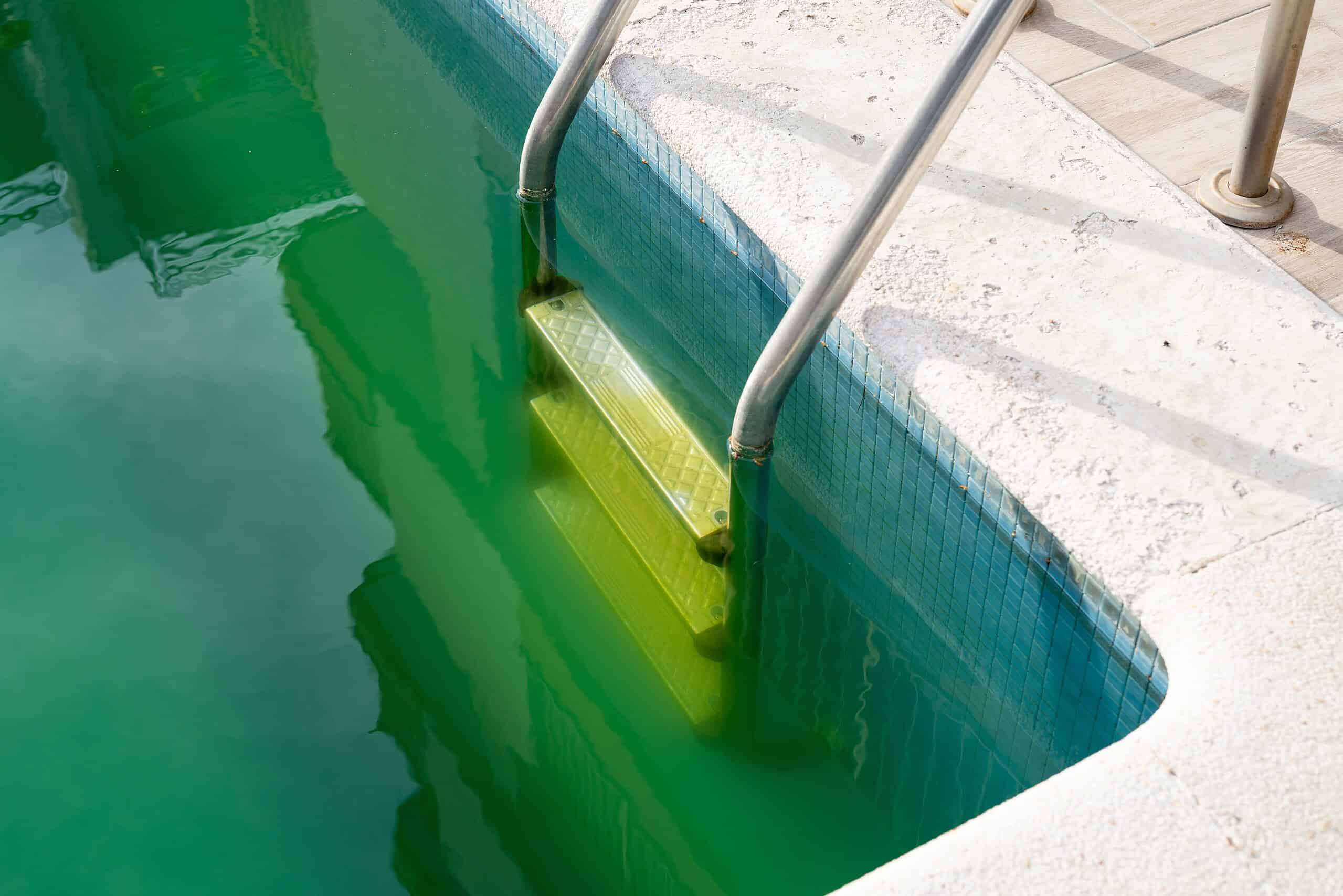
Closing a pool is more than simply throwing a heavy tarp over the water and heading indoors for the winter. Once the filtration system shuts down, water stops circulating, turning the pool into a dormant environment. To fully grasp why treatment is necessary, it helps to start by understanding what happens to your pool water in the winter. Without active sanitation and movement, stagnant water creates an open invitation for microscopic contaminants, mineral precipitation, and stubborn staining.
A quality liquid winterizer serves as a long-term defense shield. Unlike standard daily chlorine that dissipates rapidly, off-season liquid formulas use specialized non-foaming biocides, scale inhibitors, and clarifying enzymes designed to stay stable in cold, dark environments. Because it comes pre-dissolved, the liquid disperses effortlessly throughout the entire pool, providing comprehensive coverage from the deep end floor right up to the water line.
Preventing Algae, Scum Lines, and Scale Buildup
Microscopic algae spores do not vanish just because the swimming season is over. Hardier strains of blue-green algae—such as Lyngbya and Phormidium—can survive low water temperatures and bloom the moment sunlight penetrates a pool cover. Liquid winterizers utilize potent biocides that disrupt algae cellular growth before colonies can take hold.
Beyond algae prevention, many modern winterizing formulas incorporate natural enzymes and sequestering agents. Enzymes continually break down residual organic matter, non-living contaminants, and body oils, preventing the oily, unsightly scum ring that often bakes onto waterline tiles over winter. Concurrently, scale-inhibiting chelants keep dissolved minerals like calcium in suspension. When freezing temperatures cause shifts in water chemistry, unchecked minerals can bind to walls or exacerbate surface issues; learning about preventing pool damage from freeze thaw cycles highlights why maintaining mineral balance is essential. Modern winterizers also feature copper-free formulations, ensuring vinyl liners and light plaster finishes remain completely free of metallic blue-green staining.
Liquid Winterizer Features and Application Considerations
When selecting off-season chemicals, pool owners often weigh liquid formulations against traditional granular powders. Understanding the distinct mechanical advantages of liquid products ensures you select the best approach for your closing routine.
| Feature / Metric | Liquid Winterizer | Granular Winterizing Powder |
|---|---|---|
| Solubility | Instant uniform dispersion; zero mixing | Requires pre-dissolving in buckets |
| Surface Safety | Non-bleaching; completely safe for vinyl/fiberglass | Risk of un-dissolved granules bleaching liners |
| Foaming Action | Non-foaming biocide chemistries | Varies; some quat algaecides foam |
| Application Speed | Direct pour around pool perimeter | Slow distribution; requires manual brushing |
| Sediment Formation | Zero chemical fallout or cloudiness | Possible chalky residue on pool floor |
As highlighted in helpful guidelines on essential closing chemicals, choosing liquid formats avoids the risk of concentrated chemicals settling to the pool floor, which protects delicate finishes from localized chemical burns.
Surface Compatibility Across Above Ground, Inground, and Saltwater Systems
Whether maintaining a compact above-ground setup or an expansive custom inground installation, liquid winterizers offer universal compatibility across all pool construction materials.
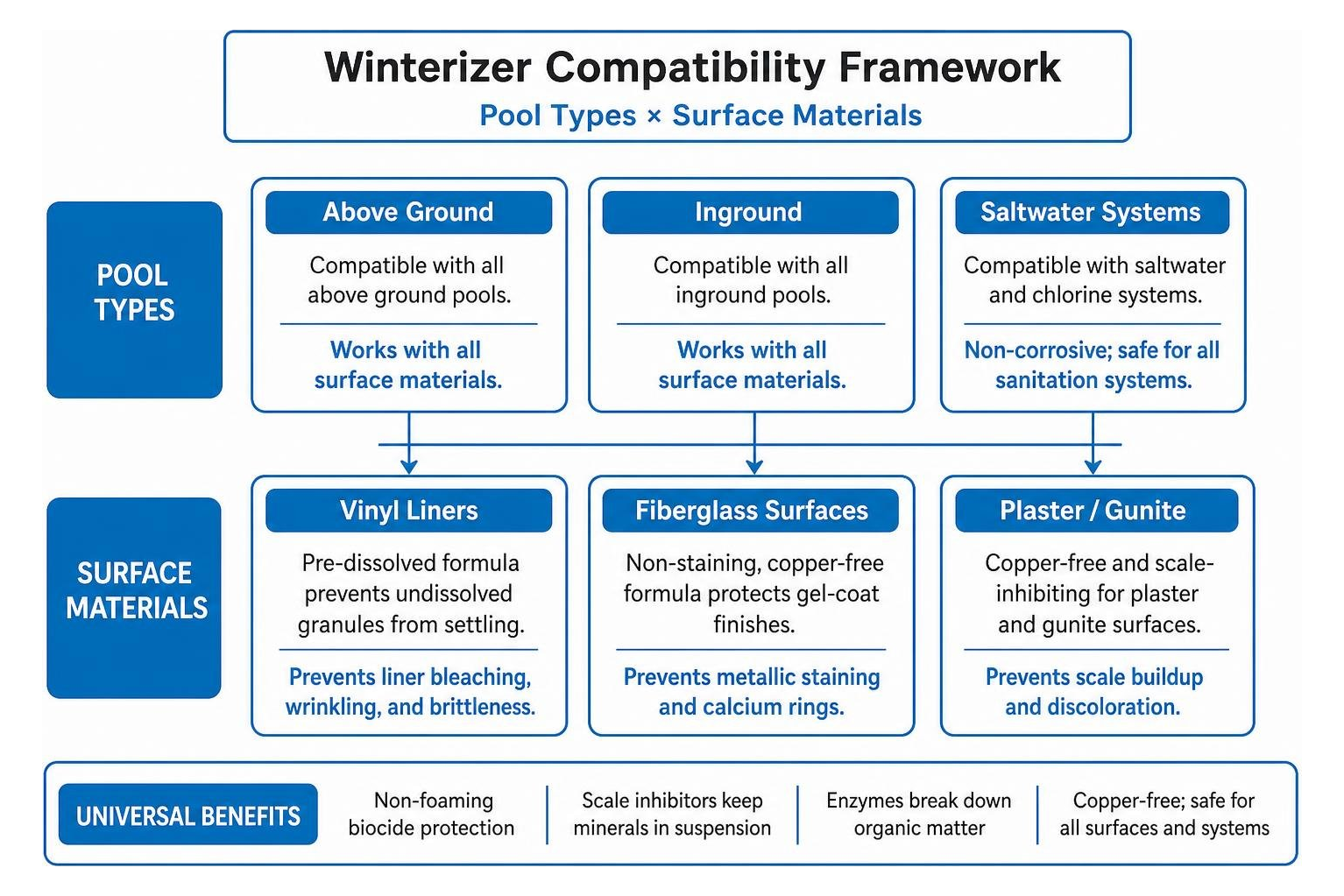
- Vinyl Liners: Pre-dissolved liquid treatments eliminate the risk of undissolved chemical granules landing on the bottom, preventing liner bleaching, wrinkling, or premature brittleness when winterizing an above ground pool.
- Fiberglass and Plaster: Non-staining, copper-free liquid additives prevent metallic deposits and unsightly calcium rings on gel-coat and gunite plaster surfaces.
- Saltwater and Chlorine Systems: Liquid winterizers are non-corrosive and fully compatible with all sanitation styles. When protecting a salt water pool system, liquid winterizers provide steady residual protection during the months when salt chlorine generator cells must be powered off to prevent cold-water equipment failure.
Step-by-Step Application, Timing, and Safe Off-Season Pool Care
Proper application ensures your winterizing chemicals perform at peak efficiency all winter. Knowing the correct order of operations helps pool owners with avoiding common pool winterizing mistakes that lead to cloudy water or damaged equipment.
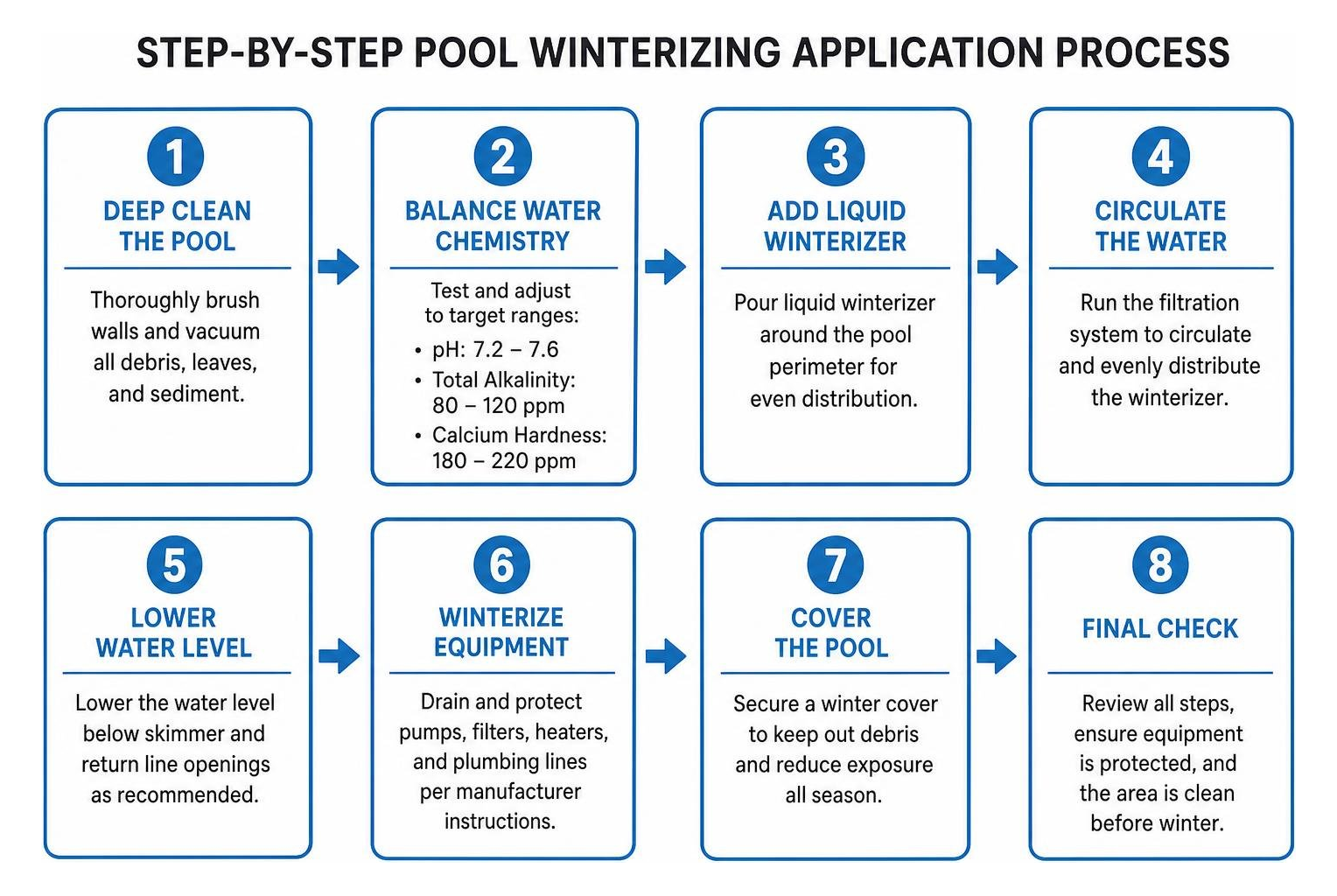
- Deep Clean the Pool: Thoroughly brush the walls and vacuum all settled debris, leaves, and organic sediment from the pool floor.
- Balance Water Chemistry: Test and adjust your water parameters to standard target ranges:
- pH: 7.2 – 7.6
- Total Alkalinity: 80 – 120 ppm
- Calcium Hardness: 180 – 220 ppm
- Shock the Pool: Apply your closing shock treatment (chlorine or non-chlorine oxidizer) to eliminate active bacteria and sanitize the water.
- Wait and Circulate: Run the pump and filtration system for 24 hours to let the oxidizer disperse and settle.
- Add Liquid Winterizer: Pour the designated dose of liquid winterizer evenly around the pool’s deep-end perimeter.
- Circulate the Chemical: Let the pump run for 2 to 3 hours to guarantee complete, uniform distribution.
- Winterize Equipment and Lower Water: Backwash the filter, disconnect and drain pump and heater plugs, blow out plumbing lines, add non-toxic pool antifreeze where required, and lower water to the appropriate winter level.
- Secure Cover: Place your safety cover or winter tarp firmly over the pool structure.
Proper Timing and Dosage of Liquid Winterizer for Pools
Timing is everything when closing down a pool. Adding your closing chemicals too early while outdoor temperatures remain warm can cause biocides to exhaust their active lifespan prematurely. Wait to apply liquid winterizer for pools until water temperatures consistently drop below 65°F (18°C), with the ideal window being between 50°F and 55°F (10°C to 12°C). Cooler water naturally slows algae growth, allowing the winterizer to maintain protective residuals deep into the winter.
Dosage is strictly calculated based on total pool water volume:
- For concentrated commercial products, typical dosage runs between 400 ml and 600 ml per 10 cubic meters of water (approximately 500 ml per 2,600 gallons).
- Standard retail gallon jugs generally treat up to 20,000 to 25,000 gallons of pool water per container.
Always ensure you follow structured guidelines like following 7 steps to close your pool to prevent adding shock and winterizer at the exact same moment, as concentrated chlorine can deactivate organic enzymes and winter biocides.
Adding Liquid Winterizer for Pools Alongside Pool Covers and Cold-Weather Care
The type of pool cover installed significantly influences chemical longevity through the off-season.
- Solid Pool Covers: Solid covers create a total light barrier that blocks UV rays, keeping water dark and cool. Liquid winterizers last exceptionally well under solid covers, rarely requiring supplemental additions.
- Mesh Safety Covers: Mesh covers allow rain and melted snow to filter into the pool while straining large debris. However, they also let in sunlight and fine organic runoff. In areas that experience milder mid-winter thaws, checking the water and adding a supplemental mid-winter booster dose of liquid winterizer can prevent early spring algae.
Always store remaining chemical bottles in a cool, dry, and frost-free indoor space away from direct sunlight. High-quality liquid winterizers typically boast a stable shelf life of 18 to 24 months after opening, ensuring leftover product remains effective for the following season.
Simplifying Spring Openings and Maintaining Chemical Balance
The primary reward of applying a liquid winterizer comes on opening day. Homeowners who properly balance and winterize their water bypass the dreaded “swamp opening.” Instead of spending days shocking, scrubbing black algae lines, running clarifiers, or draining thousands of gallons of cloudy water, the pool opens clear and chemically sound.
A protected pool conserves water, saves money on startup chemicals, and protects equipment from the strain of filtering heavy spring debris. For homeowners seeking a worry-free off-season, Aqua Leisure Pools and Spas provides expert pool care, professional water analysis, and closing services across Northeastern Pennsylvania, including Doylestown, Dickson City, Wilkes-Barre, and Bartonsville. Explore our seasonal support and prepare your backyard oasis by scheduling professional closing services today.
Posted by Aqua Leisure Pools & Spas in Pools