


Smart Buyer Guide to the Most Affordable Inground Pool Lights

Affordable Inground Pool Lighting: Where to Start
For most existing pools, a white LED light that fits the current fixture or niche is the most practical budget choice. It uses less power than an incandescent light and avoids the cost of changing the pool wall. If you want color, compare RGBW LED fixtures, but check the full installed cost, not just the light.
Before you buy, match the fixture to your pool wall, niche size, and voltage. A 12V light may also need a transformer. For any underwater light, look for a fixture rated for submersion and have a qualified professional check the electrical setup.
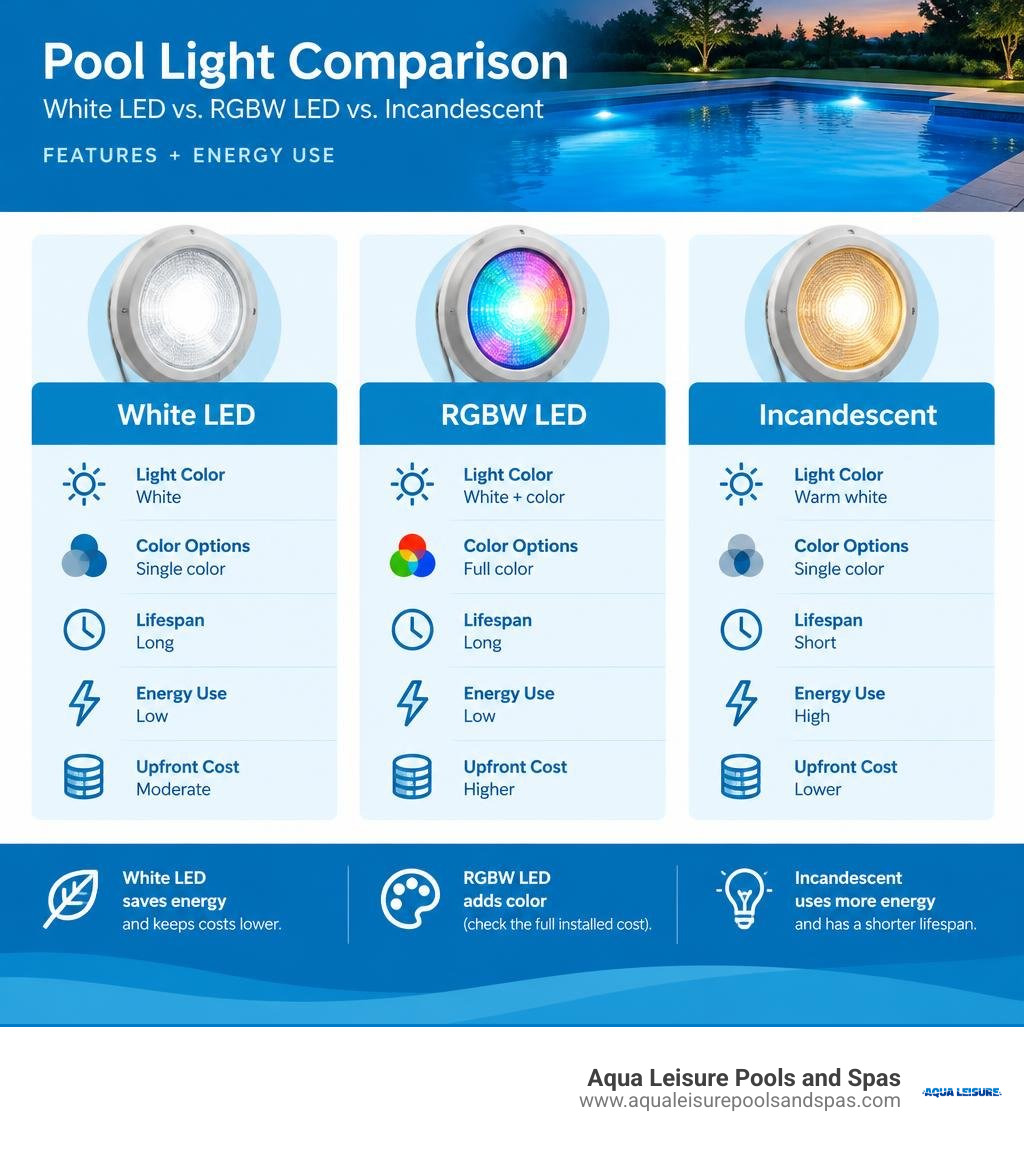
Handy affordable inground pool lighting terms:
Top Options for Affordable Inground Pool Lighting and How They Compare

Finding economical underwater fixtures does not mean sacrificing quality or vibrant ambiance. Modern solid-state LED fixtures have evolved significantly, allowing homeowners to replace outdated halogen bulbs with high-efficiency units that provide dynamic color shows or crisp white glow. Understanding the full landscape of options is easier when you consult a complete guide to swimming pool lights to see how form factors and wattages interact underwater.
| Fixture Type | Typical Wattage | Relative Lumen Output | Common Niche / Fitting | Operating Voltage | Expected Lifespan |
|---|---|---|---|---|---|
| Standard Niche LED (10-Inch) | 40W | 3,800+ lumens | Standard 10-inch wet niche | 12V AC or 120V AC | Up to 50,000 hours |
| Compact Nicheless LED (1.5-Inch) | 10W – 18W | 650 – 1,900 lumens | 1.5-inch return fitting / pipe | 12V – 24V AC/DC | 30,000 to 50,000 hours |
| Large Push-Fit RGBW Fixture | 20W – 50W | 2,000 – 3,800 lumens | 1.5-inch to 2-inch sleeve | 24V DC | 50,000 hours |
| Traditional Incandescent (Legacy) | 300W – 500W | ~2,500 lumens | Standard 10-inch wet niche | 120V AC | 2,000 to 5,000 hours |
Many manufacturers design energy-efficient options that drop straight into older niches, while compact units target 1.5-inch wall fittings to illuminate steps and swimouts.
Evaluating Affordable Inground Pool Lighting by Cost and Energy Efficiency
Operating costs form the bulk of a pool light’s lifetime expense. An 18W LED produces illumination equivalent to a 500W incandescent bulb while cutting electricity consumption by up to 90%. Over months of evening swims, these savings accumulate substantially.
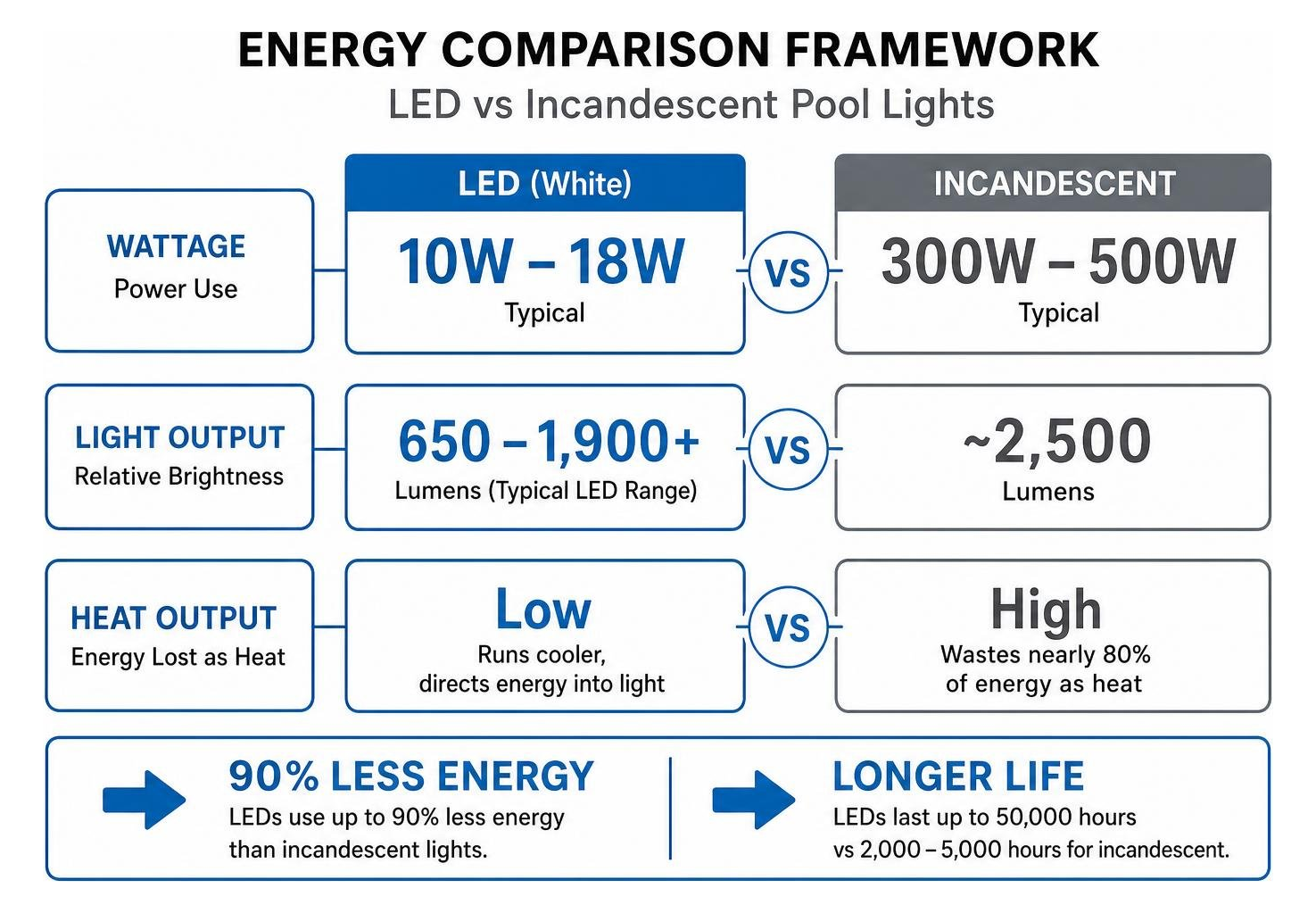
Traditional halogen and incandescent bulbs waste nearly 80% of their energy as heat rather than light, which stresses waterproof seals over time. In contrast, modern LED chips direct their energy into lumens, operating cooler and delivering lifespans reaching 50,000 hours. Research compiled by academic engineering teams at Northeastern University highlights how solid-state luminaires reduce structural thermal degradation. Pool owners planning an upgrade can review this cheat sheet for selecting inground pool lights to quickly match fixture efficiency with overall utility goals.
Choosing the Best Affordable Inground Pool Lighting for Different Pool Types
Pool wall construction directly influences how light disperses and how fixtures are mounted:
- Concrete and Gunite Pools: These plaster finishes absorb more light than reflective surfaces. Using wide 120-degree beam angle fixtures ensures single fixtures illuminate up to 20 square meters without dark shadows.
- Vinyl Liner Pools: Liner patterns and colors affect brightness. Smooth vinyl reflects light efficiently, meaning smaller wattage nicheless LEDs placed strategically can deliver complete coverage. When designing new custom inground pool construction, builders often plan niche placement to maximize light diffusion.
- Fiberglass Shells: Pre-molded fiberglass benefits from flush-mounted or nicheless fittings that clamp tightly with dedicated gaskets, preventing stress cracks around the perimeter of the shell.
For properties with complex pool shapes, exploring vibrant color-changing pool light comparisons helps balance aesthetic warmth against clear visibility.
Low-Voltage vs. Line-Voltage Systems and Fixture Specifications
When shopping for replacements, choosing between 12V and 120V models is a fundamental electrical decision:
- 12V Low-Voltage Systems: Power flows through an external step-down transformer positioned away from the pool edge. This safety-first configuration is standard in modern builds because 12V underwater power significantly reduces electrical shock hazards.
- 120V Line-Voltage Systems: Power runs directly from the electrical panel through dedicated ground-fault circuit interrupters (GFCI). While these eliminate the need for a separate transformer, older 120V installations require strict inspection of ground wiring and junction boxes.
For low-voltage setups, consult this essential checklist for 12V pool light purchases to ensure proper transformer sizing. Modern RGBW systems also feature standalone wireless remotes or direct DMX digital control to sync color transitions without extra wiring.
Essential Buying and Installation Considerations for Budget Pool Lights
Before purchasing any budget-friendly fixture, account for accessory requirements and mechanical compatibility. Reviewing creative inground lighting design ideas will help you determine whether your pool needs a single high-output center light or multiple accent fixtures along steps and tanning ledges.
Retrofit Compatibility and Easy Niche Installation
Upgrading an existing fixture should not require tearing out pool plaster or draining the water completely. Standard 10-inch wet niches easily accommodate universal replacement fixtures that lock in place with a single top pilot screw.
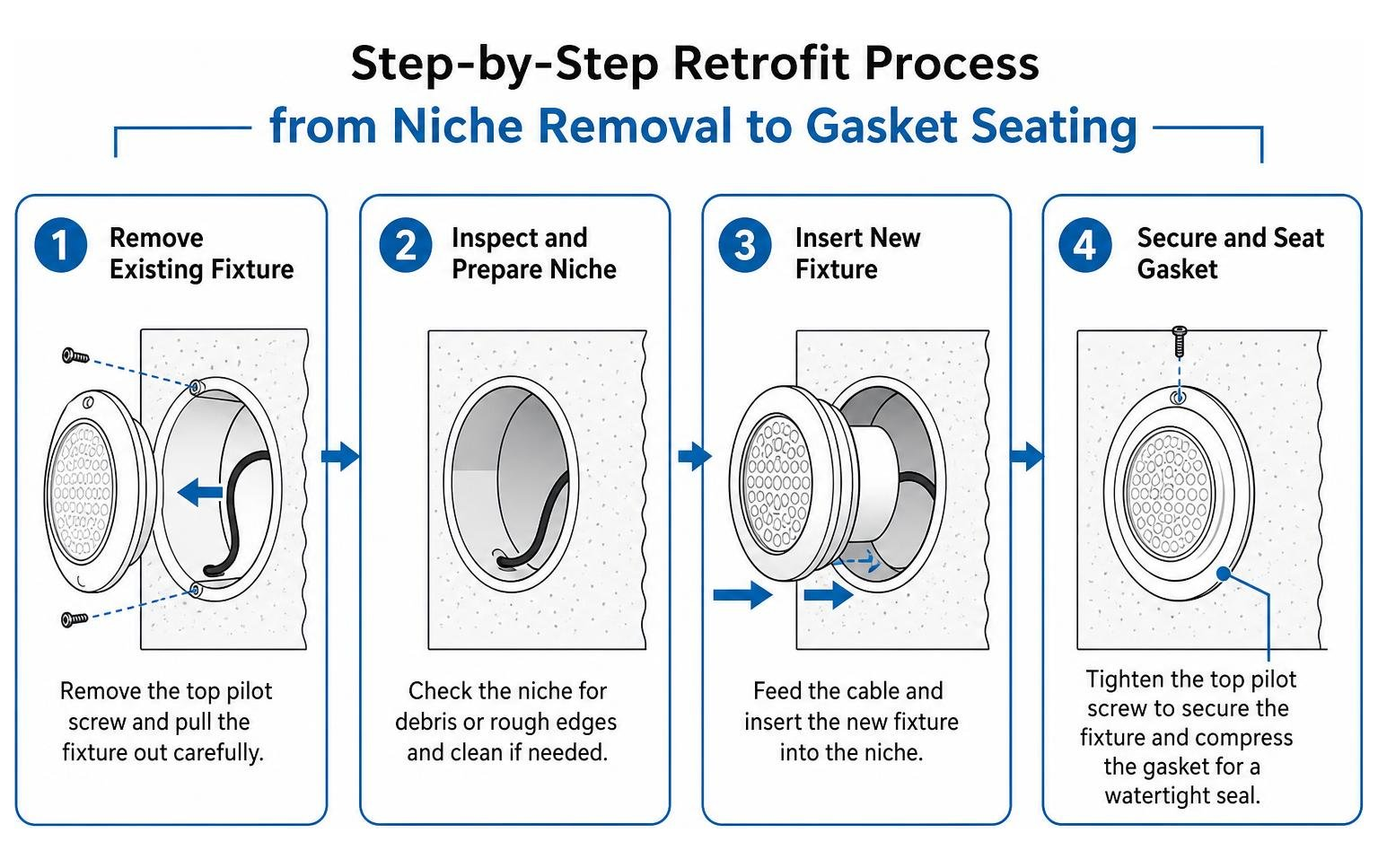
For non-standard or older niche cavities, manufacturers offer wedge bracket adapters that expand outward to lock fixtures securely in place without drilling into gunite. When planning your project, review these replacement tips for 12V LED lights and always order a model with an adequately long cord (typically 50 to 100 feet) so the cable reaches the deck junction box without underwater splices.
Electrical Safety, IP68 Waterproofing, and Long-Term Maintenance
Water and electricity demand uncompromising safety standards. Any underwater fixture must carry a certified IP68 waterproof rating, ensuring it remains fully sealed under continuous hydrostatic pressure.
- Resin-Filled Housings: Advanced polymer and resin-sealed assemblies eliminate internal air pockets, preventing condensation from forming behind the lens.
- Corrosion Resistance: Polymer faces or marine-grade 316 stainless steel prevent pitting in both saltwater electrolysis pools and traditional chlorine environments.
- Circuit Protection: Always verify that every underwater light circuit runs through an operational GFCI breaker and meets strict safety protocols, such as regional safety standards supported by institutions like Commonwealth University of PA.
- Seal Audits: Inspect lens gaskets and cord strain reliefs annually before opening the pool for the season to prevent slow leaks.
For safe installation steps, follow this guide on safe underwater pool light installation to protect both your equipment and swimmers.
Professional Guidance and Expert Pool Lighting Solutions
Navigating wire gauges, voltage transformers, and niche dimensions is much simpler with regional pool specialists. Aqua Leisure Pools and Spas assists homeowners across Northeastern Pennsylvania with comprehensive pool care, equipment retrofits, and backyard transformations.
Whether you are located in Doylestown, Wilkes-Barre, Dickson City, or Bartonsville, certified technicians can assess your existing setup, run conduit lines safely, and source high-durability LED fixtures. Explore genuine swimming pool supplies and equipment or stop by local regional pool design showrooms to see these dynamic lighting systems in action before making your upgrade.
Posted by Aqua Leisure Pools & Spas in Pools