


The Complete Guide to Built-In Swimming Pool Cost Breakdown

What Determines Built In Swimming Pool Cost?
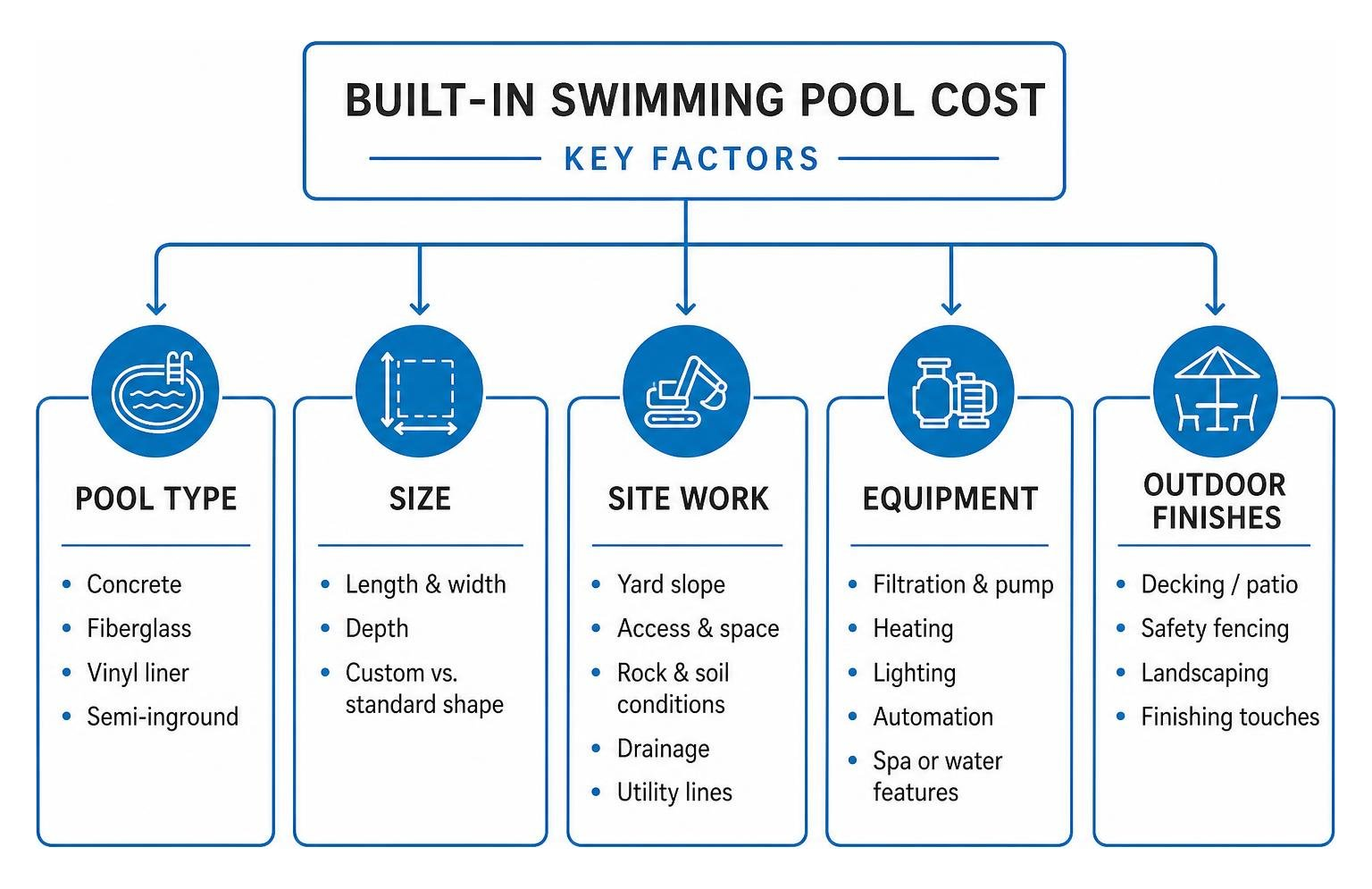
A built in swimming pool cost depends on far more than the pool shell. Your total project budget should include the pool type, size, yard conditions, excavation, equipment, permits, decking, safety fencing, and landscaping.
Before requesting quotes, decide:
- Whether you prefer concrete, fiberglass, vinyl liner, or a semi-inground option.
- How much patio and landscaping you want around the pool.
- Whether your yard has slopes, tight access, rock, drainage issues, or utility lines.
- Which features matter most, such as heating, lighting, automation, a spa, or a water feature.
A standard-shaped pool on a flat, accessible yard is usually easier to budget than a custom design with premium finishes and major site work. The best quote is not simply the lowest pool price. It is a clear, complete project plan that accounts for the work required to create a safe, finished backyard.
This guide breaks down the major costs, realistic installation timelines, long-term ownership expenses, and ways to control your budget without cutting corners on quality.
Total Built In Swimming Pool Cost by Type, Size, and Region
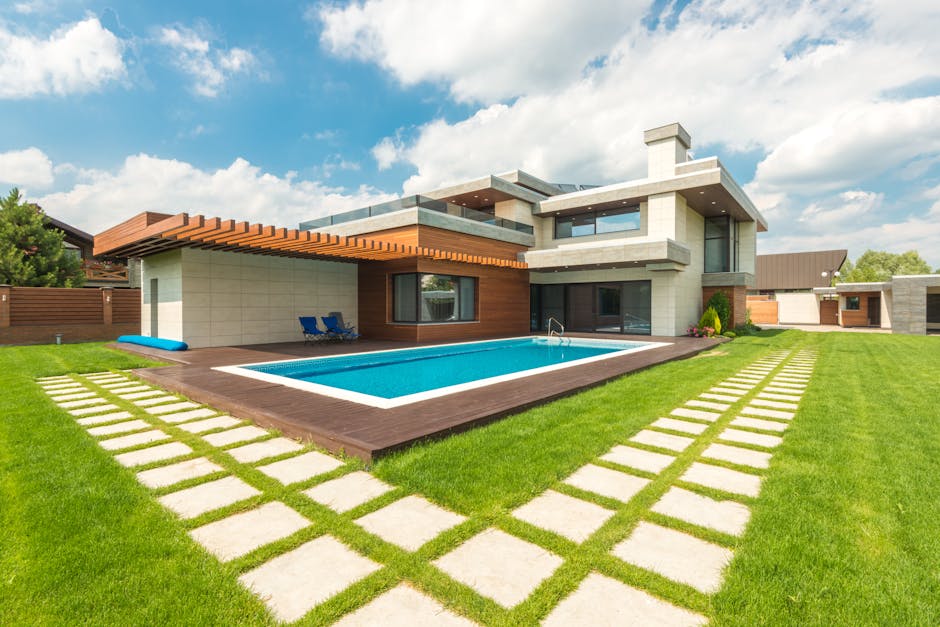
When planning a backyard transformation, calculating the overall investment requires looking at regional labor rates, municipal building codes, and site accessibility. In Northeastern Pennsylvania, local climate conditions play a major role in construction methods and timeline expectations. Freeze-thaw cycles require durable construction standards, proper depth profiles, and robust winterization planning.
Online tools like a Pool Cost Calculator 2026 help homeowners model base construction variables, but actual figures will always reflect site-specific needs. Digging through rocky soil in the Poconos, managing steep slopes near Lake Wallenpaupack, or arranging tight access equipment in historic Doylestown neighborhoods will influence the final installation scope.
Built In Swimming Pool Cost by Material and Construction Type
The pool shell material represents the foundation of your project and dictates long-term durability, maintenance routines, and customization potential. Learning how to choose an in ground pool starts with understanding how the primary build types differ.
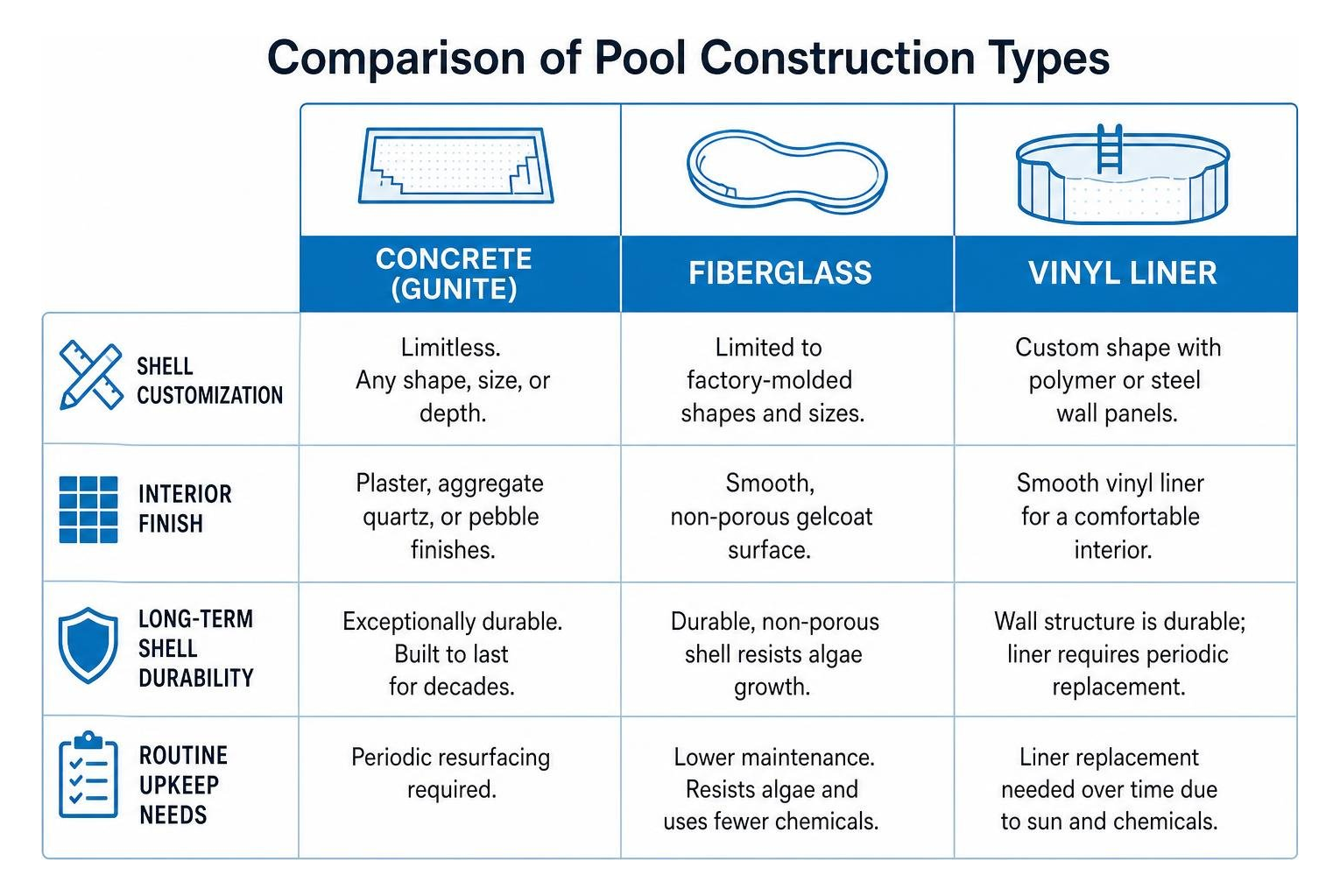
- Concrete and Gunite Pools: Concrete structures provide limitless design flexibility. They can be engineered into any custom shape, depth, or entry style, including tanning ledges and beach entries. Finishes range from standard plaster to aggregate quartz or pebble blends. They are exceptionally durable and built to last for decades, though they involve extensive on-site labor and periodic resurfacing.
- Fiberglass Pools: Manufactured off-site and delivered as a pre-molded shell, fiberglass pools feature a smooth, non-porous gelcoat finish. This surface resists algae growth and reduces chemical usage over time. While shapes and sizes are restricted to factory molds, installation moves quickly once excavation finishes.
- Vinyl Liner Pools: Featuring custom-fitted polymer or steel wall panels lined with heavy-duty vinyl, these pools offer a comfortable, smooth interior with lower initial installation demands. The liner will eventually require periodic replacement due to sun exposure and chemical wear, making long-term upkeep an essential factor in overall budgeting.
| Pool Type | Shell Customization | Interior Finish | Long-Term Shell Durability | Routine Upkeep Needs |
|---|---|---|---|---|
| Concrete / Gunite | Fully Custom | Plaster, Quartz, Pebble | 50+ Years (Needs resurfacing) | Highest (Brushing & chemical balancing) |
| Fiberglass | Pre-molded Factory Shapes | Non-porous Gelcoat | Multi-decade Shell Life | Lowest (Algae-resistant surface) |
| Vinyl Liner | Modular Engineered Shapes | Patterned Vinyl Liner | Long-lasting frame; liner replaced periodically | Moderate (Liner care & water balance) |
Average Pricing by Pool Dimensions and Square Footage
Pool surface area and depth profiles directly affect material quantities, excavation volume, and structural reinforcement. Exploring custom in-ground pool options allows buyers to balance water surface area against their yard’s usable space.
Deep ends and complex geometric designs require additional structural steel and backfill volume, expanding the site footprint compared to sport-depth pool designs with consistent four-to-five-foot depths.
Affordable Alternatives and Semi-Inground Options
Homeowners managing challenging backyard terrain often find that hybrid semi-inground installations provide the ideal middle ground. Built with heavy-duty insulated wall panels, semi-inground designs can be partially buried into hillsides or integrated directly into elevated multi-tier decking.
Reviewing the cost and comparison of inground and above ground pools demonstrates that hybrid setups dramatically reduce excavation volume and eliminate the need for costly retaining walls on uneven slopes. When paired with custom coping, surrounding pavers, and modern decking, these installations achieve a seamless built-in look while cutting build schedules significantly. Traditional above ground pool designs also serve as practical, accessible backyard additions that deliver reliable summer recreation with minimal yard disruption.
Comprehensive Project Budgeting and Long-Term Ownership Expenses
A successful pool project requires looking beyond the water basin itself. Outdoor living spaces require proper deck surrounds, secure boundaries, quality circulation equipment, and landscaping to transform an active construction zone into a functional retreat.
Key Factors and Hidden Expenses Driving Built In Swimming Pool Cost
The pool shell is only one part of the complete installation equation. Key project elements that complete an outdoor build include:
- Excavation and Site Preparation: Removing soil, clearing trees, leveling slopes, and addressing underground rocks or high water tables.
- Decking and Patio Surrounds: Concrete, brushed pavers, or natural stone coping that tie the pool into your home’s outdoor architecture.
- Safety Fencing and Barriers: Pennsylvania municipal building codes require specific self-closing, self-latching safety barriers to protect children and pets.
- Filtration and Sanitation: Calculating the cost of new pool filter systems alongside high-efficiency, variable-speed circulation pumps.
- Water Heating and Automation: Adding heat pumps or natural gas heaters to extend the swimming season into cooler autumn months, managed via mobile smartphone apps.
- Site Restoration and Landscaping: Restoring grass, installing privacy shrubbery, setting mulch beds, and correcting yard drainage paths after heavy machinery leaves the site.
Installation Timelines, Permitting, and Labor Breakdown
The timeline for pool installation depends heavily on the build type, municipal approvals, and weather conditions.
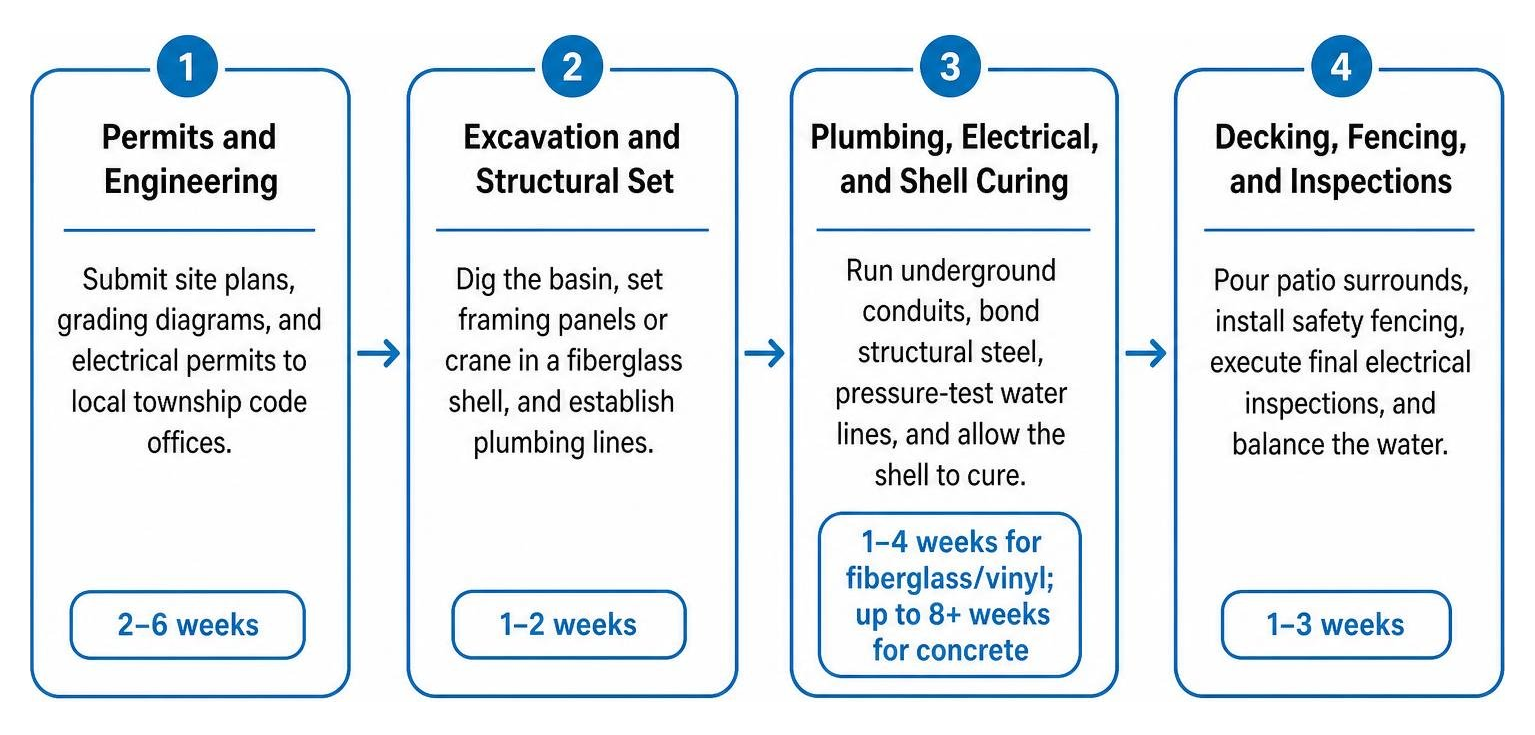
- Permits and Engineering: Submitting site plans, grading diagrams, and electrical permits to local township code offices (typically 2 to 6 weeks).
- Excavation and Structural Set: Digging the basin, setting framing panels or craning in a fiberglass shell, and establishing plumbing lines (1 to 2 weeks).
- Plumbing, Electrical, and Shell Curing: Running underground conduits, bonding structural steel, pressure-testing water lines, and allowing shotcrete or gunite shells to cure (1 to 4 weeks for fiberglass/vinyl; up to 8+ weeks for concrete).
- Decking, Fencing, and Inspections: Pouring patio surrounds, installing safety fencing, executing final electrical inspections, and balancing the water (1 to 3 weeks).
Choosing a dedicated team for professional in ground pool installation ensures that structural work, utility trenching, and local code inspections are handled smoothly without unexpected schedule delays.
Long-Term Maintenance, Home ROI, and Cost-Saving Strategies
An inground pool is an investment in personal recreation, home entertaining, and property appeal. In warm and moderate climates, understanding how inground pools add value to your property helps homeowners evaluate long-term equity alongside immediate lifestyle upgrades.
Ongoing maintenance involves budgeting for:
- Water Care and Sanitization: Maintaining clean, balanced water using proven systems like e-z-pool-chemicals water care.
- Seasonal Openings and Closings: Safe winterization protects underground plumbing and pool surfaces from freezing temperatures.
- Utility Consumption: Modern variable-speed pumps dramatically lower electrical use compared to older single-speed motors.
Smart planners also utilize proven ways to lower the cost of your pool, such as:
- Selecting clean, standardized geometric layouts rather than complex freeform curves.
- Pre-wiring and plumbing for future add-ons (like extra lighting, heaters, or water features) during initial construction rather than retrofitting later.
- Scheduling builds during early spring or autumn to take advantage of off-peak contractor schedules.
- Combining excavation with other planned backyard grading and landscaping work.
Partner with Your Local Pool Professionals
Designing a custom backyard escape requires experienced guidance tailored to your specific neighborhood and topography. Aqua Leisure Pools and Spas provides complete sales, professional installation, water testing, and long-term maintenance throughout Northeastern Pennsylvania, including Dickson City, Wilkes-Barre, Bartonsville, Doylestown, Scranton, Allentown, Bloomsburg, and Lake Wallenpaupack.
Visiting their local pool showrooms gives you the opportunity to view pool displays in person, review equipment packages, and start designing your ideal outdoor oasis today.
Posted by Aqua Leisure Pools in Pools