


The Ins and Outs of Above Ground Pool Heaters

Choosing the Best Above Ground Pool Heater for Your Backyard
The best above ground pool heater for most backyards is an electric heat pump for long-term energy efficiency, a gas heater for rapid on-demand warmth, or a solar system for low-cost supplemental heat. An above ground pool loses heat much faster than an inground pool because its exposed walls allow chilly breezes to steal thermal energy. Without active heating, pool water can easily drop five to ten degrees overnight. A quality heater extends the swimming season from a short eight-week window to four to six full months of backyard fun.
Selecting the right heater means balancing speed, budget, and outdoor climate. Achieving warm water and cool bills with the best pool heaters comes down to choosing equipment engineered for long-term efficiency.
Comparing Above Ground Pool Heater Types: Heat Pumps, Gas, Electric, and Solar
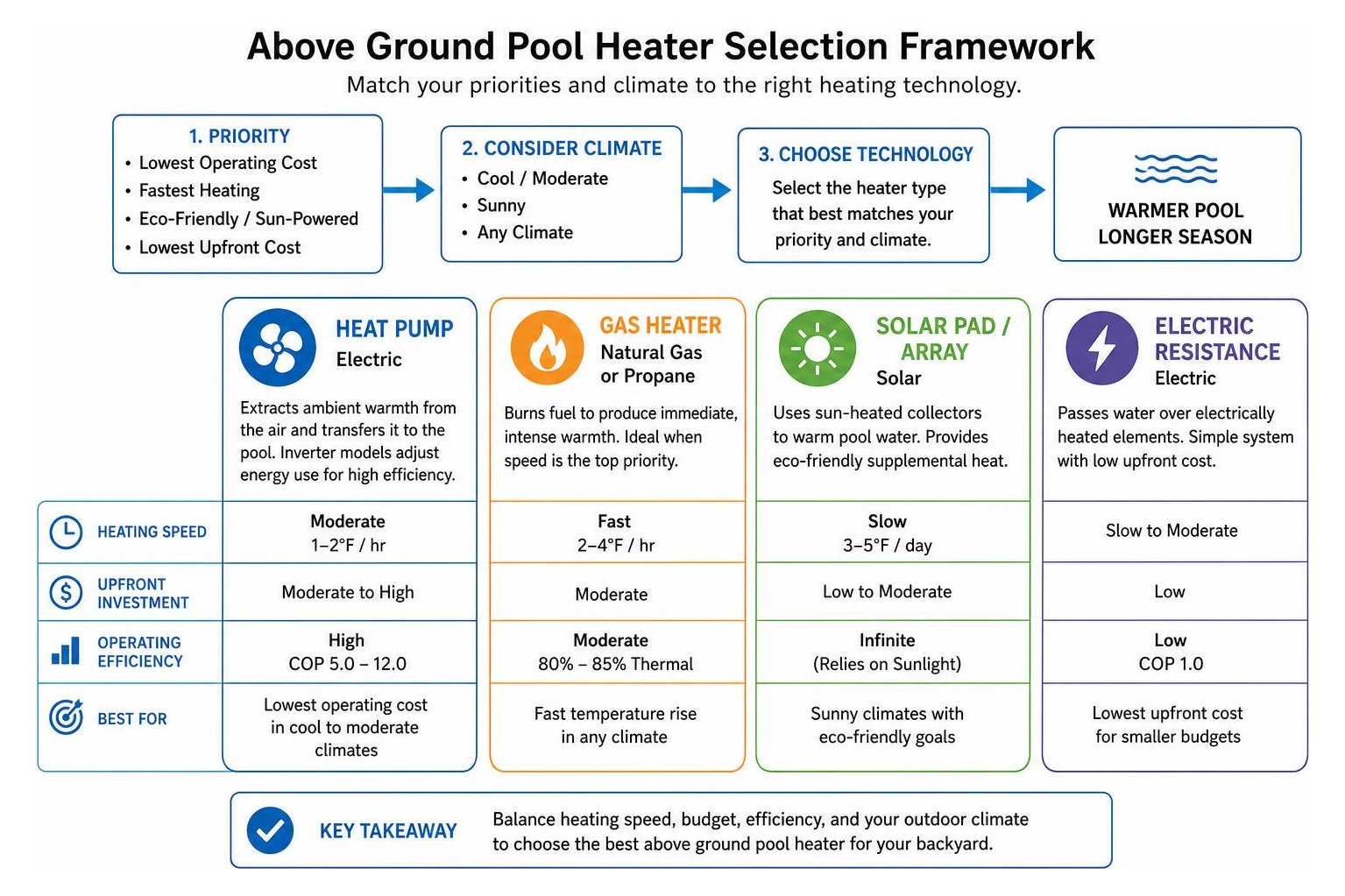
Every heating technology offers distinct advantages depending on usage habits:
- Heat Pumps: Electric heat pumps extract ambient warmth from the air and compress it into the pool water. Advanced models utilize inverter technology to dial energy consumption up or down dynamically, saving up to 40% compared to traditional on/off compressors. They deliver exceptional efficiency, often achieving a Coefficient of Performance (COP) between 5.0 and 12.0. This means you gain up to 12 units of heat for every unit of electricity consumed. Units equipped with spiral titanium heat exchangers resist harsh chemicals and salt corrosion effortlessly.
- Gas Heaters (Natural Gas and Propane): Gas heaters burn fuel inside a combustion chamber to produce immediate, intense warmth. They can raise a pool’s temperature by roughly 3 degrees per hour, bringing water from 70°F to 85°F in about five hours. While fast, fuel consumption requires a dedicated gas line or large propane tank.
- Solar Heating Systems: Solar pads and collectors route pool water through sun-warmed channels. They provide eco-friendly supplemental heat, typically adding 3 to 5 degrees during full sun, but they rely entirely on sunny skies.
- Electric Resistance Heaters: These pass water over electrically heated elements. While inexpensive upfront, their 1.0 COP makes them costly for sustained heating.
| Heater Type | Heating Speed | Upfront Investment | Operating Efficiency (COP) |
|---|---|---|---|
| Heat Pump | Moderate (1–2°F / hr) | Moderate to High | High (COP 5.0 – 12.0) |
| Gas Heater | Fast (2–4°F / hr) | Moderate | Moderate (80% – 85% Thermal) |
| Solar Pad / Array | Slow (3–5°F / day) | Low to Moderate | Infinite (Relies on Sunlight) |
| Electric Resistance | Slow to Moderate | Low | Low (COP 1.0) |
To understand how these match up with your specific swimming goals, explore what type of pool heater is best for you. If you prefer harnessing natural sunlight, check out our step-by-step guide to solar heaters for above ground pools.
Operating Costs and Climate Suitability Across Regions
Operating costs vary significantly across heater styles:
- Heat Pumps: Draw minimal electricity, costing an estimated $0.50 to $1.50 per operating hour. Inverter systems save roughly 70% in energy use compared to electric resistance systems.
- Gas Units: Range from $3.00 to $5.00 per hour depending on natural gas or propane utility rates.
- Solar Arrays: Incur zero ongoing fuel or utility costs beyond standard pool pump circulation.
In cooler climates like Northeastern Pennsylvania, ambient air drops quickly during spring and fall. Heat pumps equipped with low-ambient operation and auto-defrost can function effectively down into freezing temperatures, while gas heaters provide reliable, on-demand heating for weekend gatherings. Homeowners can read about how to stop burning cash the real cost to heat a 15000 gallon pool and consult the comprehensive pool heater comparison guide to pick the most economical option. Backyard pool owners in communities like Dickson City and Scranton frequently share their successful Pool Opening in NE PA with Heat Pump routines as early as April.
Installation, Sizing, and Long-Term Heater Management
Proper sizing and accurate plumbing configurations ensure your pool heater delivers dependable, efficient performance.

Sizing an Above Ground Pool Heater and Calculating BTU Needs
A British Thermal Unit (BTU) measures the energy required to raise one pound of water by one degree Fahrenheit. Because one gallon of water weighs approximately 8.33 pounds, sizing a heater requires calculating your total pool volume:
- Round Pools: Diameter × Diameter × Average Depth × 5.9 = Total Gallons
- Oval Pools: Length × Width × Average Depth × 5.9 = Total Gallons
- Rectangular Pools: Length × Width × Average Depth × 7.5 = Total Gallons
For detailed calculations, review our cheat sheet to above ground pool heat pump sizing alongside The Definitive Guide to the Best Above Ground Pool Heaters. Pairing an appropriately sized unit with a solar blanket traps warmth overnight, unlocking the secrets of how to turn your above ground pool into a giant hot tub.
Electrical and Plumbing Requirements: 120V vs. 240V and Bypass Valves
Smaller above ground heat pumps (14,000 to 18,000 BTUs) often use standard 115V/120V plugs with built-in Ground Fault Circuit Interrupter (GFCI) protection, making DIY installation straightforward. Larger, high-capacity systems require dedicated 208–230V / 240V circuits drawing 30 to 40 amps to power high-output compressors.
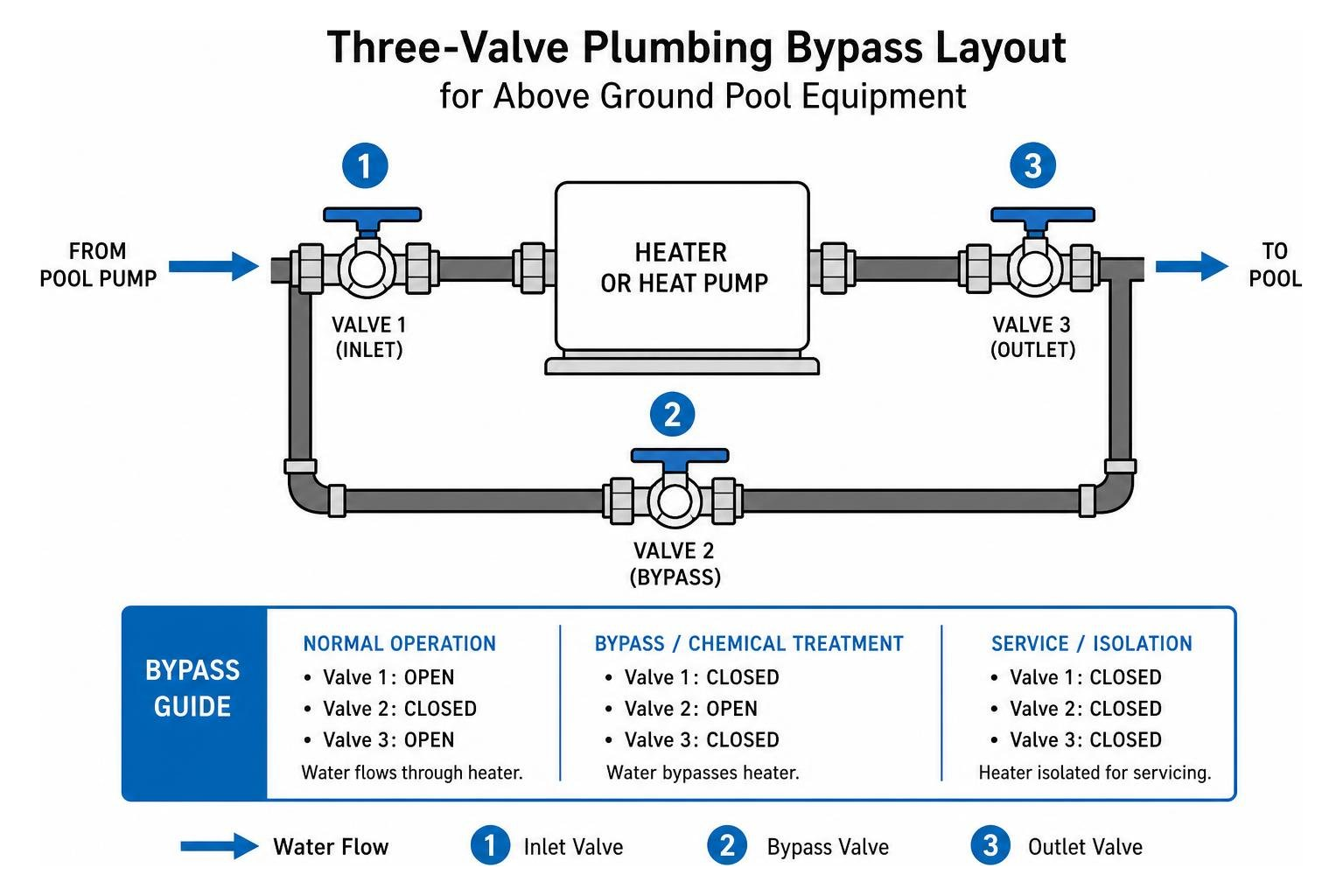
Plumbing lines must maintain adequate water flow. Most heat pumps feature water flow safety switches that automatically shut the unit off if flow rates drop below minimum thresholds (typically 3 to 30 GPM depending on unit size). Installing a three-valve bypass loop allows you to balance flow rates, divert water during chemical treatments, and isolate the heater for servicing without interrupting pool circulation.
Saltwater Pool Compatibility, Maintenance, and Winterizing
Modern heat pumps constructed with titanium heat exchangers are fully compatible with saltwater chlorine generators, resisting galvanic corrosion and chemical wear.
To keep your system running reliably year after year:
- Clear Debris and Ensure Drainage: Keep intake grilles free of leaves and verify that condensate drain lines flow away from the unit’s base pad.
- Monitor Defrost Cycles: Ensure smart auto-defrost controls engage during cool mornings to prevent ice accumulation on evaporator fins.
- Winterize Thoroughly: Before freezing temperatures arrive in regions like Wilkes-Barre, Doylestown, or Bartonsville, disconnect power, open drain plugs to remove all internal water, blow out lines, and secure a breathable protective cover over the unit.
For customized recommendations, equipment upgrades, or full-service maintenance across Northeastern Pennsylvania, explore the options available for above ground pools with the team at Aqua Leisure Pools and Spas.
Posted by Aqua Leisure Pools & Spas in Pools