


The Ultimate Guide to Average Cost of a New Inground Pool

Breaking Down the Average Cost of a New Inground Pool by Material, Size, and Site Prep
The average cost of a new inground pool typically ranges from $35,000 to $90,000, with most homeowners investing between $50,000 and $75,000 for a complete turnkey installation. Final project pricing depends primarily on your choice of structural material—vinyl, fiberglass, or concrete—along with pool dimensions, site excavation, and necessary perimeter safety features. Base quotes from builders often represent only the water-retaining shell and the primary filtration system. Determining how to choose an in-ground pool requires looking closely at how surface materials, physical dimensions, and backyard excavation interact to create the total investment.
Average Cost of a New Inground Pool by Material: Vinyl, Fiberglass, and Concrete
The interior finish and underlying structure determine both your initial out-of-pocket investment and the ongoing maintenance requirements over the lifetime of the structure.
- Vinyl Liner Pools: Vinyl represents the most accessible entry point for inground construction. Built using steel or polymer wall panels anchored on a concrete footing with a custom-fitted vinyl membrane, these structures install relatively quickly. While initial installation remains budget-friendly, vinyl liners are wear items that require complete replacement periodically to prevent leaks and cosmetic fading.
- Fiberglass Shells: Manufactured off-site in climate-controlled factory environments, fiberglass pools are delivered as single-piece structures that are craned directly into an excavated hole. The non-porous gelcoat surface naturally resists algae growth, which reduces chemical demand and eliminates the need for acid washing or structural resurfacing.
- Concrete (Gunite/Shotcrete) Pools: Concrete offers unlimited design flexibility. Crews construct a custom rebar cage, spray pneumatic concrete on-site, and apply plaster, aggregate, or tile finishes. This method requires the most intensive on-site labor and longest curing periods, requiring periodic resurfacing and specialized chemical balancing throughout its multi-decade lifespan.
Independent benchmarks, including industry cost benchmark data, highlight how structural choices influence long-term expenses:
| Pool Material | Upfront Installation Level | 10-Year Maintenance Demand | Structural Lifespan | Primary Long-Term Upkeep |
|---|---|---|---|---|
| Vinyl Liner | Most Budget-Friendly | Moderate | 25+ Years (Frame) | Liner replacements |
| Fiberglass | Moderate to Premium | Lowest | 25 to 50+ Years | Minimal (Gelcoat care) |
| Concrete / Gunite | Highest | Highest | 50+ Years | Acid washing, replastering |
Pool Dimensions, Site Excavation, and Regional Soil Variables
The physical footprint and depth profile dictate the volume of earth moved, structural materials poured, and water required to fill the basin. Standard pool sizes typically range from compact plunge pools to spacious recreation layouts:
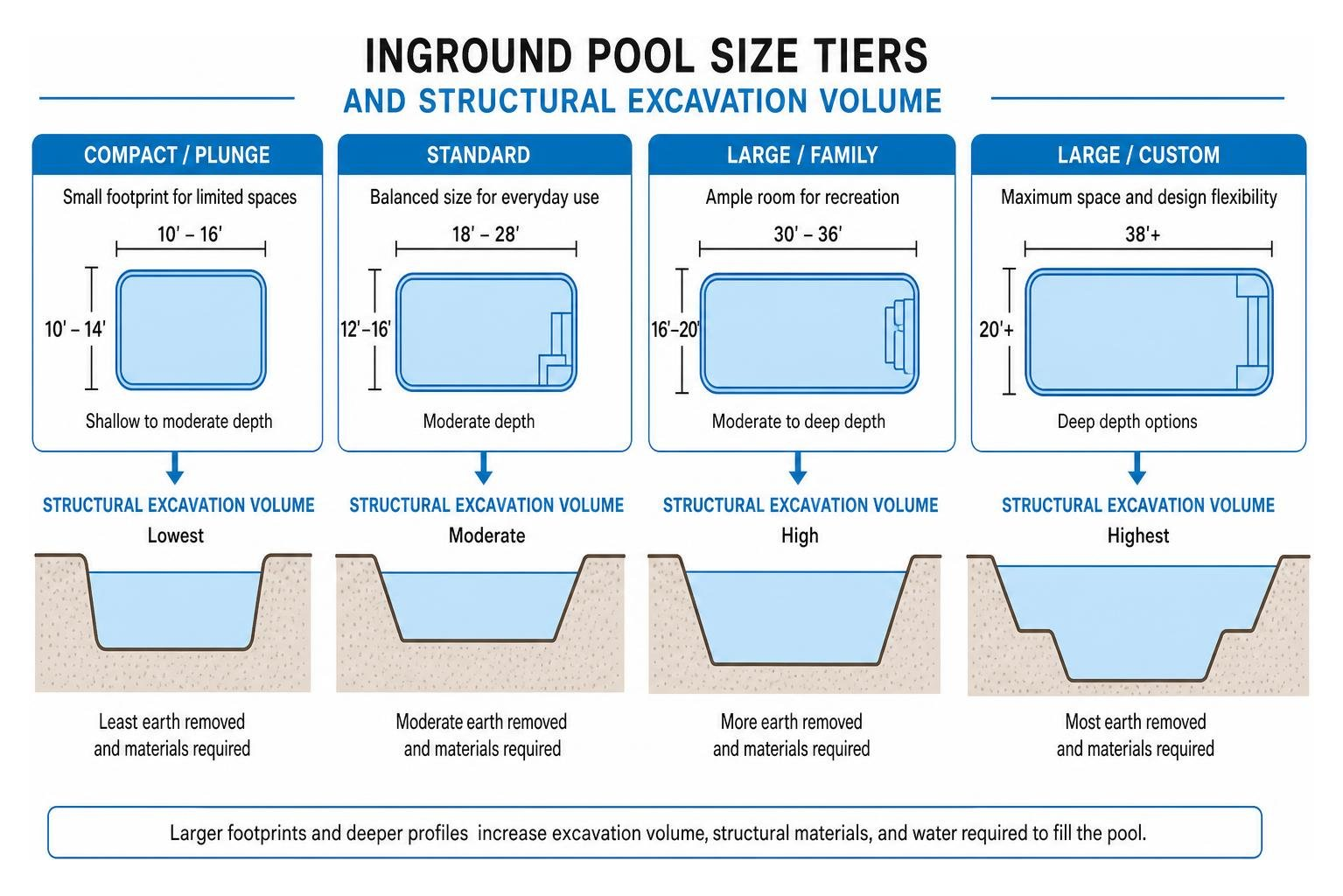
Beyond square footage, ground conditions directly influence installation complexity. In Northeastern Pennsylvania markets like Scranton, Wilkes-Barre, and Dickson City, heavy clay, glacial rock formations, or shallow bedrock can require specialized hydraulic hammering during excavation.
Furthermore, cold winter climates mandate strict adherence to local frost-line engineering. Excavation teams must bury plumbing lines below freeze depths and pour reinforced footings to resist seasonal freeze-thaw soil movement. As outlined in regional price breakdown research, accounting for local soil geology and frost depth upfront prevents unexpected structural movement. Partnering with seasoned professionals for in-ground pool installation ensures that site grading, drainage swales, and structural backfill materials (like crushed stone instead of expansive native clay) are executed correctly from day one.
Hidden Secondary Expenses: Decking, Fencing, Electrical, and Permits

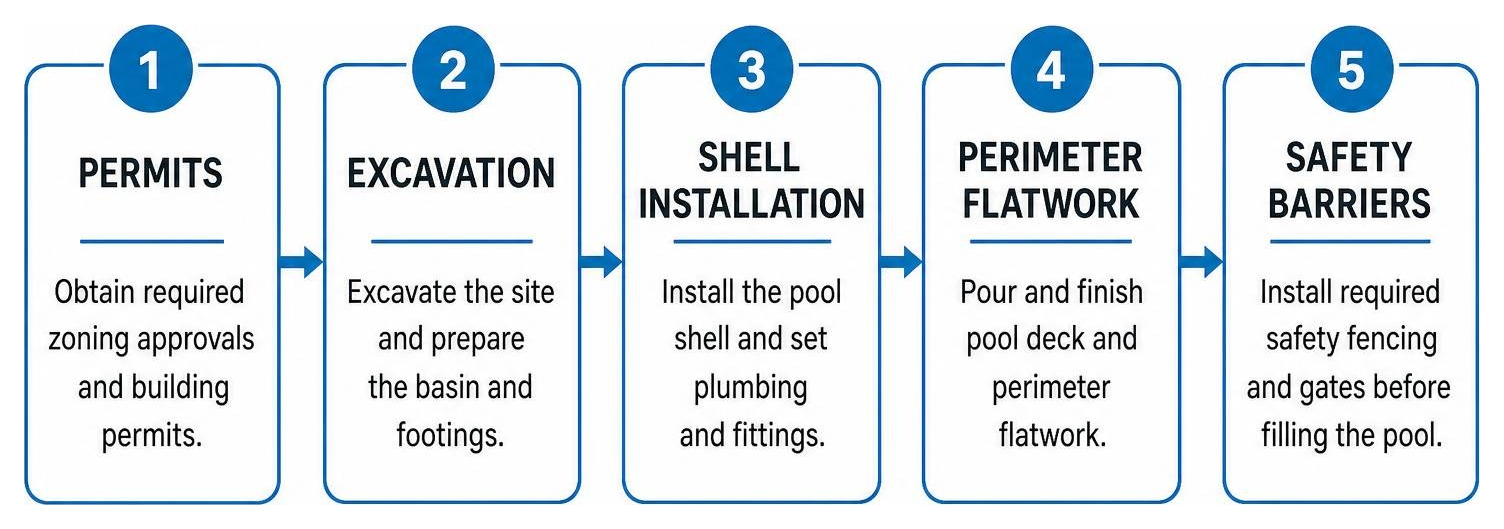
A base pool quote merely provides a water-filled basin; turning the construction site into a functional, safe, and legal outdoor living space requires secondary site work. These elements typically represent a significant portion of the total project scope:
- Building and Zoning Permits: Municipalities in towns like Doylestown, Bartonsville, and Allentown require comprehensive zoning approvals, building permits, and electrical safety inspections before groundbreaking and prior to the final certificate of occupancy.
- Safety Barrier Fencing: Local building codes mandate self-closing, self-latching safety fences (typically 48 to 60 inches in height) surrounding residential swimming pools before the basin can be filled with water.
- Surrounding Decking and Patios: Standard packages often include only a narrow perimeter walkway. Expanding this area into an entertaining patio using brushed concrete, stamped decorative concrete, or natural stone pavers adds substantial usable space.
- Dedicated Electrical Service and Bonding: Running trenching from the main breaker, installing sub-panels, bonding metal components, and wiring pumps, heaters, and underwater LED fixtures must be completed by a licensed electrician.
- Yard Restoration and Landscaping: Heavy excavation machinery alters yard grading and damages turf. Regrading, topsoil replacement, hydroseeding, and privacy landscaping are necessary steps to complete the space.
Long-Term Ownership, Return on Investment, and Financing Your Backyard Oasis
Constructing a private pool is an ongoing commitment to property maintenance, energy efficiency, and backyard recreation. Reviewing practical money saving tips when purchasing and installing a new swimming pool helps keep ongoing operational costs manageable.
10-Year Maintenance and the Average Cost of a New Inground Pool
The total cost of pool ownership extends beyond initial site construction to include utility consumption, water treatment chemistry, seasonal management, and mechanical maintenance:
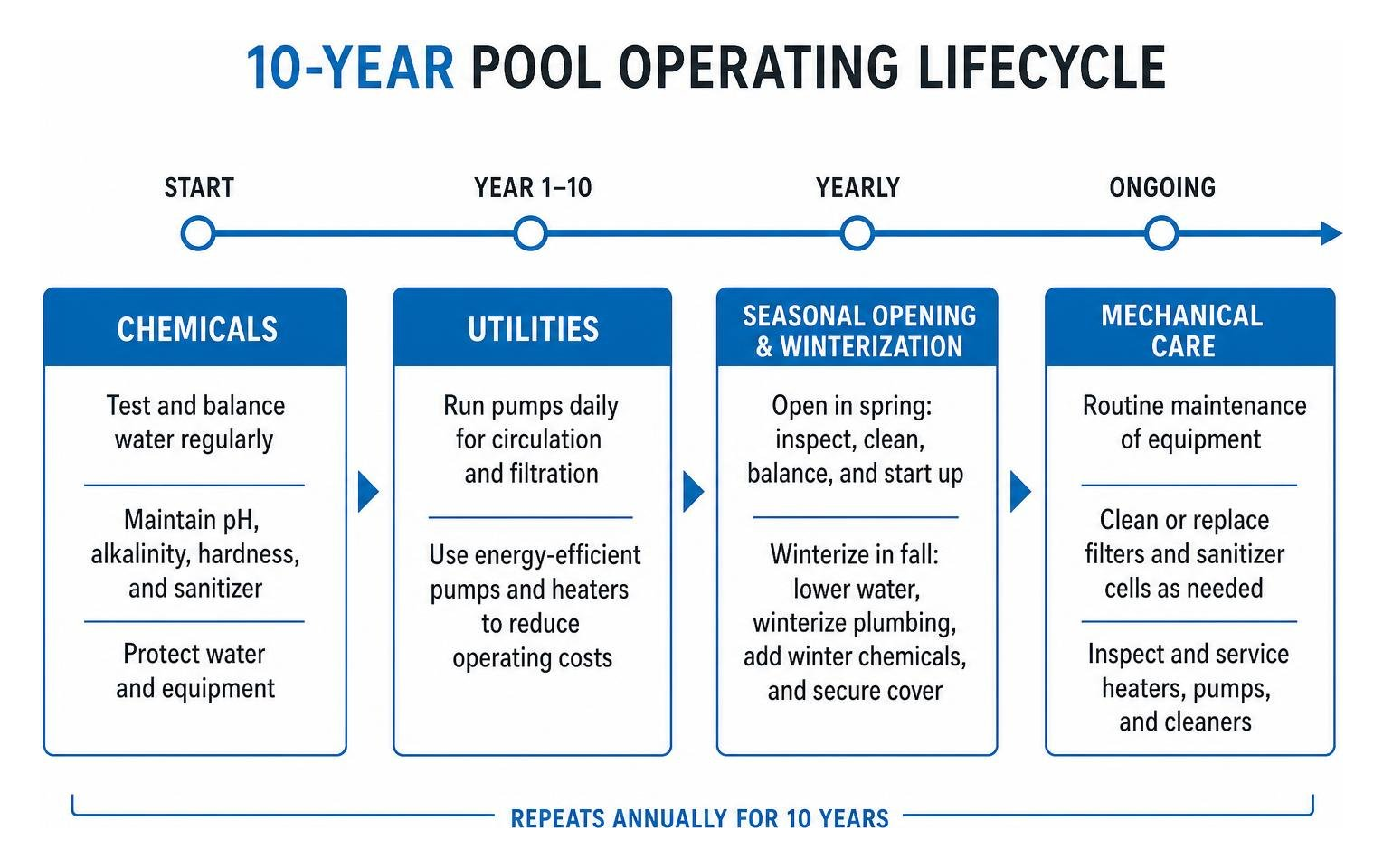
- Circulation and Energy Efficiency: Pool pumps must run daily to filter water effectively. Upgrading to a multi-speed or variable-speed pump during construction uses significantly less electricity than single-speed alternatives, creating long-term operational savings.
- Water Sanitation and Chemistry: Regular testing and balancing of pH, total alkalinity, calcium hardness, and sanitizer levels keep water sanitary and protect equipment. Smooth, non-porous surfaces like fiberglass require fewer chemical adjustments because they do not alter water chemistry the way alkaline concrete plaster can.
- Seasonal Opening and Winterization: In regions with freezing winters, such as Lake Wallenpaupack, Tannersville, and Bloomsburg, winterizing plumbing lines, adding winter chemicals, and securing safety covers protect equipment from frost expansion damage until spring.
- Component Lifecycle Care: Heaters, filter cartridges, sanitization cells, and pool cleaners require scheduled maintenance and eventual replacement over a ten-year operating window.
Resale Value, ROI, and Smarter Ways to Save on Installation
Installing a swimming pool is primarily an investment in family recreation, health, and lifestyle. While home appraisers recognize value in well-constructed outdoor amenities, learning how inground pools add value to your property clarifies what to expect when selling. In Pennsylvania communities, a pool is viewed as an attractive lifestyle upgrade that boosts buyer appeal, particularly when paired with durable decking, privacy landscaping, and quality equipment.
Homeowners can maximize their initial budget without sacrificing structural integrity through practical strategies:
- Select a Standard Geometric Footprint: Choosing standard rectangular or classic freeform shapes reduces manufacturing and excavation labor compared to intricate, multi-radius custom layouts.
- Phase the Outdoor Additions: Focus the initial construction budget on the primary pool structure, essential safety fencing, code-compliant electrical work, and base decking. Luxury elements like built-in outdoor kitchens, shade pergolas, and complex landscape lighting can easily be added in future seasons.
- Build During the Off-Peak Season: Late summer through autumn often provides stable weather and smoother contractor scheduling compared to the high-demand spring rush.
Construction Timelines, Financing Options, and Getting Started
Project schedules vary considerably depending on the construction method chosen:
- Fiberglass: 2 to 6 weeks for shell placement, backfilling, and base plumbing, followed by decking and fence installation.
- Vinyl Liner: 3 to 6 weeks for panel assembly, concrete floor pouring, liner fitting, and utility hookups.
- Concrete (Gunite): 8 to 16+ weeks to accommodate excavation, rebar tying, pneumatic application, plumbing, deck pouring, and the mandatory 28-day plaster curing period.
Homeowners commonly finance pool installations using home equity lines of credit (HELOCs), fixed-rate home equity loans, or specialized unsecured home improvement loans. Comparing loan terms, fixed interest rates, and total repayment costs ensures the monthly financing fits comfortably within your household budget.
Reviewing a comprehensive check list for pool installation success ensures proper site planning, utility marking, and clear communication with your builder. Aqua Leisure Pools and Spas serves homeowners across Northeastern Pennsylvania, including Doylestown, Dickson City, Wilkes-Barre, and Bartonsville, helping clients design, build, and maintain their ideal outdoor retreat.
To take the next step in planning your project, explore custom in-ground pools to discover the right design, material, and layout for your home.
Posted by Aqua Leisure Pools in Pools