


Top 10 Swimming Pools: Detailed Reviews

What Is a Swimming Pool? A Quick Guide for Homeowners
A swimming pool is a man-made structure designed to hold water for swimming, recreation, exercise, or relaxation. Whether you’re dreaming of a backyard retreat or a lap pool for fitness, here’s a fast overview of what you need to know:
- In-ground pools – Permanent, built into the ground using concrete, fiberglass, or vinyl. Most customizable option.
- Above-ground pools – More affordable, faster to install, and easy to remove if needed.
- Saltwater pools – Use a salt-chlorine generator instead of traditional chlorine. Gentler on skin and eyes.
- Infinity pools – Feature a vanishing edge that creates a stunning visual effect.
- Natural pools – Use plants and biological filters instead of chemicals for sanitation.
Most homeowners choose between in-ground and above-ground pools based on budget, yard size, and how long they plan to stay in their home.
People have been building pools for thousands of years. The ancient Great Bath at Mohenjo-Daro dates back to the 3rd millennium BC. The Roman statesman Gaius Maecenas built the world’s first heated swimming pool in the 1st century BCE. Today, swimming pools are one of the most sought-after backyard features in the world.
The appeal is easy to understand. A pool is more than just a place to cool off. It’s a space for family connection, low-impact exercise, stress relief, and genuine enjoyment of your own backyard. Research from the CDC shows that water-based exercise improves mood, supports joint health, and benefits people with chronic conditions like arthritis and heart disease.
But choosing the right pool – the right type, size, material, and features – can feel overwhelming. That’s exactly what this guide is here to help with.
The Ultimate Guide to the Modern Swimming Pool
When a homeowner decides to install a swimming pool, they aren’t just buying a basin of water; they are investing in a complex piece of engineering. Modern pools require careful consideration of construction methods, local zoning permits, and how the addition will affect property value. In Pennsylvania, specifically in areas like Doylestown or Scranton, the climate plays a significant role in determining which materials are best suited for longevity.
Construction Methods and Materials
Choosing the right material is the first major hurdle. Each has its own set of pros and cons regarding installation speed, durability, and maintenance requirements.
| Feature | Fiberglass | Vinyl Liner | Concrete (Gunite) |
|---|---|---|---|
| Installation Time | 2–4 Weeks | 4–8 Weeks | 3–6 Months |
| Durability | High (Shell lasts decades) | Moderate (Liner needs replacing) | Very High (Structural) |
| Customization | Limited to factory molds | High | Unlimited |
| Maintenance | Low (Non-porous surface) | Moderate | High (Needs brushing/acid wash) |
| Algae Resistance | High | Moderate | Low (Porous surface) |
In the Northeastern Pennsylvania region, homeowners often weigh these options based on the “freeze-thaw” cycle. Concrete pools offer the most flexibility in design but require the longest curing time—often several weeks—to reach full strength. Fiberglass is praised for its quick “drop-in” installation, while vinyl offers a middle ground for those seeking a balance of cost and customization.
Zoning and Property Value
Before the first shovel hits the dirt, navigating the legalities is essential. In Pennsylvania, builders must often secure permits that may involve topographical surveys, HOA approvals, or conservation district reviews. While a swimming pool is a significant investment, it often increases the aesthetic appeal and “staycation” value of a home. For many, the ability to walk into their backyard and find a private oasis is a luxury that transcends simple resale statistics.
A Brief History of the Swimming Pool
The story of the swimming pool is a long one, stretching back to the dawn of civilization. While we often think of them as modern luxuries, ancient cultures viewed communal bathing and swimming as essential social and spiritual activities.
The earliest known “pool” is the Great Bath of Mohenjo-Daro in modern-day Pakistan, constructed during the 3rd millennium BC. This impressive structure was lined with bricks and sealed with natural tar (bitumen) to keep it watertight. Fast forward to the 1st century BCE, and the Romans took things a step further. Gaius Maecenas, a wealthy patron of the arts and close friend to Emperor Augustus, is credited with building the first heated swimming pool. The Romans were masters of aquatic engineering, often building pools that were distinct from their standard public baths.
In the 19th century, swimming as a sport began to take off in London. The first indoor pool, St. George’s Baths, opened in 1828. By the mid-1800s, clubs were hosting “aquatic breakfasts” where members would eat on floating rafts while treading water! You can learn more about this fascinating journey through time by exploring The History of Swimming Pools and The History and Evolution of Swimming Pools.
Essential Types of Swimming Pools for Your Home
Selecting the right style of pool depends on how the space will be used. Is it for the kids to splash in, or for an athlete to train?
- In-Ground Pools: These are the gold standard for permanent backyard transformations. They offer the most depth and are often integrated with elaborate landscaping.
- Above-Ground Pools: These are versatile and cost-effective. Modern models come with resin composite walls that are UV-resistant and saltwater compatible. They are ideal for families who want summer fun without the permanence of excavation.
- Saltwater Pools: Contrary to popular belief, these aren’t chlorine-free. They use a process called electrolysis to turn salt into a steady stream of chlorine. This results in water that is much gentler on the eyes, skin, and hair.
- Infinity and Zero-Entry: These are the height of luxury. Infinity pools use a “vanishing edge” to create the illusion of water extending to the horizon. Zero-entry (or beach-entry) pools replace traditional stairs with a gradual slope, making them perfect for children or those with mobility issues.
- Natural Swimming Pools: These use biological filters and aquatic plants to keep the water clean, skipping the chemicals entirely for an eco-friendly experience.
For a deeper dive into which style fits your lifestyle, check out the comparison between In Ground vs Above Ground Pools or read tips on How to Choose an In-Ground Pool.
Health Benefits and Safety Standards
Swimming is widely considered one of the best forms of exercise for the human body. Because water provides natural buoyancy, it supports about 90% of a person’s body weight. This allows for vigorous cardiovascular activity without the joint impact associated with running or weightlifting.
Physical and Mental Health According to the CDC, water-based exercise can:
- Improve mood and decrease anxiety.
- Provide a safe environment for people with arthritis or fibromyalgia to exercise longer without pain.
- Benefit older adults by improving quality of life and decreasing disability.
- Help patients with chronic heart failure improve cardiac function through immersion in warm water.
Safety First While pools provide endless joy, safety is paramount. In Pennsylvania, residential pools must typically be enclosed with fencing to prevent unauthorized access, particularly by children. Other critical safety features include:
- Non-skid surfaces: Using materials around the pool deck that prevent slips when wet.
- Depth Markers: Clearly marking where the water becomes deep enough for diving (usually a minimum of 9 feet is recommended for safety).
- Supervision: Nothing replaces the watchful eye of a designated “water watcher” or lifeguard.
For more detailed advice on keeping your family secure, refer to these Pool Safety Tips.
Top 10 Swimming Pools: Iconic Records and Residential Favorites
Beyond the backyard, swimming pools includes some truly mind-boggling architectural feats. From the deepest pits to the largest lagoons, these structures push the limits of what is possible with water and concrete.
World Record Holders: Deepest and Largest Pools
When it comes to sheer scale, two pools stand out globally.
- The Largest: The San Alfonso del Mar seawater pool in Chile holds the record for the largest area. It is over 1,000 meters long (that’s more than 3,000 feet!) and covers 20 acres. It is so large that visitors can actually sail small boats on its surface.
- The Deepest: Deep Dive Dubai is currently the world’s deepest swimming pool, reaching a staggering depth of 60 meters (200 feet). It features an “underwater city” for scuba divers to explore.
Olympic and Competition Standards For those who prefer racing to record-breaking depths, the Olympic-sized pool is the ultimate benchmark. According to Britannica, these pools must adhere to strict FINA (now World Aquatics) standards:
- Length: 50 meters.
- Width: 25 meters.
- Lanes: 10 lanes, each 2.5 meters wide.
- Depth: A minimum of 2 meters (about 6.5 feet).
Maintenance and Sanitation Essentials
To keep a swimming pool sparkling clear and safe for swimmers, a consistent maintenance routine is non-negotiable. Without proper care, pools can quickly become breeding grounds for algae and bacteria.
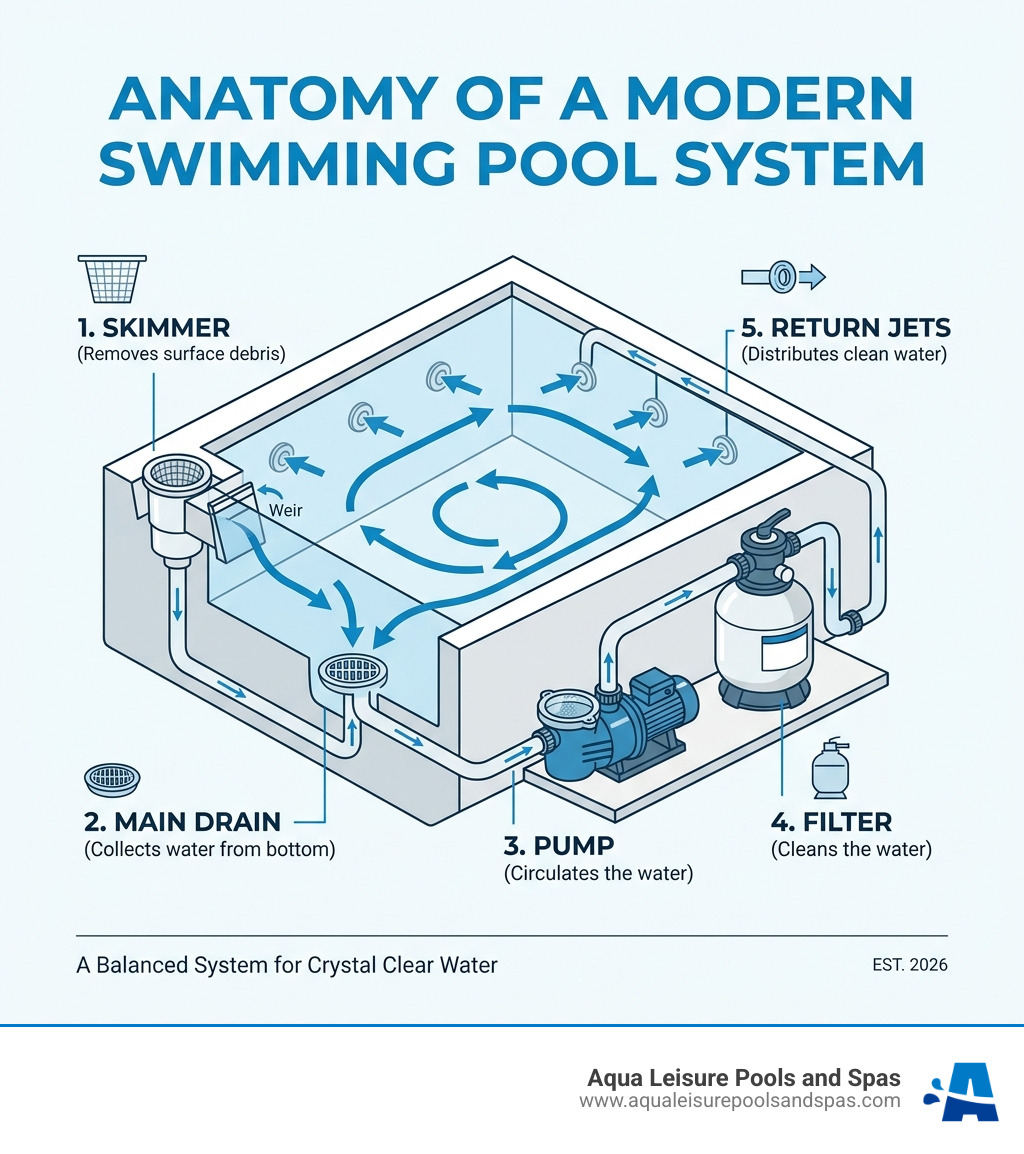
The Filtration System The heart of the pool is the pump and filter. The pump pulls water from the pool (usually through a skimmer), pushes it through a filter (sand, cartridge, or DE), and returns it to the pool. This mechanical cleaning removes debris and helps distribute chemicals. You can find a complete breakdown in this Swimming Pool Filtration Systems: A Guide.
Water Chemistry Chemical sanitation is the second pillar of maintenance.
- Chlorine/Bromine: These are the primary disinfectants used to kill germs.
- pH Balance: The pH level should stay between 7.2 and 7.8. If it’s too high, the chlorine becomes less effective; if it’s too low, the water can irritate eyes and corrode pool equipment.
- Algae Control: Regular “shocking” of the pool (adding a large dose of chlorine) helps kill off algae blooms before they turn the water green.
A Canadian study once estimated that swimmers can release up to 75 liters of urine into a large public pool—a sobering reminder of why sanitation is so important! For a comprehensive checklist, see Everything You Need to Know to Keep Your Pool Clean.
Choosing Your Dream Backyard Oasis
Creating a backyard retreat in Pennsylvania requires a partner who understands the local landscape and climate. Whether you are in Doylestown, Dickson City, Wilkes-Barre, or Bartonsville, the goal is the same: a beautiful, functional space that lasts for years.
Aqua Leisure Pools and Spas offers a “one-stop shop” experience for homeowners. From the initial design phase to the final installation and long-term maintenance, they help navigate the complexities of pool ownership.
If you are just starting your journey, “Pool School” is an excellent place to begin. It provides the foundational knowledge needed to understand how your pool works and how to keep it in top shape.
- For those looking for a permanent, high-end look, explore In Ground Pools.
- If you prefer a faster, more flexible installation, check out the latest Above Ground Pools.
- For those with limited space who still want the benefits of aquatic exercise, Swim Spas or traditional Spas offer a perfect alternative.
From the history of ancient Rome to the cutting-edge technology of a modern saltwater system, the swimming pool remains a symbol of relaxation and health. By choosing the right type, staying on top of maintenance, and prioritizing safety, you can turn your backyard into an oasis that provides joy for generations. Ready to dive in? Visit Pool School today to get started.
Posted by chris@enx2marketing.com in Pools