


Deep End Rope Safety 101: Everything You Need to Know
Why Pool Safety Ropes Matter for Every Pool Owner
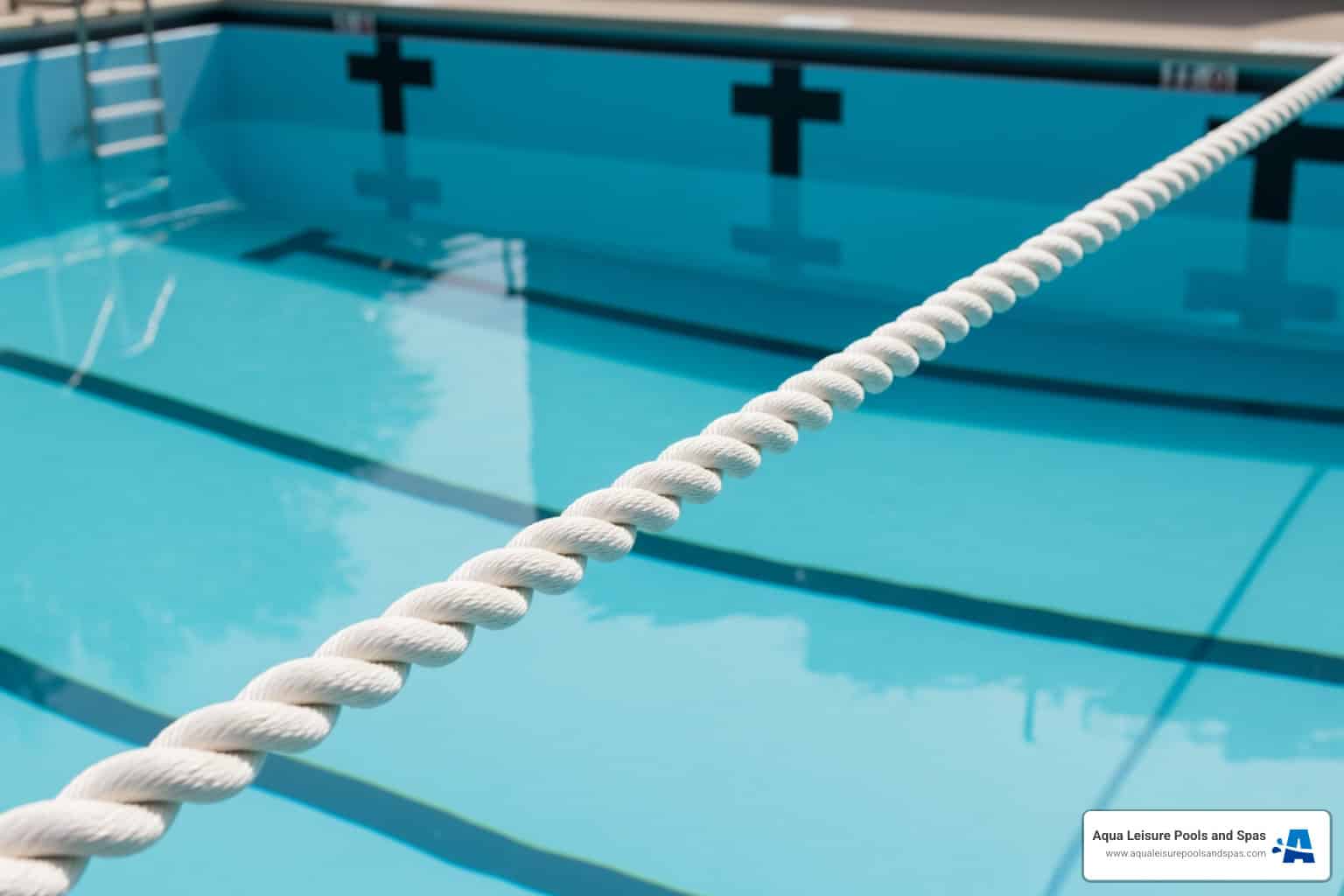
A deep end rope is a floating safety barrier installed across swimming pools to mark the transition from shallow to deep water, providing both a visual boundary and an emergency grab line for swimmers.
Key Functions of a Deep End Rope:
- Visual Boundary – Clearly marks where the pool depth changes from shallow to deep
- Emergency Grab Line – Provides a stable handhold for tired or struggling swimmers
- Safety for Non-Swimmers – Helps children and inexperienced swimmers stay in safe zones
- Peace of Mind – Gives parents and pool owners confidence during supervised swim sessions
If you’re a pool owner worried about keeping family members safe, especially children who are still learning to swim, you’re not alone. The transition from shallow to deep water can be hard to see underwater, and swimmers don’t always realize when they’ve drifted into areas beyond their skill level.
Pool safety ropes create a clear visual line between shallow and deep water, typically positioned 3-5 inches above the waterline at the exact point where the pool floor slopes down. The rope is strung with brightly colored floats spaced every 12-18 inches, making it impossible to miss even from across the yard.
But safety ropes do more than just mark boundaries. They provide a critical handhold for swimmers who need a moment to rest or catch their breath. For families with young children or guests who aren’t strong swimmers, that simple rope can be the difference between a fun pool day and a scary situation.
Essential Components and Installation of a Deep End Rope
Setting up a deep end rope doesn’t have to be a complicated engineering feat, but doing it right ensures both safety and longevity. To create a barrier that can actually support the weight of a swimmer in an emergency, you need more than just a piece of clothesline and some pool noodles.
The foundation of a reliable safety system lies in its hardware. Because pool environments are high-moisture and chemically treated, all metal components must be corrosion-resistant. Stainless steel or chrome-plated brass are the gold standards here. Using cheap hardware will lead to rust streaks on your pool walls or, worse, a structural failure when someone grabs the rope.
Key Materials Checklist:
- The Rope: Look for UV-resistant materials like braided polyethylene or nylon. While specialized ropes like the Go Deep Freediving Pro Rope (10.5mm) are excellent for depth training due to their low stretch (less than 2%), standard pool safety ropes are typically thicker and designed for high visibility.
- Wall Anchors: These are the recessed cups or hooks installed into the pool wall.
- Turnbuckles: These allow you to adjust the tension of the rope so it remains taut without sagging.
- Rope Clamps/Keepers: These secure the floats in place so they don’t all slide to one side of the pool.
- Floats: Usually made of durable plastic, these come in standard sizes like 3″x5″ or 5″x9″.
For those looking for professional-grade setups, the team at Aqua Leisure Pools and Spas offers a variety of Premium Pool Safety Rope Options that meet local safety standards in Pennsylvania.
Measuring and Positioning Your Deep End Rope
Before you head to the store or browse online, you need exact measurements. A common mistake is measuring the pool width and buying exactly that much rope. You must add 2-3 extra feet to your measured width to account for knots, threading through hardware, and adjustments.
The positioning of the deep end rope is critical. It should be placed exactly where the floor begins to slope toward the deep end. In terms of height, wall anchors should be placed 3-5 inches above the waterline. This ensures the rope floats on the surface but has enough tension to remain stable.
Float Spacing Comparison
| Feature | 3″x5″ Floats | 5″x9″ Floats |
|---|---|---|
| Best For | Smaller residential pools | Large inground or commercial pools |
| Visibility | Moderate | High |
| Standard Spacing | 12-18 inches | 12-18 inches |
| Function | Visual marker | Heavy-duty grab line |
Spacing your floats every 12-18 inches is the industry standard. This prevents large gaps where a swimmer could accidentally slip under or over the rope without noticing the transition. For more help on selection, check out our guide on Choosing the Right Rope for Your Pool.
Step-by-Step Installation with Wall Anchors
If your pool was built with safety in mind, it likely has pre-installed wall anchors. If not, you may need to install them into the concrete deck or pool wall.
- Mark Your Spot: Identify the transition point. Ensure both sides are perfectly aligned.
- Drill and Set: For concrete decks, drill the appropriate sized hole for your anchor. Always use a waterproof sealant to prevent water from seeping behind the pool liner or into the concrete.
- Prepare the Rope: Thread your floats onto the rope. Secure them at 12-18 inch intervals using rope keepers or simple overhand knots if the rope is thick enough.
- Attach Hardware: Secure one end of the rope to a wall hook. On the opposite end, attach a turnbuckle.
- Adjust Tension: Tighten the turnbuckle until the rope is taut. You want it to have just a little bit of “give”—if it’s as tight as a guitar string, it puts too much stress on the anchors. If it sags, it won’t provide a reliable handhold.
For a more detailed walkthrough, you can find more info about installing your pool safety rope on our dedicated installation page.
Alternative Mounting for Pools Without Pre-Installed Hooks
Not every pool comes ready for a safety rope. If you have a vinyl liner pool or an older concrete pool without hooks, you don’t necessarily have to start drilling into your walls. There are several clever alternatives:
- Deck-Mounted Eye Bolts: Instead of the pool wall, install eye bolts into the pool deck itself. This keeps the hardware out of the water but allows the rope to drape over the edge to the waterline.
- Deck Clamps: These are rubber-padded C-clamps that grip the edge of the pool coping. They are excellent because they require zero drilling and can be removed for parties or winterizing.
- Heavy Planters: If you need a temporary solution, you can secure the rope to heavy, weighted planters on either side of the pool. Just ensure they are heavy enough that a swimmer grabbing the rope won’t pull the planter into the water!
- Cup Hooks in Deck Posts: If you have a wooden deck surrounding your pool, large stainless steel cup hooks can be screwed into the posts to distribute weight effectively.
Regardless of the method, the goal is the same: a secure, visible line. You can explore more info about pool safety rope options to see which mounting style fits your backyard aesthetic.
Safety Standards, Maintenance, and Liability
In Pennsylvania, pool safety is more than just a good idea—it’s often a matter of regulation. While specific codes vary by municipality (from Doylestown to Scranton), many local building departments require a visual barrier between shallow and deep ends for residential pools to pass inspection.
Beyond local laws, your insurance provider likely has a vested interest in your deep end rope. Proper safety equipment can impact your liability coverage. If an accident occurs and the pool was not equipped with standard safety markers, it could complicate insurance claims.
Maximizing Swimmer Safety with a Deep End Rope
The primary beneficiaries of a deep end rope are children and non-swimmers. For a child who is just gaining confidence in the 3-foot section, the sudden drop to 8 feet can be terrifying. The rope acts as a “stop sign” they can feel and see.
In an emergency, the rope serves as a life-saving tool. If a swimmer becomes exhausted or suffers a cramp, having a buoyant line to grab onto can prevent a submerged struggle. This is why using high-quality floats and ensuring proper tension is so important.
For those interested in the technical side of marking depths, the Deep Rope Manual provides extensive data on how professional facilities manage depth transitions. Even for home use, following these professional standards provides an extra layer of protection.
Long-Term Maintenance and Inspection
A safety rope is not a “set it and forget it” feature. The harsh environment of a pool—UV rays, chlorine, and salt—will eventually take a toll on any material.
- Monthly Corrosion Checks: Inspect your stainless steel hooks and turnbuckles for signs of pitting or rust.
- Rope Integrity: Run your hand along the rope (carefully!) to check for fraying or “sun-rot.” If the rope feels crunchy or leaves a powdery residue on your hands, the UV rays have broken down the fibers and it needs replacement.
- Float Inspection: Ensure floats haven’t cracked. Water-logged floats will sink, rendering the rope useless as a visual marker.
- Chemical Balance: Believe it or not, poor water chemistry can shorten the life of your rope. High acidity can eat away at fibers. For tips on keeping your water in check, see more info about pool chemicals.
When winterizing your pool in Northeastern Pennsylvania, it is best to remove the rope, rinse it with fresh water to remove chemicals, and store it in a dry place. This simple step can double the lifespan of the equipment.
Professional Support for Your Backyard Oasis
Investing in a pool is a significant commitment. In Pennsylvania, the average inground pool installation can range from $40,000 to over $100,000 for custom concrete designs. Given that an inground pool can increase your home value by 5-7%, it makes sense to protect that investment with the best safety gear and professional advice.
At Aqua Leisure Pools and Spas, we’ve helped homeowners across Wilkes-Barre, Dickson City, and the Pocono region create safe, beautiful backyards. Whether you need help installing a deep end rope, choosing the right in-ground pool design, or navigating the financing process through partners like HFS Financial, we are here to help.
Don’t wait for a “close call” to think about pool safety. A deep end rope is a small investment that provides massive returns in peace of mind. Whether you are in Doylestown or Lake Wallenpaupack, ensuring your pool is clearly marked and safely equipped is the hallmark of a responsible pool owner.
Common Mistakes to Avoid:
- Installing too low: If the rope is at the waterline, it can be a tripping hazard for swimmers. Keep it 3-5 inches above.
- Using the wrong rope: Never use a “sinker” rope for a safety line. It must be buoyant.
- Ignoring the tension: A sagging rope is a useless rope. Use a turnbuckle to keep it crisp.
- Skipping the sealant: When drilling into your deck, always seal the anchors to prevent freeze-thaw damage in the PA winters.
If you’re ready to upgrade your pool’s safety or are just starting your journey toward owning a backyard oasis, visit one of our showrooms or contact us today. Your future self—and your swimmers—will thank you.
Posted by chris@enx2marketing.com in Swim Safety