


Don’t Let Scale Fail Your Spa Day
Why Scale Buildup Threatens Your Hot Tub Investment
A hot tub descaler is a chemical product that removes and prevents calcium and mineral deposits (limescale) from forming on your spa’s surfaces, jets, and internal plumbing. These deposits appear as white, crusty buildup that damages equipment and reduces water quality.
Quick Answer: What You Need to Know
- What it does: Dissolves existing calcium deposits and prevents new scale formation
- Why you need it: Protects pumps, heaters, and jets from damage; extends hot tub lifespan from 7-14 years
- How it works: Uses organic polymers or mild acids to break down mineral buildup
- When to use: Weekly for prevention, or during deep cleaning every 3-4 months
- Best for: Water with calcium hardness above 75 ppm
That relaxing soak in your backyard spa can quickly turn frustrating when white, chalky deposits start coating your jets and surfaces. Scale buildup isn’t just ugly—it’s actively damaging your investment.
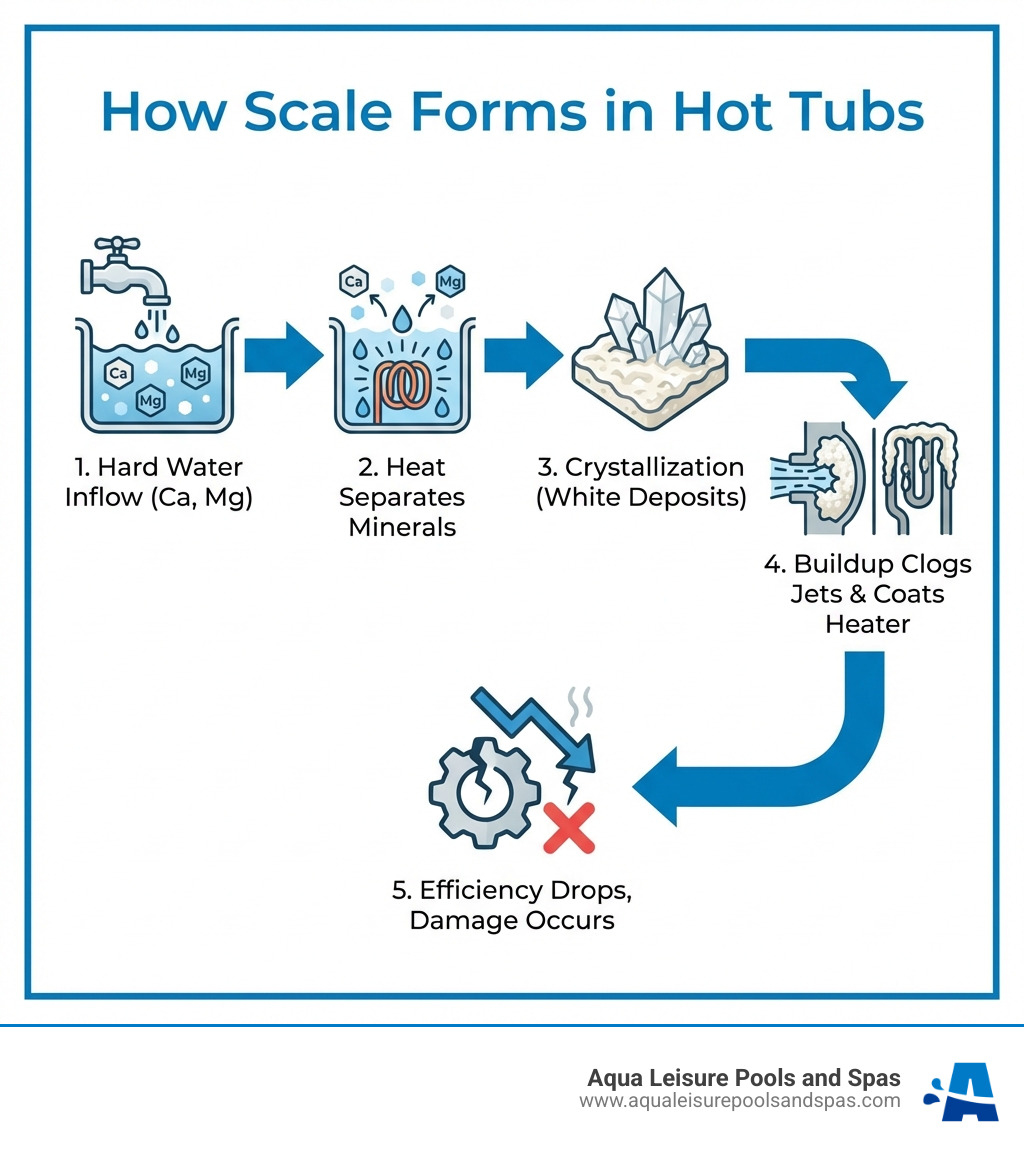
Hard water is the main culprit behind scale formation. When water contains high levels of calcium and magnesium, heat causes these minerals to precipitate out and stick to every surface they touch. Your hot tub’s warm temperatures accelerate this process dramatically.
The cost of ignoring scale goes beyond aesthetics. Calcium deposits clog jets, reduce heater efficiency, and force pumps to work harder. This extra strain shortens equipment life and drives up energy bills. Industry data shows proper maintenance can help hot tubs reach their full 14-year lifespan, while neglected units often fail much sooner.
The good news? Scale is completely preventable and reversible with the right approach. Whether you use commercial descalers with organic polymers or household solutions like white vinegar, regular treatment keeps your spa running smoothly and your water crystal clear.
Understanding and Using a Hot Tub Descaler
A hot tub descaler isn’t just a soap; it is a specialized chemical tool designed to combat the stubborn nature of calcium carbonate. When minerals are dissolved in your water, they are invisible. However, as soon as the water chemistry shifts—usually due to high pH or high temperatures—those minerals “precipitate” or fall out of suspension, turning into the hard, white crust we know as limescale.
Most high-quality commercial descalers utilize organic polymers. These polymers work through a process called sequestration or chelation. Essentially, they wrap around the mineral particles, preventing them from sticking together or bonding to your hot tub’s acrylic shell. If scale has already formed, these chemicals work to break the bond between the mineral and the surface, allowing the debris to be filtered away.
Using a hot tub descaler is particularly important in regions like Northeastern Pennsylvania, where well water or municipal sources may have high mineral content. If your calcium hardness level is above 75 ppm, you should consider a descaler a mandatory part of your chemical kit.
| Feature | Acidic Descalers | Organic Polymer Descalers | Natural Alternatives (Vinegar) |
|---|---|---|---|
| Speed | Very Fast | Moderate | Slow |
| Safety | Requires gloves/care | Generally safe | Very safe |
| Best Use | Heavy buildup on surfaces | Weekly prevention/maintenance | Light film/DIY cleaning |
| Compatibility | Check sanitizer type | Works with all sanitizers | Safe for most surfaces |
Before you start adding chemicals, it’s helpful to review essential tips for initial spa chemical treatment to ensure your water is balanced from day one.
How a Hot Tub Descaler Protects Your Equipment
While the white flakes on your seats are annoying, the real damage happens where you can’t see it. The internal components of your spa—the heater, the pump, and the plumbing lines—are the most vulnerable to scale.
- Heater Efficiency: The heating element is often the hottest point in your spa. Because heat triggers mineral precipitation, calcium often coats the heater first. This creates an insulating layer, meaning the heater has to run longer and hotter to reach your desired temperature. This not only wastes electricity but can eventually cause the element to burn out.
- Pump Longevity: Scale can build up on the pump’s impeller and seals. This creates friction and resistance, forcing the motor to work harder. Over time, this leads to premature pump failure. Given that the industry average lifespan of a hot tub is 7-14 years, keeping your pump healthy is key to hitting that upper limit.
- Jet Performance: We all love the massage action of spa jets. However, calcium deposits can clog the small orifices and moving parts of adjustable jets, causing them to seize up or lose pressure.
- Corrosion Prevention: Interestingly, scale and corrosion are two sides of the same coin. While too much calcium causes scale, too little can make water “hungry” and corrosive. A hot tub descaler allows you to maintain slightly higher calcium levels for equipment protection without the risk of those minerals “falling out” and creating a mess.
To dive deeper into the mechanics of mineral removal, you can read this guide on how to decalcify a hot tub or learn more about spa water chemistry to understand the delicate balance required.
Step-by-Step Guide to Applying Hot Tub Descaler
Using a hot tub descaler effectively depends on whether you are performing routine maintenance or tackling a “scale-pocalypse.”
For Weekly Maintenance:
- Step 1: Test your water. Ensure your pH is between 7.2 and 7.8. If the pH is too high, the descaler will have to work twice as hard.
- Step 2: Add the maintenance dose. Most products require about 1-2 ounces per 500 gallons weekly.
- Step 3: Let the water circulate. If you have a dedicated circulation pump, let it run. Otherwise, turn on your low-speed jets for at least 15 minutes to ensure the chemical is distributed through the plumbing.
For Heavy Scale Removal:
- Step 1: If the scale is severe, you may need to perform a “line flush” using a product like Ahh-Some or a concentrated descaler.
- Step 2: Apply the product directly to visible scale on the shell using a non-abrasive sponge.
- Step 3: Scrub gently. For stubborn spots, a paste of baking soda and water can provide a mild abrasive action that won’t scratch the acrylic.
- Step 4: Rinse your filters. As the hot tub descaler breaks down the minerals, they will end up in your filter. Check out our master spa filter cleaning guide to make sure you aren’t just recirculating the gunk you just removed.
If you find that your old spa is simply too far gone due to years of scale neglect, it might be time to browse our full range of high-quality spas to start fresh with a modern, more efficient model.
Preventing Future Scale and Maintaining Your Spa
Prevention is always cheaper and easier than a cure. Once you have cleared the existing limescale, your goal is to keep the water “balanced” so that minerals stay dissolved in the water rather than coating your heater.
Evaporation is a silent contributor to scale. As water evaporates from your hot tub, it leaves the minerals behind. This means the concentration of calcium in your remaining water actually increases over time. This is why “topping off” your hot tub with a garden hose can lead to a slow creep in calcium hardness.
To stay ahead of the curve, follow these preventive steps:
- Use a Water Softener: If you live in an area with exceptionally hard water, consider using a pre-filter on your hose when filling the tub.
- Wipe the Waterline: After each use, use a soft cloth to wipe the waterline. This prevents the “bathtub ring” of minerals and oils from hardening.
- Monitor Chemistry Weekly: Small adjustments once a week prevent the massive chemical swings that trigger scale formation.
For a comprehensive look at long-term maintenance, see our guide on how to care for your hot tub.
Ideal Water Chemistry Levels to Stop Scale
To keep your water in the “sweet spot” where it is neither corrosive nor scaling, you need to hit specific targets. These ranges are the industry standard for protecting your equipment and ensuring bather comfort.
- Calcium Hardness: The ideal range is 150-250 ppm. If it drops below 150, the water can become corrosive to metal parts. If it rises above 250 (and certainly above 400), you are in the “danger zone” for scale formation.
- pH Level: Keep this between 7.2 and 7.8. A high pH (alkaline water) is the #1 trigger for calcium to drop out of the water and form scale.
- Total Alkalinity: Aim for 80-120 ppm. Alkalinity acts as a “buffer” for your pH, preventing it from bouncing up and down.
- Saturation Index: Professional testers often look at the Langelier Saturation Index (LSI). If your LSI is above +0.3, scale is likely to form.
Regular testing is the only way to know where you stand. If you have questions about your specific readings, our spa frequently asked questions page covers many common chemistry hurdles.
Natural Alternatives and Household Items
If you prefer a more “DIY” approach or want to avoid heavy chemicals for surface cleaning, several household items can act as a mild hot tub descaler.
White Vinegar (Acetic Acid) Vinegar is a fantastic, mild acid that dissolves calcium deposits. It is safe for pets, people, and most hot tub surfaces.
- Usage: Mix a 50/50 solution of white vinegar and distilled water in a spray bottle. Spray it on the scale, let it sit for 15-20 minutes (don’t let it dry!), and then scrub with a non-abrasive sponge.
- Pro Tip: For a deep plumbing clean, some owners add a gallon of vinegar to the water before draining the tub and let the jets run for 30 minutes.
Baking Soda Paste While baking soda is usually used to increase alkalinity, as a paste, it acts as a very fine abrasive. It is perfect for scrubbing away the “white film” on the shell without scratching the expensive acrylic finish.
Citric Acid Often found in the canning aisle of the grocery store, citric acid is a stronger descaler than vinegar but still relatively “natural.” It is excellent for soaking removable parts like jet nozzles or filter housings.
For those who want the convenience of professional-grade formulas, you can explore various Hot Tub Descaler Products to find one that fits your maintenance routine.
Maintenance Tips for Saltwater Systems
Saltwater hot tubs are increasingly popular because the water feels “silky,” but they have unique scaling challenges. The process of electrolysis—which the salt cell uses to create chlorine—naturally drives the pH of the water up. As we learned earlier, high pH is the “on switch” for scale.
- Quarterly Salt Cell Inspections: Calcium likes to build up on the plates inside your salt cell. If you see white, flaky deposits, the cell won’t be able to produce chlorine effectively. Clean the cell every 3 months with a mild acid wash.
- Calcium Hardness in Salt Systems: For saltwater pools and spas, the target calcium hardness is often slightly higher (200-400 ppm) to protect the cell, but this makes pH management even more critical.
- Sacrificial Anodes: Consider using a zinc anode to protect metal components from the increased risk of galvanic corrosion in saltwater environments.
Properly managing your saltwater system also helps prevent mold and mildew in your swim spa, as a clean system is a healthy system.
Long-Term Care with Aqua Leisure Pools and Spas
Maintaining a hot tub shouldn’t feel like a chemistry degree requirement. While using a hot tub descaler and keeping your water balanced is a great start, sometimes you need a professional touch to ensure your “backyard oasis” stays that way.
At Aqua Leisure Pools and Spas, we specialize in helping Pennsylvania homeowners keep their equipment in peak condition. Whether you are in Doylestown, Dickson City, Wilkes-Barre, or Bartonsville, our team is ready to assist with seasonal service, water testing, and professional equipment inspections.
Proper maintenance doesn’t just save you from the headache of scrubbing scale; it protects the 7-14 year lifespan of your investment. From the initial chemical treatment to the deep cleans required every 3-4 months, we are your one-stop shop for everything spa-related in Northeastern Pennsylvania.
Don’t let mineral buildup ruin your next soak. If you’re struggling with stubborn scale or just want to make sure your water is as healthy as possible, visit our pool and spa showrooms today. Let’s make sure your only worry is which jet setting to use!
Posted by Aqua Leisure Pools & Spas in Pools