


How to Handle Heavy Rain & Pool Overflow in Northeastern PA
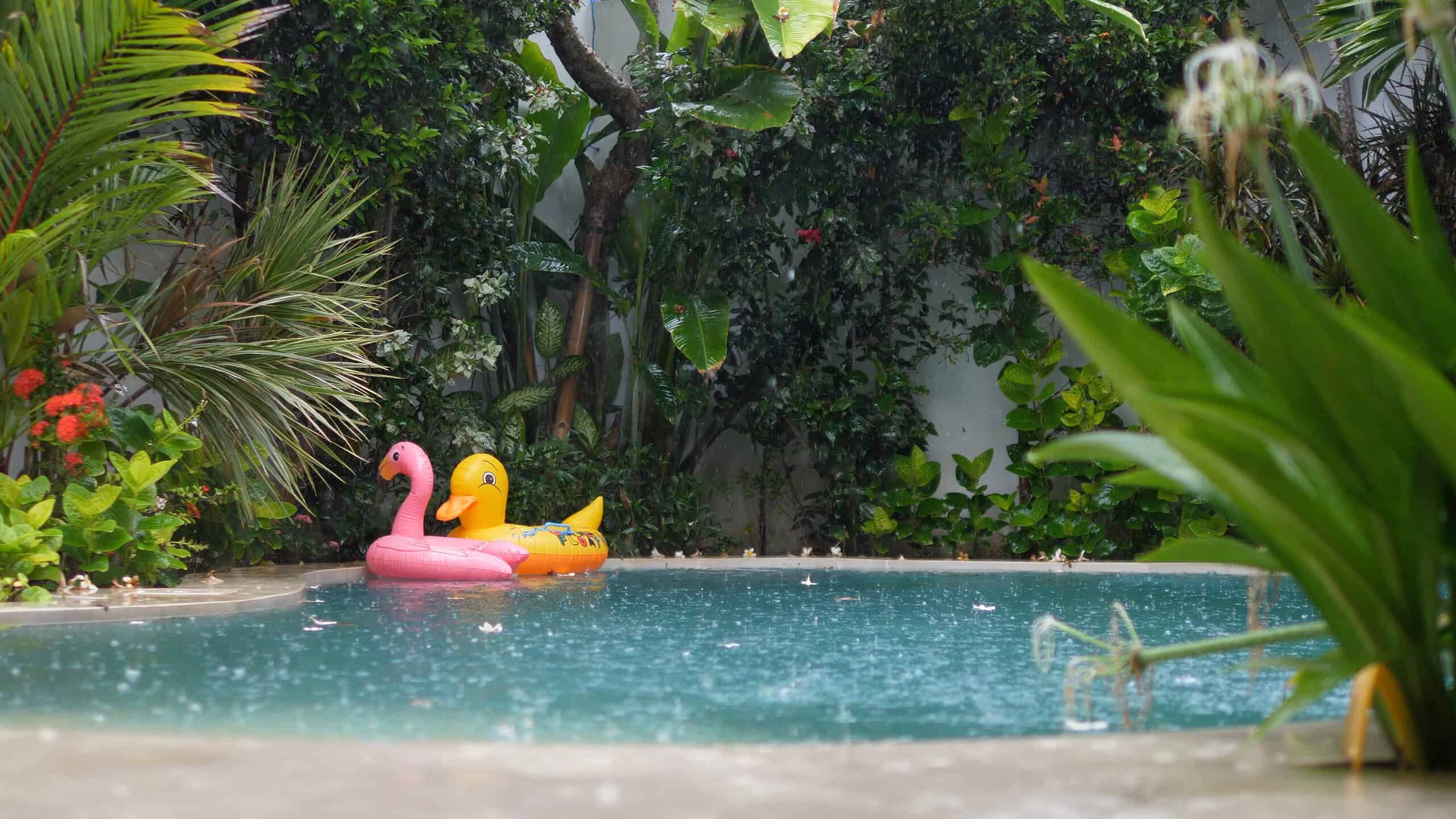
Northeastern Pennsylvania homeowners know that summer storms can bring both relief from the heat and headaches for pool owners. When heavy rainfall strikes the region, pool overflow becomes a real concern that can lead to chemical imbalances, equipment damage, and messy yard flooding.
The key to protecting your investment lies in preparation and knowing how to respond when storms hit. By taking the right steps before, during, and after heavy rain, you can keep your pool safe and ready for swimming once the skies clear.
Preparing Your Pool Before the Storm
Taking action before heavy rain arrives is the most effective way to protect your pool and property. Here’s what you should do when storms are forecast for Northeastern Pennsylvania.
Lower the Water Level
Drop your pool’s water level a few inches below the normal mid-skimmer level to create room for incoming rainwater. For sand or Diatomaceous Earth (DE) filters, use the “waste” or “backwash” setting to drain water away from your pool area. If you have a cartridge filter system, you’ll need a submersible pump or siphon since these filters don’t have waste settings.
Secure Pool Equipment and Outdoor Items
Move patio furniture, pool toys, and any loose objects away from the pool area. Strong winds can blow these items into your pool, potentially damaging the liner or contaminating the water with debris.
Boost Chemical Levels
Raise your pool’s chlorine and algaecide levels slightly before the storm hits. Rainwater dilutes existing chemicals and introduces contaminants that can trigger algae growth, so this extra protection helps maintain water quality.
Consider Your Pool Cover
A high-quality, securely fastened pool cover can prevent most excess rainwater and debris from entering your pool. However, if very strong winds are expected in your area, evaluate the forecast carefully—severe weather can damage pool covers.
Managing Pool Overflow During Heavy Rainfall
While preparation is ideal, you can still take action if overflow has already begun during the storm.
- Avoid draining in-ground pools. For in-ground pools, resist the urge to drain significant amounts of water during or immediately after heavy rain. High groundwater levels create hydrostatic pressure that can severely damage your pool or even cause it to “pop” out of the ground if it is quickly changed.
- Keep the pump running safely. If your electrical equipment is above potential flood levels, run your pump to maintain water circulation. This helps with chemical balance and debris filtration. However, if flooding threatens your equipment, turn off the power at the breaker immediately.
- Use submersible pumps carefully. You can use a submersible pump to manage water levels, but only when the surrounding ground isn’t completely saturated. Always direct drained water away from your house and your neighbors’ properties.
Addressing Pool Overflow After the Storm
Once the weather clears, follow these steps to restore your pool to swimming condition.
Remove Debris and Lower Water Levels
Start by using a long-handled skimmer to remove leaves, sticks, and other debris from both the surface and bottom of your pool. Empty skimmer and pump baskets frequently during this process.
If you couldn’t lower the water level beforehand, do so now using your filter’s waste or backwash function, or a submersible pump. Return the water to its normal mid-skimmer height.
Test and Balance Water Chemistry
Heavy rainfall is acidic, which typically lowers your pool’s pH levels. Use a reliable pool test kit to check pH, alkalinity, and other chemical levels. Follow the kit’s instructions to restore proper balance, starting with pH and alkalinity adjustments.
Shock and Filter
Perform a shock treatment to eliminate bacteria or algae that may have developed due to rainwater contaminants. After adjusting chemicals, backwash or clean your filter system, then vacuum the pool to remove fine particles that have settled on the floor.
Inspect Equipment for Damage
Check your pump, filter, and other equipment for signs of damage. If any equipment was submerged during flooding, allow it to dry completely for 36-72 hours before attempting to restart it.
Protecting Your Pool Investment
Isn’t it time you finally had the inground swimming pool of your dreams? Enjoy summer and “soak in the memories” by relaxing, having fun, entertaining, and spending time with family and friends in your very own swimming pool.
Come to Aqua Leisure Pools and Spas, located in Wilkes-Barre, Dickson City / Scranton, and Tannersville, to see our inground fiberglass pools for sale. We can help you find the swimming pool that’s perfect for you and your family! With over 60 years of combined experience, our team provides in-ground swimming pool services to all of Northeastern Pennsylvania, Allentown, PA, Doylestown, PA, and the surrounding areas.
We can show you all the different pool models, additional accessories, and cleaning materials you need. Check out our locations, or contact us today for more information.
Posted by Aqua Leisure Pools & Spas in Pools