


Solar Pool Covers That Won’t Quit: A Guide to Maximum Durability
Why a Durable Solar Pool Cover Is One of the Smartest Pool Investments You Can Make

The most durable solar pool covers are made from UV-stabilized polyethylene, range from 12 to 16 mil in thickness, and can last anywhere from 3 to 10 years with proper care.
Quick answer — best choices by durability tier:
| Thickness | Best For | Expected Lifespan |
|---|---|---|
| 8 mil | Mild climates, light use | 1-2 seasons |
| 12 mil | Most homeowners, balanced use | 3-5 years |
| 16 mil | Cooler climates, heavy-duty use | 5-10 years |
You bought a pool to enjoy it — not to spend every weekend battling heat loss, skyrocketing water bills, and chemical top-ups that seem to disappear overnight.
A durable solar pool cover solves all three problems at once.
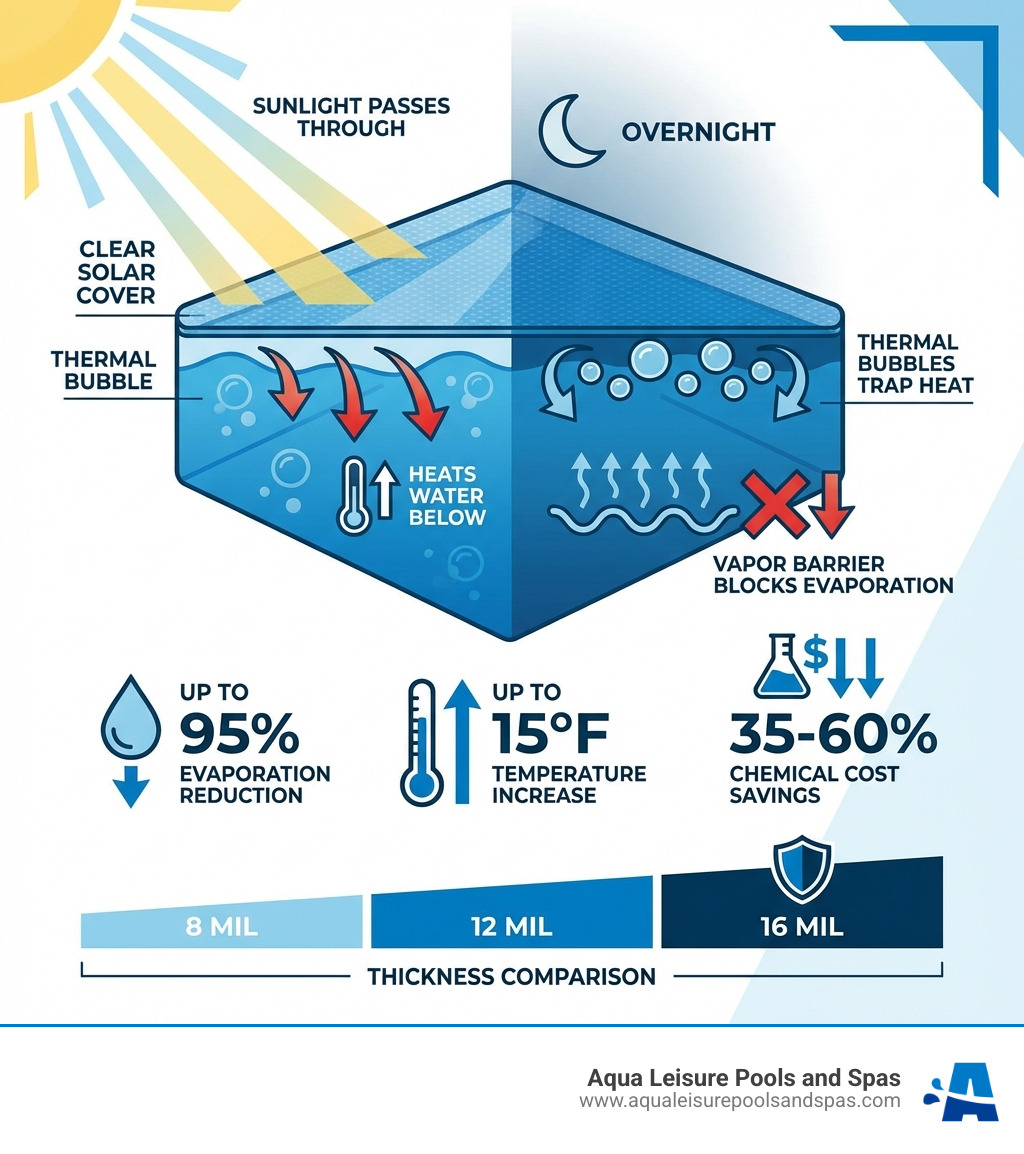
Solar covers can raise your pool’s water temperature by up to 15°F, cut water evaporation by up to 95%, and reduce chemical costs by 35–60%. That’s not a minor perk — that’s real, measurable savings every single season.
But here’s the catch: not all solar covers are built to last. A flimsy 8 mil cover left in the sun without proper care might not survive a full season. A well-chosen 16 mil cover, stored and maintained correctly, can protect your pool for close to a decade.
This guide cuts through the noise. We’ll show you exactly what makes a solar cover genuinely durable — the materials, the thickness, the maintenance habits — so you can stop replacing covers every year and start enjoying your backyard the way it was meant to be enjoyed.
Choosing a Durable Solar Pool Cover: Materials and Thickness
When shopping for a durable solar pool cover, the first thing you’ll notice is the “mil” rating. For those of us who don’t spend our days measuring industrial plastics, a “mil” is simply one-thousandth of an inch. While that sounds tiny, in pool covers, a few mils make the difference between a cover that lasts one summer and one that survives five or more.
In Northeastern Pennsylvania, where our swimming seasons are precious and the nights can get chilly even in July, the thickness of your cover directly impacts how much heat stays in your pool.
| Feature | 8 Mil | 12 Mil | 16 Mil |
|---|---|---|---|
| Durability | Low | Medium-High | Maximum |
| Heat Retention | Fair | Good | Excellent |
| Ease of Handling | Very Easy | Moderate | Requires Effort/Reel |
| Weight | Lightweight | Balanced | Heavy-Duty |
Most durable solar pool covers are constructed using two layers of high-density polyethylene. The bottom layer is shaped into thousands of tiny air bubbles, while the top layer is a flat vapor barrier. These bubbles act like little magnifying glasses during the day, focusing solar energy into the water, and like a thermal blanket at night, preventing that heat from escaping.
The material density is key. High-quality covers use UV-stabilized resins, which are essential because the sun’s rays are actually the number one enemy of plastic. Without UV protection, the plastic becomes brittle, and those helpful bubbles will start to flake off and float into your skimmer.
According to scientific research on evaporation reduction, a solid vapor barrier can conserve a massive amount of water. In fact, solar covers can reduce the need for “make-up water” (the water you add to refill the pool) by 30% to 50%.
Why 16 Mil is the Standard for a Durable Solar Pool Cover
If you live in Allentown, Scranton, or Wilkes-Barre, you know that our spring and autumn air can be quite crisp. This is where the 16 mil cover shines. It is widely considered the “heavy-duty” standard for a durable solar pool cover.
While an 8 mil cover is roughly as thin as a standard credit card, a 16 mil cover feels more like a piece of sturdy poster board. This added thickness provides several “pro” level benefits:
- Superior Insulation: The thicker the plastic and the air pocket, the harder it is for heat to transfer from the warm water to the cold air.
- Tear Resistance: Thicker covers are much harder to rip or puncture during the daily “on and off” routine.
- Multi-Season Longevity: Because there is more physical material, it takes much longer for the sun and chemicals to break the cover down to the point of failure.
Learning how to reduce evaporation and save water is a top priority for eco-conscious pool owners in Pennsylvania. By opting for a 16 mil cover, you aren’t just buying a thicker piece of plastic; you’re investing in a superior insulation layer that keeps your pool swimmable for weeks longer than a thinner alternative would.
Material Science: Polyethylene vs. Vinyl for Longevity
Not all plastics are created equal. The most durable solar pool covers typically utilize low-density polyethylene made from Dow prime resins. These resins are chosen for their flexibility and their ability to withstand the harsh environment of a swimming pool—which is basically a giant bowl of sun-baked chemicals.
When looking at the different types of pool covers, you might see mentions of vinyl or polypropylene. While vinyl is incredibly strong and often used for safety covers, most “bubble” style solar blankets rely on polyethylene because it is lighter and floats better.
The secret to longevity in a polyethylene cover is the “scrim count” and the quality of the heat-sealed seams. High-end covers are manufactured with automated extrusion technology that eliminates delamination—that annoying process where the top and bottom layers of the cover start to peel apart. If the seams are heat-sealed properly (often with a 1-inch wide solid joint), the cover remains a single, sturdy unit for years.
Maintenance Strategies to Extend Your Cover’s Lifespan
Even the most durable solar pool cover won’t last long if it’s treated like an old tarp. Maintenance is the difference between a 3-year lifespan and a 10-year lifespan.
The biggest factor in cover degradation isn’t actually the sun—it’s your pool’s chemistry. If your water is out of balance, it will literally eat the cover from the bottom up.
- pH Levels: Keep your pH between 7.2 and 7.8. Anything lower is acidic enough to make the plastic brittle.
- Chlorine Management: High chlorine levels are the leading cause of “bubble rot.”
- Cleaning Protocols: Periodically, you should lay the cover on a soft surface (like the grass) and rinse it with a garden hose. If it’s particularly dirty, a soft brush and mild soap can help. Just make sure to rinse it thoroughly before putting it back on the water.
Scientific research on UV and chlorine degradation shows that the combination of high UV exposure and chemical imbalance creates a “perfect storm” for plastic failure. By keeping your water balanced, you protect the structural integrity of the polymer chains in your cover.
Protecting Your Durable Solar Pool Cover from Chemical Damage
We all have to “shock” the pool occasionally to keep the water crystal clear. However, this is the most dangerous time for your durable solar pool cover.
When you add a large dose of chlorine or other oxidizing chemicals, they “gas off” as they work. If the cover is on the pool, those concentrated chemicals get trapped directly against the plastic bubbles. This causes the bubbles to become thin, turn white, and eventually burst.
Best Practice: Always leave the cover off for at least 24 to 48 hours after a shock treatment, or until the chlorine level drops below 2.5 ppm.
For those with inground pool solar covers, this step is vital. Saltwater systems also require attention; while they are generally gentler on skin, the constant chlorine generation means you must stay vigilant about your chemical levels to ensure your cover doesn’t suffer premature oxidation.
Proper Storage and Handling with Reels
If you want to maximize the life of your durable solar pool cover, stop folding it like a giant, wet bedsheet. Folding creates creases, and creases eventually become cracks.
A solar reel is a game-changer for durability. It allows the cover to be rolled up evenly, which reduces stress on the material. However, the work doesn’t stop once the cover is on the reel.
When the cover is rolled up, the layers are still exposed to the sun. Because the heat can’t dissipate into the water, the temperature inside the roll can skyrocket, leading to a “magnified” heat effect that can melt the bubbles together. This is why a UV-protective “solar reel cover” (usually a white or silver tarp) is essential.
Understanding how can your pool be more energy efficient often starts with these small handling habits. During the off-season, store your cleaned and dried cover in a cool, shaded area like a garage or shed. Never leave it outside during a Pennsylvania winter unless you want the freezing temperatures to crack the plastic.
Sizing and Trimming for a Perfect Fit
A durable solar pool cover works best when it fits like a glove. If there are gaps at the edges, heat escapes and debris gets in.
When you receive your cover, it will likely be a large rectangle, even if your pool is a round above-ground or a custom-shaped inground.
- Let it Settle: Lay the cover on the pool for a day or two before you touch the scissors. This allows the packing wrinkles to flatten out.
- Trim with Care: Use sharp scissors or a razor knife. Many experts recommend using the edge of your coping stone as a guide.
- The “Clover” Technique: For custom shapes, trim the cover so it sits flat on the water but turns up slightly at the edges. This creates a seal that helps keep leaves and bugs from falling into the water when you remove the cover.
Following water conservation tips for pool owners is easier when the cover fits perfectly. An edge-to-edge fit ensures that 95% of evaporation is blocked, keeping your water level—and your water bill—exactly where they should be.
Conclusion: Investing in Long-Term Pool Efficiency
Choosing a durable solar pool cover is more than just a maintenance decision; it’s a commitment to a better, more efficient swimming experience. By selecting a high-quality 12 or 16 mil cover and following the maintenance strategies outlined in this guide, you can enjoy a warmer pool and significant savings for many seasons to come.
At Aqua Leisure Pools and Spas, we understand that your pool is the heart of your backyard. Whether you are in Doylestown, Dickson City, Wilkes-Barre, or Bartonsville, we are here to help you find the right equipment to create your dream backyard oasis. From professional installation to expert advice on chemical balance, we are your one-stop shop for all things pool and spa.
Don’t let another season go by with a cold pool and high energy bills. Investing in a heavy-duty solar cover today means more time swimming and less time worrying about maintenance tomorrow.
Ready to see the difference a quality cover can make? Visit our pool showrooms in Northeastern Pennsylvania to browse our selection of durable covers and reel systems. Our team is ready to help you extend your swimming season and maximize your pool’s efficiency!
Posted by chris@enx2marketing.com in Pools