


Stop Playing Tag with Algae with These Sand Filter and Saltwater Combos

Why a Sand Filter and Saltwater System Combo Changes Everything
A sand filter and saltwater system combo is an all-in-one pool maintenance solution that combines mechanical filtration with automated chlorine generation. Instead of buying separate components, you get a single unit that filters debris and sanitizes your water using dissolved salt.
Quick Answer: What You Need to Know
- What it does: Filters particles down to 20-40 microns using silica sand while generating chlorine from salt through electrolysis
- Best for: Above-ground pools ranging from 2,600 to 15,000 gallons
- Key benefit: Eliminates the need to buy, store, or handle harsh chlorine chemicals
- Maintenance: Backwash when pressure gauge hits yellow zone (typically every few weeks), add salt once per season
- Cost advantage: Sand lasts 5 years before replacement versus frequent cartridge purchases
Ever look at your pool on a perfect summer day and see a cloudy mess? You’ve skimmed, balanced chemicals, and still can’t get that resort-quality sparkle. The problem isn’t you—it’s your filtration system fighting an uphill battle.
Traditional chlorine requires constant monitoring, weekly store trips, and careful handling of harsh chemicals. Cartridge filters clog quickly and need cleaning every few days. It’s exhausting.
Sand filter and saltwater combos solve both problems at once. The sand traps suspended particles while the saltwater system automatically produces chlorine at approximately 3,000 ppm salinity—similar to human tears. You get soft, clean water without the chemical smell, red eyes, or faded swimsuits.
According to user reviews, 324 customers specifically mention the system “works great,” with 143 reporting crystal clear water. One pool owner saw their green pool transform in just 24 hours after installation.
This guide walks you through everything you need to choose, install, and maintain the right combo system for your backyard oasis.
The Ultimate Guide to the Sand Filter and Saltwater System Combo
When you choose a sand filter and saltwater system combo, you are essentially hiring a full-time pool technician that never takes a day off. This integrated unit acts as both the “heart” and the “kidneys” of your pool. It pumps the water to keep it from becoming stagnant and scrubs it clean of both physical debris and microscopic bacteria.
For homeowners in Northeastern Pennsylvania, from the bustling neighborhoods of Scranton and Wilkes-Barre to the scenic retreats of Lake Wallenpaupack, maintaining a pool can be a challenge due to seasonal shifts and local pollen. A combo system simplifies this by utilizing saltwater filtration technology.
The filtration side uses #20 silica sand or glass media to trap particles as small as 20-40 microns. To put that in perspective, a human hair is about 70 microns wide. While the sand is busy catching dirt, the saltwater side is busy creating natural chlorine. Many of these systems also feature Hydro Aeration Technology, which improves water clarity and increases negative ions at the water surface, creating that fresh, “resort-style” feel every time you jump in.
How a Sand Filter and Saltwater System Combo Works
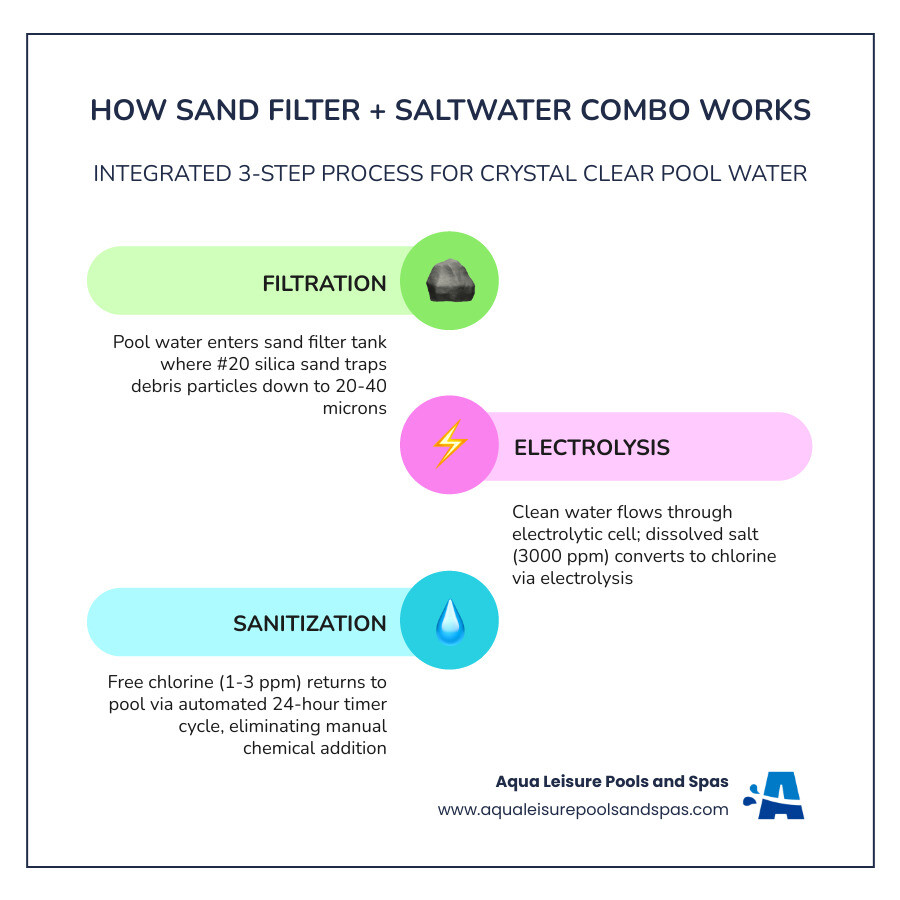
The magic of this system lies in two distinct stages: mechanical filtration and electrocatalytic oxidation.
- Mechanical Filtration: The pump draws water into a corrosion-resistant tank filled with silica sand. As water passes through the sand, suspended particles are snagged by the jagged edges of the grains. If you want even better performance, many experts recommend using glass media. Glass media can filter down to 2-3 microns, which is comparable to the high-end performance of D.E. (diatomaceous earth) filters, but without the messy cleanup.
- Electrolysis Process: Once the water is physically clean, it passes through an electrolytic cell. This cell contains titanium plates that use a low-voltage electrical current to split the dissolved salt (sodium chloride) in the water. This process creates sodium hypochlorite—a pure form of chlorine. This chlorine kills bacteria like Escherichia coli and Pseudomonas aeruginosa, ensuring you are following the CDC’s guidelines for healthy swimming.
Once the chlorine has done its job of sanitizing the pool, it turns back into salt, and the cycle repeats. Because the chlorine is generated on-site, you don’t get the “chloramine” buildup that causes red eyes and that pungent chemical smell.
Key Specifications and Pool Size Compatibility
Choosing the right sand filter and saltwater system combo depends largely on the volume of your pool. You want a system that can achieve at least one full water turnover in 8 to 10 hours. If the pump is too small, the water stays stagnant; if it’s too large, you’re wasting energy.
| Feature | 1,500 GPH System | 2,150 GPH System |
|---|---|---|
| Ideal Pool Size | 2,600 – 8,500 Gallons | 4,800 – 15,000 Gallons |
| Motor Power | 0.3 HP | 0.75 HP |
| Chlorine Output | 7 g/hr | 11 g/hr |
| Sand Capacity | 77 lbs | 120 lbs |
| Glass Media Capacity | 55 lbs | 85 lbs |
| Tank Diameter | 14 inches | 16 inches |
Matching your system to your pool volume ensures optimal pool filtration and sanitation. For example, a 24′ x 12′ rectangular pool typically requires the 2,150 GPH model to ensure the water stays crystal clear even during a heatwave in Allentown or Tannersville.
Installation and Maintenance of Your Sand Filter and Saltwater System Combo
Setting up your combo system is a straightforward DIY project, provided you follow the safety rules. Most units come with a 25-foot power cord and a built-in GFCI (Ground Fault Circuit Interrupter) for safety.
The Setup Process:
- Placement: Position the pump on a solid, level base at least 2 feet away from the pool wall to prevent children from using it as a step into the pool.
- Sand Loading: Use #20 silica sand. Ensure you use the sand shield to prevent sand from entering the center pipe during the filling process.
- Adding Salt: You need to reach a salinity level of approximately 3,000 ppm. For most pools, this means adding several bags of 99.4% pure non-iodized salt. Let the pump run for 24 hours to fully dissolve the salt before turning on the saltwater chlorinator.
Regular Maintenance:
- Backwashing: Keep an eye on the pressure gauge. When the needle moves into the yellow zone (usually 8-10 PSI above your starting pressure), it’s time to backwash. This reverses the water flow to flush out trapped dirt.
- The Digital Timer: Most systems feature a 24-hour automatic timer. Set it to run during the day when the sun is strongest to combat UV-related chlorine loss.
- Winterization: In Pennsylvania, we have to deal with freezing temperatures. Before the first frost in Dickson City or Wilkes-Barre, drain all water from the pump and tank, lubricate the O-rings with petroleum jelly, and store the unit in a dry place.
With the Department of Energy’s conservation standards in mind, running your system efficiently not only keeps the water clean but also keeps your electric bill manageable.
Preventing Corrosion and Troubleshooting Common Issues
One common concern with saltwater systems is the potential for corrosion on metal pool frames or ladders. Salt is naturally corrosive, but with proper care, you can protect your investment.
Corrosion Prevention:
- Zinc Anodes: Installing a sacrificial zinc anode is a game-changer. The salt will “attack” the zinc instead of your pool’s metal frame.
- Rinsing: Occasionally spray down the metal parts of your pool frame with fresh water to remove salt residue.
- pH Balance: Saltwater systems naturally cause pH to rise. Keep your pH between 7.2 and 7.6 to prevent calcium scaling on the electrolytic cell. If the cell does get scaly, a mild acid wash will clean it right up.
Troubleshooting Error Codes:
- Code 91 (Low Salt): This is the most common alarm. It usually means you need to add more salt, but it can also be triggered by cold water (below 65°F) or a dirty electrolytic cell.
- Low Flow Alarm: This usually means your pre-filter basket is full of leaves or your sand needs backwashing.
If you are looking for alternatives to traditional chlorine, understanding these small maintenance quirks makes the transition much smoother.
Choosing the Best Filtration for Your Backyard Oasis
Investing in a sand filter and saltwater system combo is about more than just equipment; it’s about the quality of your leisure time. In areas like Doylestown and Bartonsville, where summer days are precious, you don’t want to spend your Saturday morning at a chemical testing station.
Combo vs. Separate Systems: Which Should You Buy?
This is a frequent debate in pool forums. Here is the breakdown:
The Combo Unit Advantage:
- Simplicity: One plug, one timer, and fewer hoses. It’s a “set it and forget it” solution.
- Space-Saving: The integrated footprint is much smaller than having a separate pump, filter tank, and saltwater generator spread across your equipment pad.
- Cost: Generally, buying the combo unit is significantly more affordable than purchasing the high-quality components separately.
The Separate System Argument:
- Modularity: If the saltwater generator fails, you can still run the filter. In a combo unit, if the main circuit board goes, the whole system might be down.
- Customization: You can pair a massive sand filter with a smaller chlorinator if you have unique pool needs.
However, for the average above-ground pool owner, the combo unit provides an unbeatable balance of saltwater pool benefits and ease of use. User reliability ratings for integrated systems have climbed significantly, with modern models featuring better weatherproofing and more robust electronics.
Long-Term Value and Professional Support
When you look at the long-term value, the sand filter and saltwater system combo pays for itself. You save money every year by not buying buckets of chlorine tablets or shock. Furthermore, the sand only needs to be replaced every five years, unlike cartridge filters which often need replacing every season.
At Aqua Leisure Pools and Spas, we understand that your backyard is your sanctuary. Whether you are in Dickson City, Wilkes-Barre, or Bartonsville, our team is dedicated to helping you achieve that dream oasis. We provide expert advice on the best systems for Pennsylvania’s climate and can assist with everything from initial selection to professional installation and seasonal maintenance.
Ready to stop playing tag with algae and start enjoying your pool? Our experts are here to help you navigate saltwater filtration systems so you can spend less time cleaning and more time swimming.
Build your dream oasis today with Aqua Leisure Pools and Spas!
Posted by chris@enx2marketing.com in Pools