


The Ultimate Guide to Hot Tub Health Benefits

Why Hot Tub Health Benefits Are Worth Taking Seriously
Hot tub health benefits are well-supported by science — and they go far beyond simple relaxation.
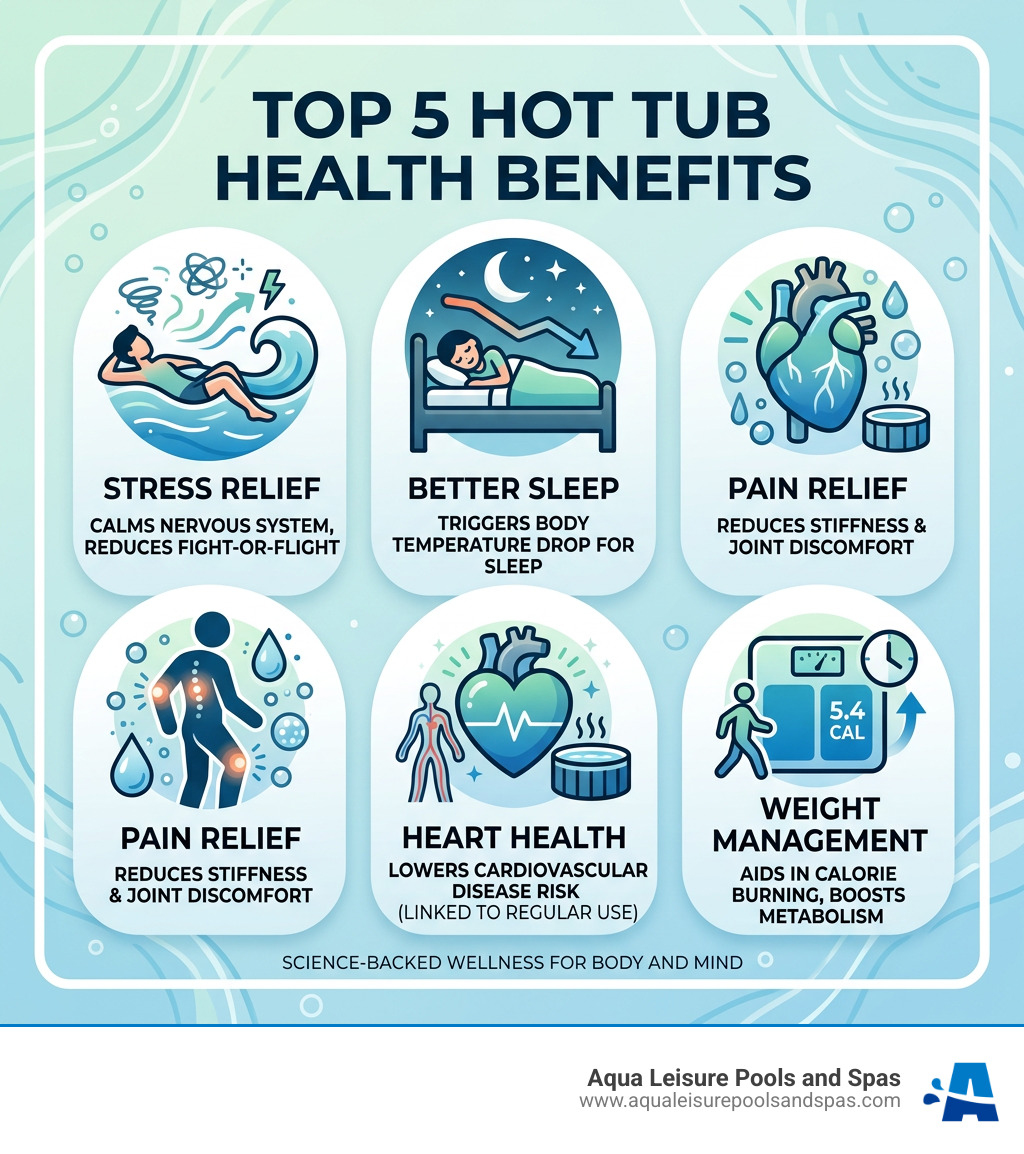
Here’s a quick look at what regular soaking can do for you:
| Health Benefit | What the Research Shows |
|---|---|
| Stress relief | Warm water and jets calm the nervous system and reduce the fight-or-flight response |
| Better sleep | A pre-bed soak helps trigger the body temperature drop that signals sleep time |
| Muscle recovery | Buoyancy reduces your body weight by ~90%, easing pressure on joints and muscles |
| Heart health | Regular hot baths are linked to lower cardiovascular disease risk |
| Weight management | One hour in a hot tub burns roughly the same calories as a 30-minute walk |
| Pain relief | Soaking can reduce stiffness and discomfort from arthritis and chronic pain |
| Improved insulin sensitivity | Studies show hot water immersion can lower fasting blood glucose levels |
Most people think of a hot tub as a luxury. But the evidence tells a different story.
A 2020 study tracking over 30,000 people for 19 years found that those who took regular very hot baths had a meaningfully lower risk of cardiovascular disease. Separate research shows that just 10 hot water immersion sessions over two weeks can improve blood glucose and insulin levels in sedentary adults.
Whether you’re dealing with daily stress, poor sleep, sore muscles, or a long-term health condition — a hot tub may be one of the most practical wellness tools you can add to your home.
This guide breaks down every major benefit, backed by real research, so you know exactly what to expect.
Proven Hot Tub Health Benefits for Body and Mind
When someone steps into a hot tub, they aren’t just getting wet; they are entering a unique environment that manipulates physics to heal the body. The primary drivers behind these hot tub health benefits are buoyancy, hydrostatic pressure, and thermal therapy.
Buoyancy is perhaps the most immediate sensation. When submerged to the neck, the water’s upward force reduces a person’s body weight by approximately 90%. This effectively “turns off” the constant pull of gravity on the joints and spine, allowing the musculoskeletal system to relax in a way that is impossible on dry land. Combined with hydrostatic pressure—the gentle, consistent pressure water exerts on the body—this environment promotes better blood flow and reduces swelling in the extremities.
Beyond the physical, the mental impact is profound. Scientific research on stress relief suggests that warm water immersion helps ease the physical, emotional, and mental tensions that accumulate throughout a busy day. The soothing action of the water and the massaging rhythm of the jets help calm the nervous system, shifting the body from a “fight-or-flight” state into a “rest-and-digest” state.
For those looking to bring these advantages into their daily routine, understanding more info about hydrotherapy at home can be a game-changer. Regular use stimulates the release of endorphins, the body’s natural “feel-good” chemicals, and can even provide a serotonin boost. This chemical shift doesn’t just make a person feel happy in the moment; it helps build resilience against the daily grind.
Relieving Chronic Pain and Arthritis
For millions of people, daily life is defined by joint inflammation and limited mobility. This is where the targeted power of a hot tub truly shines. The heat from the water penetrates deep into the muscle tissue, increasing blood flow and helping to soothe tight, tense muscles.
According to scientific research on arthritis relief, the heat and massaging action of a spa can significantly ease the stiffness and inflammation associated with arthritis. By reducing the weight-bearing load on the joints, the water allows for gentle movement and stretching that might be too painful to perform otherwise. This increased mobility is a cornerstone of managing chronic pain.
Furthermore, research demonstrates significant benefits for those suffering from fibromyalgia. Hydrotherapy sessions have been shown to reduce pain intensity, fatigue, and stiffness while simultaneously improving mood. For athletes or weekend warriors in Northeastern Pennsylvania, using a spa for muscle recovery is equally effective. The targeted massage jets can be adjusted to hit specific muscle groups, acting like a personal masseuse to break up lactic acid and speed up the healing of microscopic muscle tears after a long hike or a gym session.
Improving Cardiovascular Health and Circulation
It might sound surprising, but sitting in a hot tub can actually give the heart a gentle workout. When a person soaks in hot water, their internal body temperature rises, causing blood vessels to dilate (a process called vasodilation). This lowers blood pressure and increases the heart rate, mimicking some of the effects of light cardiovascular exercise.
A landmark 2020 study conducted in Japan followed over 30,000 participants for nearly two decades. The researchers found that those who routinely took hot baths had a significantly lower risk of cardiovascular disease compared to those who did not. This study from 2016 further suggests that passive heat therapy can have “robust” effects on vascular function, potentially reducing cardiovascular risk and mortality—especially for those who have a limited ability to engage in traditional exercise.
By improving blood flow, the hot tub ensures that oxygen and nutrient-rich blood reach the body’s tissues more efficiently. This doesn’t just help the heart; it supports the health of every organ in the body. For residents in areas like Scranton or Wilkes-Barre, where winters can be harsh, this boost in circulation can also help keep the extremities warm and functional during the colder months.
Maximizing Hot Tub Health Benefits for Better Sleep
Sleep is the foundation of health, yet nearly 31% of adults report struggling with insomnia or poor sleep quality. A hot tub can be a natural, drug-free solution to this widespread problem. The secret lies in the body’s internal clock, or circadian rhythm.
Our bodies naturally begin to cool down as bedtime approaches, a signal to the brain that it is time to sleep. By soaking in a hot tub about 90 minutes before bed, a person artificially raises their core temperature. Once they exit the tub, their temperature drops rapidly. This accelerated cooling mimics the natural body temperature drop that occurs before sleep, helping the individual fall asleep faster and stay in a deeper state of rest.
A 2023 review of studies found that hydrotherapy leads to a measurable improvement in the Pittsburgh Sleep Quality Index (PSQI), which is a standard tool used by doctors to measure sleep quality. When the body is physically relaxed and the mind is calmed by the warmth, the transition into sleep becomes much smoother, leading to a more restorative night.
Understanding Hot Tub Health Benefits for Weight Management
While a hot tub should never replace a healthy diet and regular exercise, it can be a valuable partner in weight management. The concept of “passive heating” has gained traction in recent years as a way to support metabolic health.
In a fascinating 2016 study, researchers found that soaking in a waist-high hot bath for one hour burned approximately the same number of calories as a 30-minute walk. This occurs because the body has to work harder to regulate its temperature in the heat, which increases energy expenditure. Another study from 2019 suggests that regular thermal therapy may improve glucose tolerance and insulin sensitivity, particularly in populations with marked insulin resistance.
One clinical study even found that patients who used hot tubs lost an average of 3.5 pounds over the course of the study without making any other changes to their diet or exercise routines. For individuals with type-2 diabetes or those who find traditional exercise difficult due to physical limitations, the smaller 2018 study showed that just 10 sessions over two weeks led to lower fasting blood glucose concentrations. It’s a powerful reminder that wellness can be found in the most relaxing places.
Safe Usage Guidelines and Best Practices
To fully enjoy the hot tub health benefits, it is essential to follow safe usage guidelines. Even the most therapeutic tool requires a bit of common sense and maintenance to ensure it remains a help rather than a hindrance.
First and foremost, temperature control is vital. The water should never exceed 104°F (40°C). Most modern spas have built-in safety shut-offs to prevent the water from getting hotter than this, as higher temperatures can lead to heatstroke or fainting. For most people, a comfortable and safe range is between 100°F and 102°F.
Duration is the next factor. While it might be tempting to stay in for hours, the optimal time for a soak is generally between 15 and 30 minutes. Staying in much longer can cause the body to overheat, leading to dizziness or nausea. If a person wants to stay in longer, they should lower the temperature to around 95°F-98°F.
Hydration is also key. Because the body sweats in the hot water—even if it isn’t noticeable—it is easy to become dehydrated. It is a good practice to drink a glass of water before and after a soak. To learn more about how to optimize every session, check out these tips on spa benefits.
If you are ready to transform your backyard into a center for wellness, you can explore our luxury spas at any of our locations in Doylestown, Dickson City, Wilkes-Barre, or Bartonsville.
Who Should Consult a Doctor Before Using a Hot Tub?
While hot tubs are safe for the vast majority of people, certain conditions require a professional medical opinion before diving in. Safety should always come first.
- Pregnancy: Pregnant individuals should be very cautious. Raising the core body temperature too high, especially in the first trimester, can be risky for the developing fetus. Most doctors recommend limiting soaks to 10 minutes and keeping the water at a lower temperature.
- Heart Conditions: Because hot water raises the heart rate and lowers blood pressure, those with pre-existing heart disease or high blood pressure (hypertension) should consult their physician.
- Low Blood Pressure: Conversely, those with low blood pressure (hypotension) might feel light-headed or faint as the warm water dilates their blood vessels further.
- Seizure Disorders: Hot water can occasionally trigger seizures in individuals with epilepsy, making it dangerous to soak alone.
- Diabetes: While hot tubs can help with insulin sensitivity, those with diabetes should monitor their blood sugar closely, as the heat can affect how the body absorbs insulin.
- Infections and Cuts: To prevent the spread of bacteria and ensure personal safety, avoid the hot tub if you have open sores, rashes, or have recently experienced diarrhea.
Finally, a note on alcohol: hot water and alcohol are a dangerous mix. Alcohol can impair your ability to sense when your body is overheating and can lead to a dangerous drop in blood pressure, increasing the risk of drowning or fainting.
By following these guidelines and maintaining proper water chemistry, a hot tub can remain a safe, effective, and joyful part of a healthy lifestyle. Whether you are in Tannersville, Allentown, or Bloomsburg, Aqua Leisure Pools and Spas is here to help you maintain your oasis so you can focus on the many hot tub health benefits waiting for you.
Posted by chris@enx2marketing.com in Pools