


Warm Water and Cool Bills with the Best Pool Heaters
Why an Energy Efficient Pool Heater Is the Smartest Upgrade You Can Make
The best energy efficient pool heater options for most homeowners in 2026 are:
- Heat pump pool heater – Most efficient overall; COP of 3.0-7.0; best for mild to warm climates above 50°F
- Solar pool heater – Lowest operating cost; ideal where roof space and sunlight are available
- High-efficiency gas heater – Fastest heating; best for occasional use or colder climates; 89-95% efficiency
- Electric resistance heater – Simple but costly to run; COP of only 1.0
Nobody wants to open their pool in April and stare at cold water. But heating a pool the wrong way can send your energy bills through the roof — sometimes hundreds of dollars per month.
The good news? The right heater can cut those costs by 60-80%. Pool heat pumps, for example, deliver up to $6 worth of heat for every $1 of electricity spent. That’s not a typo.
Beyond your wallet, there’s a real environmental case too. Gas heaters burn fossil fuels and produce carbon monoxide. Heat pumps run on electricity, produce no direct emissions, and in 2026 can pair with renewable energy sources.
The challenge most homeowners face isn’t deciding whether to heat their pool — it’s figuring out which heating system actually delivers comfort without punishing monthly bills. That’s exactly what this guide is here to help with.
Choosing the Right energy efficient pool heater for Your Backyard
Selecting a heating system isn’t just about picking the biggest unit on the shelf. In Pennsylvania, our weather is a bit like a mood ring—constantly changing. To find the right energy efficient pool heater, you need to balance how often you swim, your budget, and the local climate in areas like Wilkes-Barre or Dickson City.
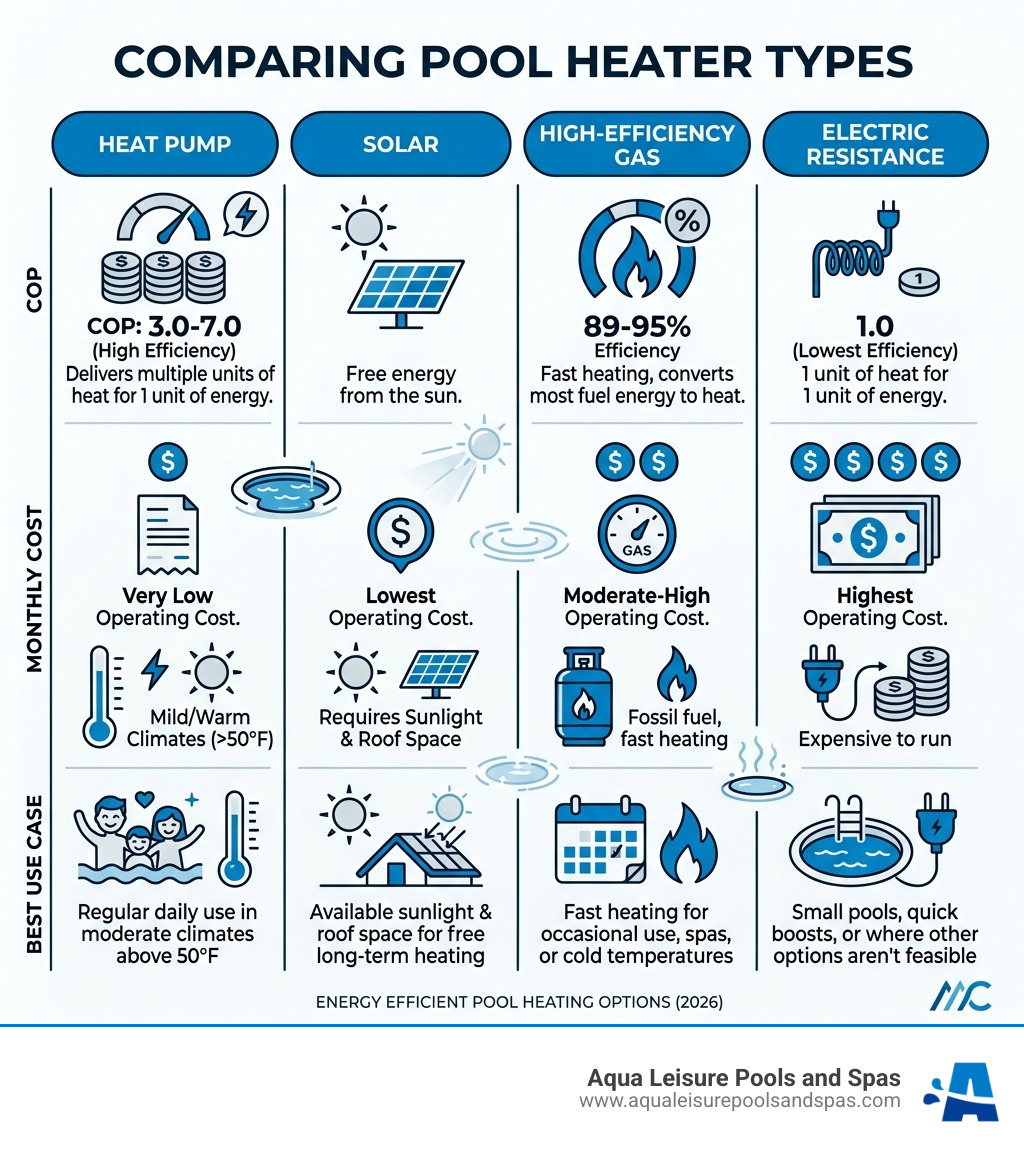
Comparing the Main Contenders
Modern technology has given us four primary ways to keep the water sparkling and warm. Each has a specific “job” it does best.
- Heat Pumps: These are the marathon runners of pool heating. They aren’t the fastest, but they are incredibly efficient. They work by pulling heat from the air and transferring it to the water.
- Gas Heaters (Natural Gas or Propane): Think of these as the sprinters. If you decide on a Friday afternoon that you want to host a pool party on Friday evening, a gas heater is your best friend. Modern units, like the Pentair MasterTemp, are much more efficient than older models, converting up to 95% of gas expenditure directly into heat.
- Solar Thermal: This is the “free lunch” of the pool world. Once installed, the fuel (sunlight) is free. However, in Northeastern Pennsylvania, they usually need a backup source for those cloudy stretches.
- Electric Resistance: These work like a giant toaster submerged in your plumbing. They are cheap to buy but very expensive to run because they have a Coefficient of Performance (COP) of only 1.0.
| Heater Type | Efficiency (COP/Rating) | Monthly Operating Cost | Best For… |
|---|---|---|---|
| Heat Pump | 3.0 – 7.0 COP | $50 – $150 | Daily use, long seasons |
| High-Efficiency Gas | 89% – 95% | $200 – $500+ | Spas, quick heating, cold weather |
| Solar Thermal | N/A (Free Fuel) | $0 – $20 (pump only) | Sunny yards, eco-conscious owners |
| Electric Resistance | 1.0 COP | $600+ | Very small spas or plunge pools |
For a deeper dive into which specific technology fits your lifestyle, check out What Type Of Pool Heater Is Best For You/.
The Science of Heat Pumps and Coefficient of Performance (COP)
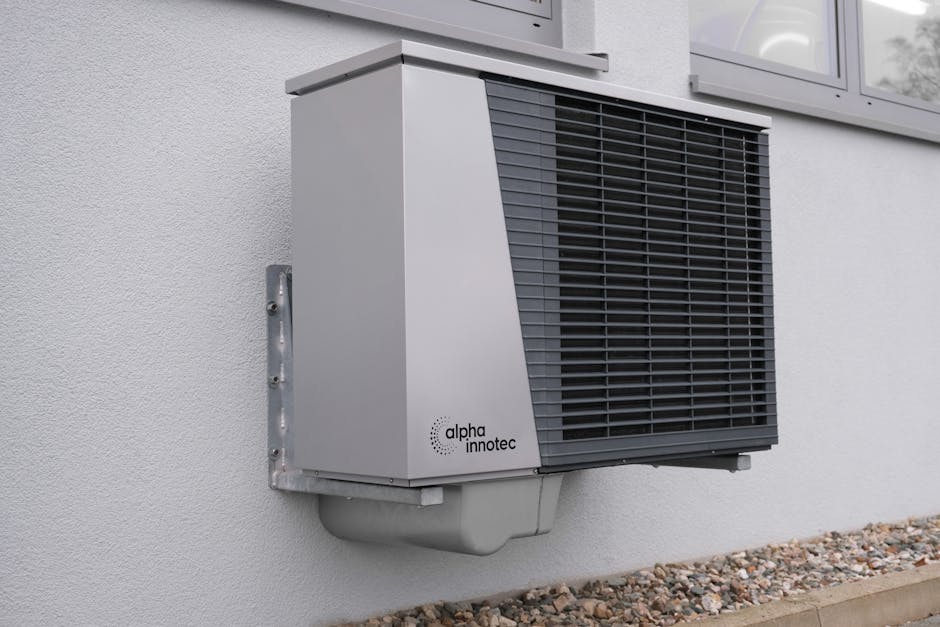
If you’ve ever stood behind a refrigerator, you’ve felt the warm air blowing out of the back. A heat pump pool heater is essentially a refrigerator running in reverse. Instead of taking heat out of a box and dumping it into your kitchen, it takes heat out of the Pennsylvania air and dumps it into your pool.
Here is the step-by-step “magic” that happens inside:
- The Fan: A fan draws in the outside air and directs it over an evaporator coil.
- The Refrigerant: Liquid refrigerant inside the coil absorbs the heat from the air and turns into a gas.
- The Compressor: This gas passes through a compressor that increases the pressure, which spikes the temperature significantly.
- The Heat Exchanger: The hot gas then travels through a condenser (heat exchanger). The pool water flows past this, picks up the heat, and heads back to your pool.
The most important metric to know is the Coefficient of Performance (COP). This measures the ratio of energy out versus energy in. If a heat pump has a COP of 6.0, it means for every $1 of electricity you use to run the compressor and fan, you get $6 worth of heat. Compare that to a gas heater, which usually has a COP of about 0.85 to 0.95 (meaning you lose 5-15 cents of every dollar to exhaust).
According to the Department of Energy, heat pumps are most effective when the air temperature is above 45°F–50°F. Since we want to swim when it’s beautiful outside anyway, this fits the Pennsylvania lifestyle perfectly.
Maximizing Your energy efficient pool heater with Smart Accessories
Buying a great heater and not using a pool cover is like turning on the heat in your house and leaving all the windows open. Evaporation is the primary cause of heat loss for swimming pools.
To keep your energy efficient pool heater from working overtime, consider these additions:
- Pool Blankets/Solar Covers: Using a pool cover can reduce heat loss by 50% to 70%. In some regions, a cover can reduce annual gas heating costs from nearly $3,000 down to under $600.
- Variable-Speed Pumps: These pumps are the “unsung heroes” of efficiency. Unlike standard pumps that run at one (high) speed, variable-speed pumps can move water slowly through the heater. This allows for better heat transfer and can save you hundreds of dollars per season in electricity alone.
- Wind Protection: If your pool is in a windy spot in the Poconos, the wind acts like a giant straw, sucking the heat right off the surface. Fencing or strategic landscaping can act as a windshield, keeping that expensive heat in the water.
Learn more about optimizing your setup at How Can Your Pool Be More Energy Efficient/.
Sizing and Maintenance for Long-Term Efficiency
A heater that is too small will run constantly and still leave you shivering. A heater that is too large might cycle on and off too frequently, wearing out the components.
How to Calculate Your Needs: The industry standard for sizing involves three main factors:
- Surface Area: The square footage of the water’s surface.
- Temperature Rise: The difference between the average air temperature and your desired pool temperature.
- The Formula: A general rule of thumb is: Area x Temperature Rise x 12. This gives you the BTU/hour output required.
However, professional sizing is always recommended. Our experts at Aqua Leisure Pools and Spas take into account local humidity and wind speeds in places like Doylestown to ensure you get the perfect match.
Maintenance is Key: To keep your COP high and your bills low, follow these tips:
- Clear the Air: Heat pumps need to breathe. Keep plants and debris at least 12-36 inches away from the unit.
- Annual Tune-ups: Just like your car, a pool heater needs a check-up. Scaling (calcium buildup) in the heat exchanger can act as an insulator, making the heater work harder to push heat through the “gunk.”
- Check the Chemistry: Poor water balance can corrode the internal components of a gas heater or heat pump, leading to expensive repairs and lost efficiency.
For a breakdown of what it costs to maintain different pool sizes, read Stop Burning Cash The Real Cost To Heat A 15000 Gallon Pool/.
Investing in Your Dream Oasis with Aqua Leisure Pools and Spas
At Aqua Leisure Pools and Spas, we don’t just sell equipment; we build backyards where memories are made. Serving Northeastern Pennsylvania for years, we understand that a pool is a significant investment. Choosing an energy efficient pool heater is about more than just the environment—it’s about maximizing your Return on Investment (ROI).
When you choose a high-quality heat pump, you are looking at a lifespan of 10 to 20 years. That is nearly double the lifespan of many traditional gas heaters. While the upfront cost of a heat pump is higher, the long-term savings usually pay for the unit within 2 to 4 years.
Our showrooms in Dickson City, Wilkes-Barre, and Bartonsville feature the latest 2026 models with smart-home integration. Imagine being able to turn your pool heater on from your office in Scranton so the water is a perfect 82°F by the time you get home.
Find the best heater for your pool with our expert guide
Regional Performance: Heating in Pennsylvania Climates
In Northeastern PA, our swimming season is notoriously short—often just Memorial Day to Labor Day. But it doesn’t have to be that way. With an energy efficient pool heater, many of our customers are opening their pools in mid-April and swimming comfortably through October.
The PA Factor:
- Humidity: Heat pumps actually love humidity. The more moisture in the air, the more heat there is for the evaporator coil to grab. This makes them exceptionally efficient during our humid Pennsylvania summers.
- Night Temperatures: Our nights can get chilly, even in July. This is where a pool cover becomes your best friend, trapping the heat your pump worked all day to generate.
- Spring Openings: If you want to swim in April, a hybrid approach (using a gas heater to “kickstart” the temperature and a heat pump to maintain it) is a popular choice for our Doylestown and Tannersville clients.
Explore In-Ground Pool Options for PA Homeowners
Comparing Operating Costs of an energy efficient pool heater
To put the savings in perspective, let’s use the “Muscle Car vs. Bicycle” analogy.
A traditional gas heater is like a 1970s muscle car. It’s powerful, it sounds great, and it can get you from 0 to 60 (or 60° to 80°) incredibly fast. But it drinks fuel like crazy and is expensive to keep on the road every day.
An energy efficient pool heater, like a modern heat pump, is more like a high-end electric bicycle. It’s steady, it’s quiet, and it gets you where you’re going for pennies.
The Real Numbers:
- Gas Heating: In a typical PA season, running a gas heater can cost between $200 and $500 per month depending on how warm you like the water.
- Heat Pump: For the same pool, a heat pump might cost only $50 to $150 per month.
- The Savings: Over a 15-year lifespan, switching to a heat pump can save a homeowner between $15,000 and $20,000 in energy costs. That’s enough to pay for a whole new pool liner, a variable-speed pump upgrade, and several years of chemicals!
Beyond the monthly bill, many local utility companies in Pennsylvania offer rebates for installing energy-efficient equipment. For example, some areas offer $150 rebates for upgrading to variable-speed pumps, which pair perfectly with your new heater to slash your carbon footprint.
Visit our Showrooms to see the latest energy-saving technology
Final Thoughts for April 2026
As we move through 2026, the technology behind pool heating has never been better. We no longer have to choose between a warm pool and a reasonable bank balance. By selecting a high-COP heat pump, sizing it correctly for your backyard, and using a simple pool cover, you can enjoy a “endless summer” right here in Pennsylvania.
Whether you are in Allentown, Lake Wallenpaupack, or right down the street from our Dickson City shop, Aqua Leisure Pools and Spas is here to help you navigate these choices. We are a one-stop shop for sales, installation, and maintenance, ensuring your dream backyard remains a place of relaxation, not a source of high-energy stress.
Stop by one of our locations today and let’s get your water warm for the season!
Posted by chris@enx2marketing.com in Pools