


The Lazy Owner’s Guide to Pristine Spa Water
The Essential Hot tub maintenance Schedule for Beginners
Hot tub maintenance doesn’t have to eat up your weekends or stress you out. In fact, most owners keep their spa in perfect condition with just a few minutes a day.
Here’s what basic hot tub maintenance looks like:
| Frequency | Time Needed | Key Tasks |
|---|---|---|
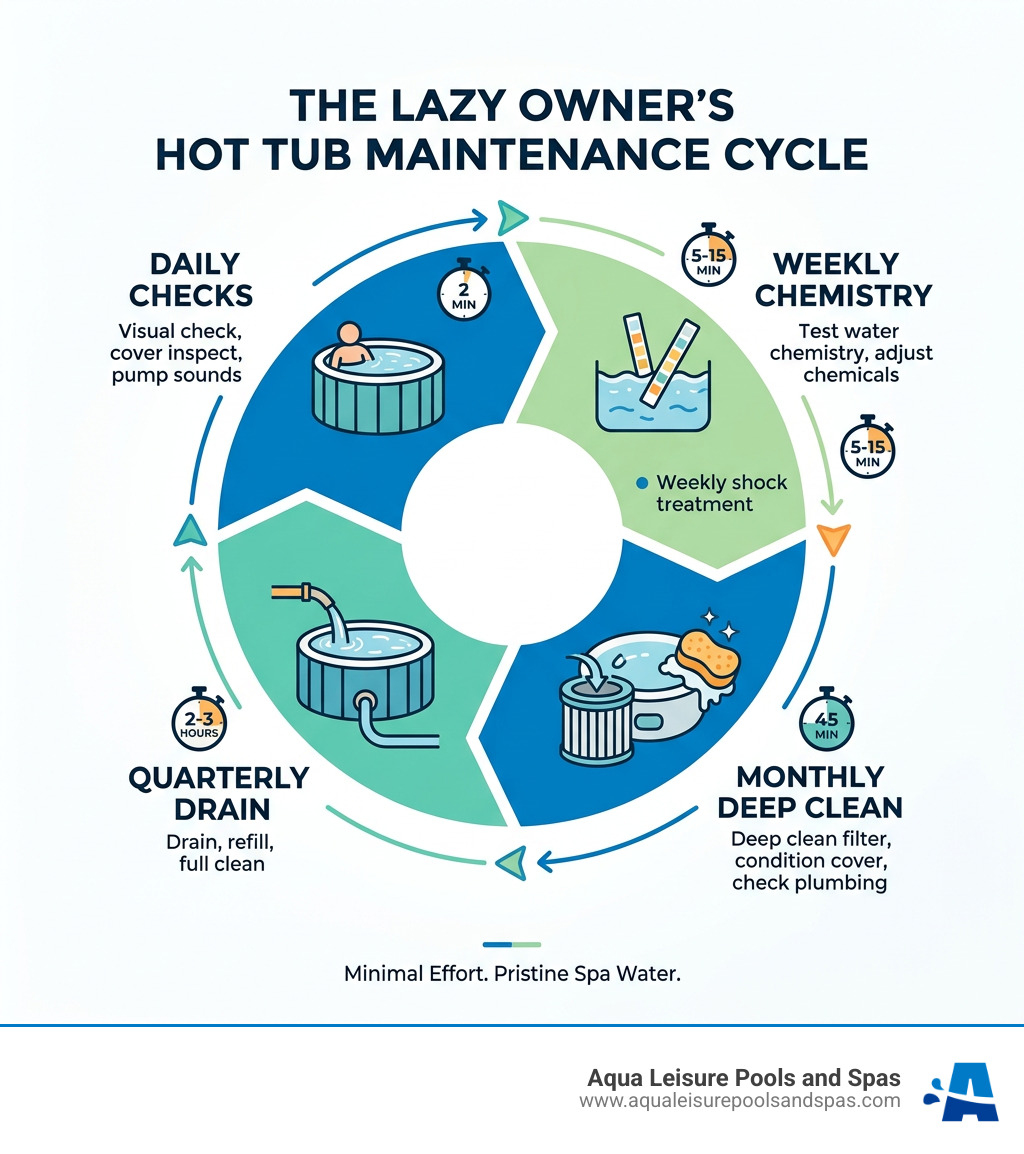
| Daily | 2 minutes | Visual check, cover inspect, listen for pump sounds |
| 2-3x Weekly | 5 minutes | Test water chemistry, adjust chemicals |
| Weekly | 15 minutes | Shock treatment, rinse filter, wipe shell |
| Monthly | 45 minutes | Deep clean filter, condition cover, check plumbing |
| Quarterly | 2-3 hours | Drain, refill, full clean |
| Annually | Half day | Professional inspection, plumbing flush |
A well-maintained hot tub can last 20 years. Skip the routine and that number can drop to 10-15. That’s a big difference for what is, honestly, a pretty small daily habit.
Think of it like brushing your teeth. Nobody loves doing it. But two minutes a day beats a very expensive dentist visit.
The good news? About 90% of hot tub problems are preventable with a consistent routine. You don’t need to be a water chemistry expert or spend hours scrubbing. You just need a simple system — and that’s exactly what this guide gives you.
Whether you’re a brand-new spa owner or you’ve had one for years and want to simplify your routine, this guide covers everything from daily habits to seasonal care.
Many beginners worry that owning a spa is a second job. It isn’t. The “secret” to being a lazy but successful owner is consistency. When a person stays on top of the small things, the big problems—like algae blooms or equipment failure—simply never happen.
The Daily Ritual (2 Minutes)
Every day, even if the spa isn’t used, a quick visual check is vital. Ensure the water is clear, the temperature is steady, and the cover is secure. Most importantly, ensure the water is circulating. Modern spas often have a circulation pump designed to run 24/7 or for set blocks of time. This movement is the first line of defense against bacteria. Ideally, water should circulate for at least one hour daily to remain fresh.
The Weekly Routine (15 Minutes)
This is where the real work happens, though “work” is a strong word for 15 minutes of effort. This involves testing the water, adding a weekly shock treatment to oxidize organic waste (like oils and sweat), and giving the filters a quick rinse. If there are leaves or debris floating around, a quick skim prevents them from clogging the system.
For those who want to stay organized, using A Comprehensive Hot Tub Maintenance Checklist can ensure no step is missed during the busy work week.
| Task | Frequency | Why It Matters |
|---|---|---|
| Circulation | Daily | Prevents “dead spots” where bacteria grow. |
| Water Testing | 2-3x Weekly | Keeps chemicals balanced before they drift. |
| Filter Rinse | Weekly | Maintains water pressure and clarity. |
| Shocking | Weekly | Breaks down chloramines and invisible waste. |
| Shell Wipe | Weekly | Prevents the dreaded “scum line” at the water level. |
Mastering Hot tub maintenance Water Chemistry
Water chemistry is the part that intimidates people the most, but it’s actually just basic math. Because a hot tub has a much smaller volume of water than a pool, changes happen fast. Aeration, high heat, and bather load (the number of people soaking) all cause chemistry to shift rapidly.
To keep things simple, focus on these three pillars:
- Total Alkalinity (TA): This is the “anchor” for your pH. If your TA is off, your pH will bounce around like a rubber ball. Aim for 80-120 ppm. Always adjust Alkalinity first.
- pH Balance: This measures how acidic or basic your water is. The “sweet spot” is 7.2-7.8. If the pH is too high, you’ll get scale and cloudy water. If it’s too low, the water becomes acidic and can eat away at your heater and seals.
- Sanitizer: This is your frontline soldier against germs. Chlorine should stay between 1-3 ppm, while Bromine (a popular alternative for spas because it stays stable at high temperatures) should be 3-5 ppm.
Another factor often overlooked is Calcium Hardness. In Pennsylvania, water can vary significantly by municipality. You want your calcium levels between 150-250 ppm. If the water is too “soft,” it will pull minerals from your spa’s hardware; if it’s too “hard,” you’ll see white flakes (scale) everywhere.
For a deeper dive into these numbers, check out our guide on spa-water-chemistry or refer to the Pool & Hot Tub Alliance (PHTA) water treatment guidelines for national safety standards.
Cleaning Filters and Shells Without the Scrubbing
The filter is the unsung hero of hot tub maintenance. It traps hair, skin cells, and lotion before they can reach your pump. If a filter is dirty, the pump has to work twice as hard, which kills its lifespan and spikes your energy bill.
- The Weekly Rinse: Take the filter out and spray it with a garden hose. This removes the big stuff.
- The Monthly Soak: Once a month, use a dedicated filter cleaner to break down deep-seated oils. This is non-negotiable for master-spa-filter-cleaning success.
- The Pressure Rule: If your spa has a pressure gauge, clean the filter whenever the pressure rises 8-10 PSI above the “clean” baseline.
Most quality filters have a lifespan of 12-18 months. Even if it “looks” okay, the fabric fibers eventually break down and stop trapping microscopic particles. Replacing them annually is a small price to pay for crystal-clear water. While you have the water level slightly lower during a filter change, give the shell a quick wipe with a damp cloth to prevent buildup.
When to Drain and Refill Your Spa
Even with perfect chemistry, water eventually gets “tired.” This happens because of Total Dissolved Solids (TDS)—the buildup of chemicals and minerals that no longer dissolve.
The general rule is to drain and refill every 3-4 months. However, if the water looks murky, smells “funky,” or creates foam that won’t go away, it’s time for a fresh start.
Pro Tip for Refilling: When you refill, never use water hotter than 104°F (40°C). Using boiling water can actually “shock” and damage the acrylic shell of your spa. Also, consider using a pre-filter on your garden hose to keep Pennsylvania minerals and metals out of the tub from day one. For more details on the timing, see our article on how-often-should-you-change-your-hot-tub-water.
Before you pull the plug, add a plumbing flush product. This cleans out the “biofilm” (slime) that grows inside the pipes where you can’t see it.
Troubleshooting and Advanced Spa Care Tips
Sometimes, despite your best efforts, the water goes rogue. Don’t panic. Most issues have a “quick fix.”
- Cloudy Water: Usually caused by dirty filters or a pH imbalance. Clean the filter, test the water, and add a dose of shock.
- Foam: This usually comes from “outside” contaminants like laundry detergent in bathing suits, hairspray, or body lotions. Use an anti-foam agent for a temporary fix, but a partial water change is the only permanent solution. Lazy Tip: Encourage guests to rinse off before hopping in.
- Green Water: This is algae. It means your sanitizer levels hit zero. You’ll need to “super-chlorinate” (heavy shock) and keep the filters running until it clears.
- Strong Chemical Smell: Paradoxically, a strong “chlorine” smell usually means you have too little chlorine. The smell comes from chloramines (used-up chlorine). Adding a fresh dose of shock will actually break these down and remove the odor.
For health and safety concerns regarding waterborne pathogens, the CDC’s official guide to safe swimming practices is an excellent resource to ensure your backyard oasis remains a healthy environment.
Seasonal Care and Winterization Strategies
In Northeastern Pennsylvania, winter is the best time to use a hot tub, but it’s also the time when maintenance matters most.
Winter Care: If you plan to use your spa all winter, you don’t need to “winterize” it in the traditional sense. High-quality insulated spas are designed to stay on. However, you must keep the water moving to prevent freezing in the pipes. If a power outage occurs, keep the cover closed to trap heat. Always clear snow off the cover immediately; the weight of heavy Pennsylvania snow can snap the internal foam cores.
Summer Care: In the summer, bather loads often increase with kids and guests. You may need to clean your filters more frequently and check sanitizer levels daily.
Cover Conditioning: Your cover is your spa’s most important accessory. It traps heat and keeps out debris. Use a UV protectant spray every few months to prevent the vinyl from cracking in the sun. A well-maintained cover can last 5-7 years, while a neglected one might fail in three.
For more specific advice on cold-weather operation, read our winter-swim-spa-maintenance-tips.
Simplifying Your Routine with Salt Systems
If you truly want to be a “lazy” owner, consider a salt system. Modern salt systems, like those available at Aqua Leisure Pools and Spas, automate the sanitization process.
Instead of adding chlorine manually every few days, the system generates it from salt. This results in:
- Softer Water: Saltwater feels better on the skin and eyes.
- Less Maintenance: The system does the heavy lifting.
- Water Longevity: Some salt systems allow you to go up to a full year before needing a drain and refill.
Setting up the system requires some initial knowledge, so be sure to check out essential-tips-for-initial-spa-chemical-treatment to get started the right way.
Professional Hot tub maintenance and Longevity
Even the most diligent “lazy” owner should call in the pros once a year. An annual professional inspection can catch small leaks, heater scaling, or pump wear before they become expensive repairs.
At Aqua Leisure Pools and Spas, we’ve spent years helping residents in Doylestown, Wilkes-Barre, Dickson City, and Bartonsville keep their dream backyards in peak condition. Whether you need a one-time repair, a seasonal opening, or a new premium spa, our team is here to ensure your only job is to relax.
Proper hot tub maintenance isn’t about working hard; it’s about working smart. By spending two minutes a day on the basics, you protect your investment and ensure that your spa is always ready for a soak.
Ready to upgrade your backyard experience or need a hand with your current setup? how-to-care-for-your-hot-tub or Explore our full range of premium spas and services today. We are your one-stop shop for everything “spa” in Pennsylvania.
Posted by chris@enx2marketing.com in Pools