


Ultimate Checklist for Buying a Solar Cover for Above Ground Pool
Choosing a Solar Cover for an Above-Ground Pool
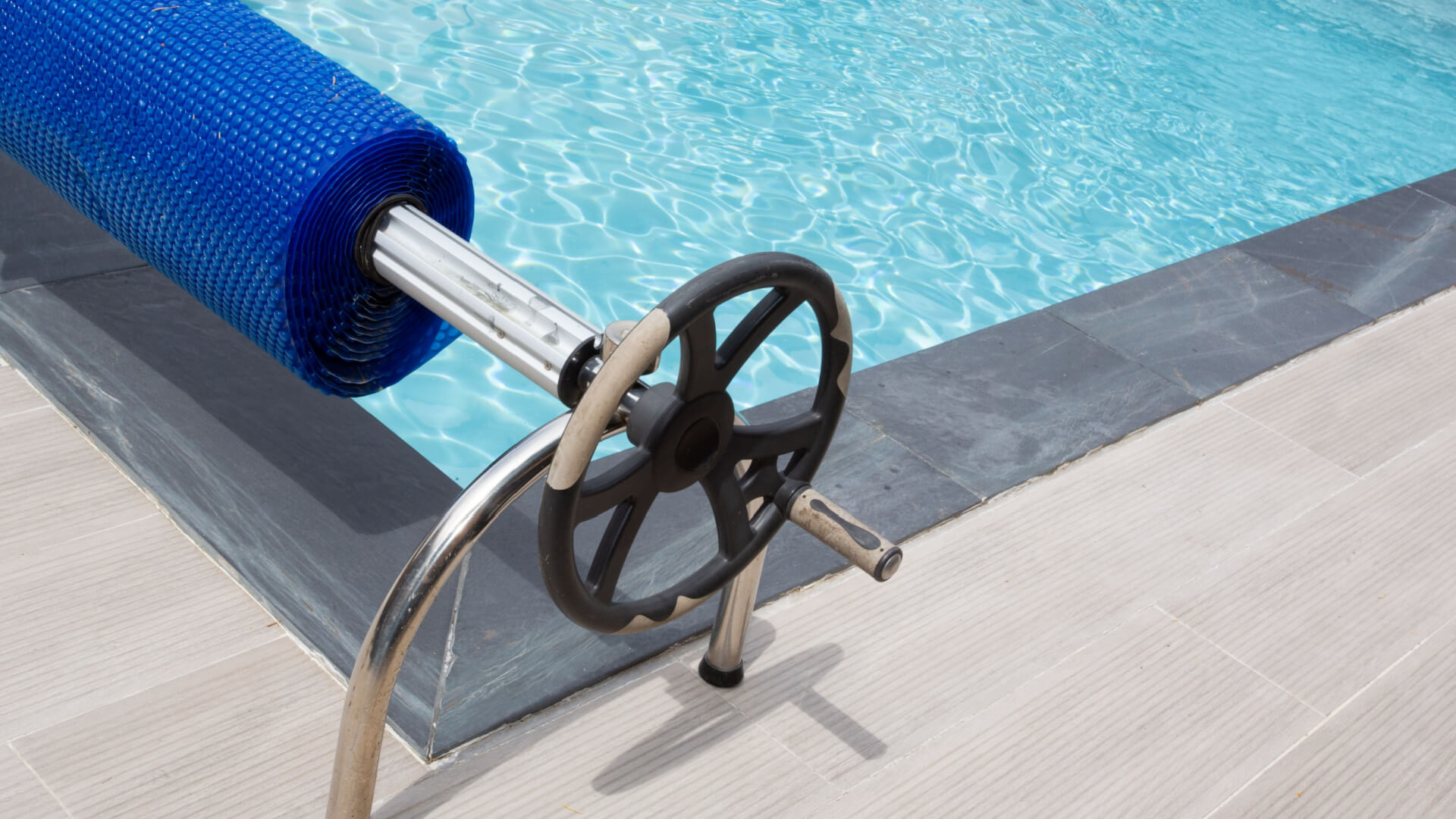
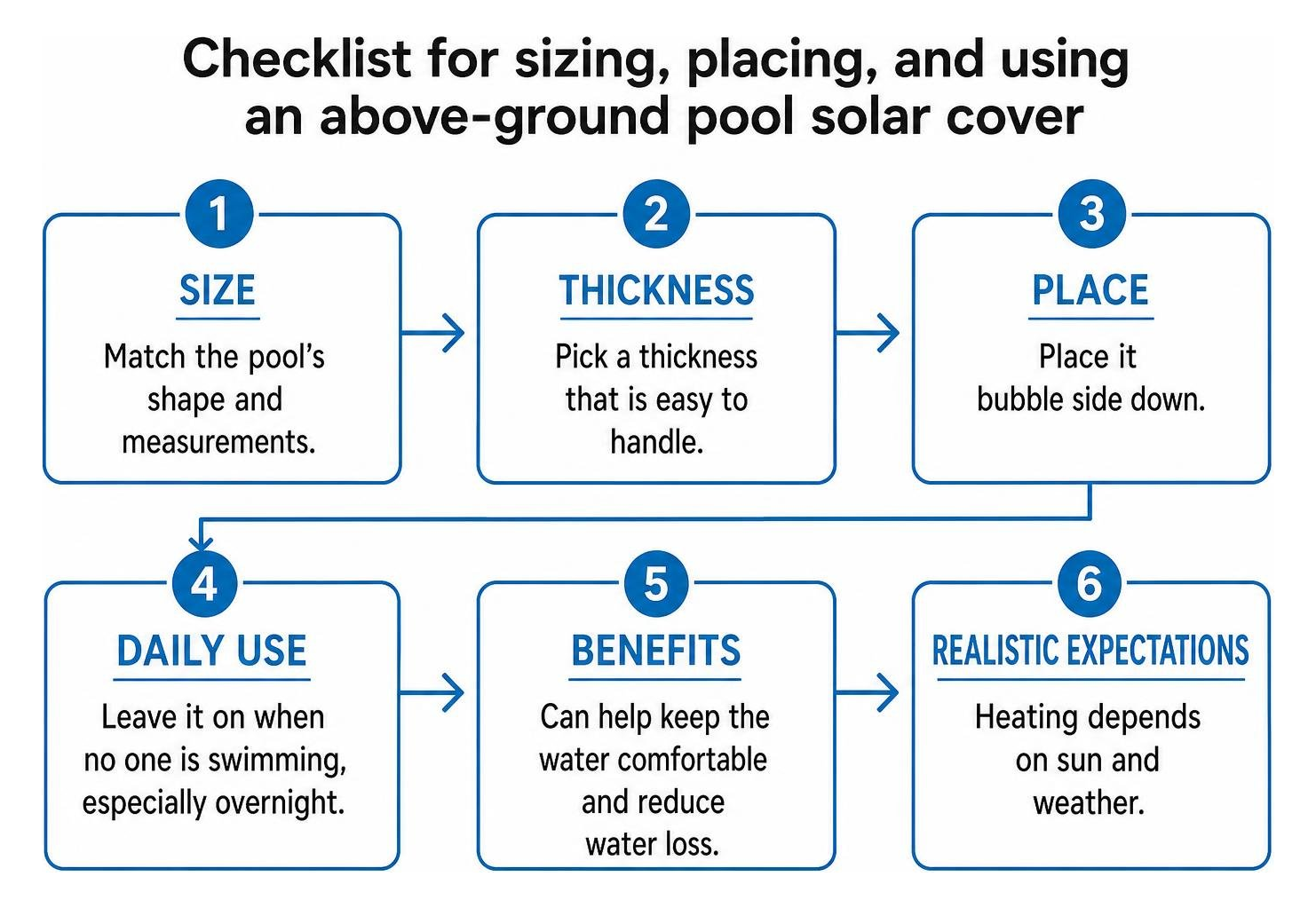
A solar cover for an above-ground pool floats on the water to slow evaporation and hold in heat. To choose one, match the pool’s shape and measurements, then pick a thickness that is easy to handle. Place it bubble side down and leave it on when no one is swimming, especially overnight.
A cover can help keep the water comfortable and reduce water loss, but heating depends on sun and weather. This checklist covers the choices that matter most: size, color, thickness, daily use, and storage.
Essential Factors When Choosing a Solar Cover Above Ground
Above-ground pools are fantastic for cooling off during hot summer afternoons, but because their sidewalls are exposed to ambient air, they lose heat much faster than inground setups. Choosing an effective solar cover above ground creates a protective barrier over the surface where the vast majority of heat loss occurs.

Evaporation accounts for up to 75% of total swimming pool heat loss. When water evaporates, it pulls thermal energy right out of the pool. Applying a thermal floating blanket prevents this moisture loss, trapping heat in the water. Beyond keeping the water warm, a cover significantly cuts water replenishment needs and stabilizes water chemistry by reducing chlorine dissipation under direct ultraviolet radiation. Exploring the different types of pool covers helps pool owners identify which barrier matches their seasonal needs.
Selecting the Right Material Thickness and Color for a Solar Cover Above Ground
Solar covers are classified by their mil thickness (one mil equals one one-thousandth of an inch). Choosing the right grade depends on the balance between thermal performance and ease of handling:
- 8 Mil (Lightweight): The easiest thickness to fold, remove, and roll up. An 8 mil blanket works well for smaller pools or for owners who manage the pool alone. While it provides good heat retention, it wears out more quickly under heavy sun exposure.
- 12 Mil (Standard / Premium): The sweet spot for most backyard setups. A 12 mil cover offers enhanced tear resistance and heat insulation while remaining manageable during daily removal.
- 16 Mil (Heavy-Duty): Delivering maximum thermal insulation, heavy-duty 16 mil solar covers provide outstanding durability and long service lives. However, they are significantly heavier and often require a dedicated reel system to roll on and off.
| Thickness | Durability Rating | Weight & Handling | Heat Retention | Best Suited For |
|---|---|---|---|---|
| 8 Mil | 1 to 2 Seasons | Very lightweight, easy for one person | Moderate | Small pools, quick removal |
| 12 Mil | 2 to 3 Seasons | Balanced weight, manageable | High | All standard above-ground pools |
| 16 Mil | 3 to 5+ Seasons | Heavy, best paired with a reel | Maximum | Long-term use, cold night retention |
Color also plays a distinct role in heating performance:
- Crystal Clear Covers: Clear material allows direct solar radiation to penetrate deeper into the water column during peak daylight hours, offering the fastest daytime temperature gains.
- Deep Blue Covers: Blue material excels at trapping existing heat and preventing thermal radiation from escaping into cool nighttime air.
Sizing, Shapes, and Trimming for Round, Oval, and Rectangular Pools
Above-ground pools come in several standard dimensions, from round steel-frame setups to long rectangular designs. Common round diameters include 15 ft, 18 ft, 21 ft, 24 ft, and 28 ft, while popular rectangular sizes include 12×24 ft and 16×32 ft. Finding the right fit, such as custom fitting 13 ft round pool covers, ensures complete edge-to-edge water protection.
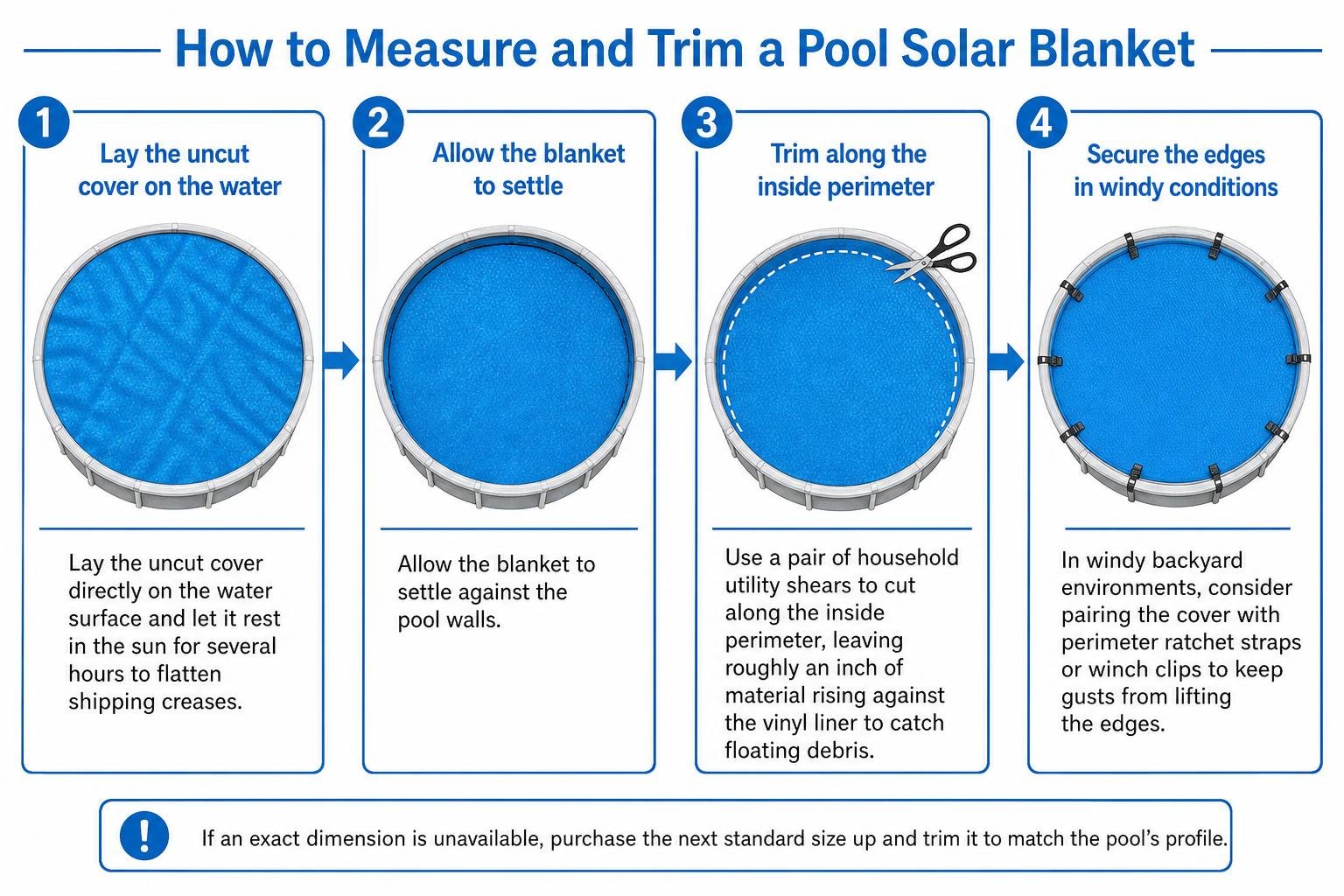
If an exact dimension is unavailable, purchase the next standard size up and trim it to match the pool’s profile:
- Lay the uncut cover directly on the water surface and let it rest in the sun for several hours to flatten shipping creases.
- Allow the blanket to settle against the pool walls.
- Use a pair of household utility shears to cut along the inside perimeter, leaving roughly an inch of material rising against the vinyl liner to catch floating debris.
- In windy backyard environments, consider pairing the cover with perimeter ratchet straps or winch clips to keep gusts from lifting the edges.
Thermal Blankets vs. Overhead Solar Canopies: Understanding the Difference
When researching solar heating, homeowners sometimes encounter commercial photovoltaic solar canopies or residential solar patio covers alongside floating pool blankets. While both harness the sun, they fulfill completely different functions.
An overhead solar canopy is a permanent, freestanding structural framework fitted with rigid photovoltaic panels. These elevated systems generate usable electrical power for a home or electric vehicle charger while providing shade underneath. In contrast, a swimming pool solar cover is an insulated floating thermal blanket placed directly on the water surface. Its sole purpose is absorbing direct solar heat, insulating the pool, and stopping evaporative cooling.
Installation, Usage, and Maintenance Checklist for Pool Owners
Proper operation and handling ensure you get the highest heat transfer and longest lifespan from your cover. Consulting an in-depth guide to swimming pool covers provides additional insight into maintaining balanced pool water under thermal blankets.
How to Install and Position Your Solar Cover Above Ground for Maximum Heating
To heat your pool effectively, always install the cover with the bubble side facing down into the water and the smooth side facing up toward the sky.
Placing the bubbles downward creates direct thermal contact between the air pockets and the water. As the sun hits the top of the cover, heat transfers directly into the pool. The submerged bubbles also create a light surface tension grip that helps anchor the blanket against wind uplift.
Under steady sunlight, a quality blanket can raise pool water temperatures by 10°F to 15°F over a single week. Implementing proven methods to reduce pool evaporation and save water ensures you retain these temperature gains, especially by rolling the cover back over the water immediately after swimming and keeping it on all night.
Using Solar Reels, Storage Systems, and Extending Cover Lifespan
Manually folding and dragging a wet solar blanket over the top rails of an above-ground pool can lead to tears and fatigue. A dedicated solar reel mounted to the top rails makes deployment quick and simple for one person:
- Reel Construction: Choose corrosion-resistant aluminum or stainless steel frames with heavy-duty center poles that won’t sag under the weight of wet 12 or 16 mil blankets.
- Protective Storage Sheets: When the blanket is rolled up on the reel during hot afternoons, wrap it in an opaque, UV-reflective storage sheet. Concentrated solar heat on a rolled-up cover can melt and pop nested bubbles within hours.
- Water Chemistry & Winter Care: High chlorine levels and low pH quickly degrade polyethylene blanket material. Remove the cover when shocking the pool until chlorine levels return to normal. When closing the pool for the season, clean the blanket with mild soap, rinse thoroughly, dry completely, and store it in a covered indoor area protected from rodents.
For homeowners in Northeastern Pennsylvania—including Wilkes-Barre, Scranton, Doylestown, Dickson City, and Bartonsville—investing in the right cover setup turns a chilly pool into a warm retreat. If you are exploring energy-efficient above ground pools and solar heating solutions, Aqua Leisure Pools and Spas provides professional guidance, pool installations, and maintenance to help you get the most out of every swim season.
Posted by Aqua Leisure Pools & Spas in Pools