


How to Fix a Leaky Baptismal Pool Without Losing Your Faith

Why Your Baptismal Pool Deserves the Same Attention as Your Foundation
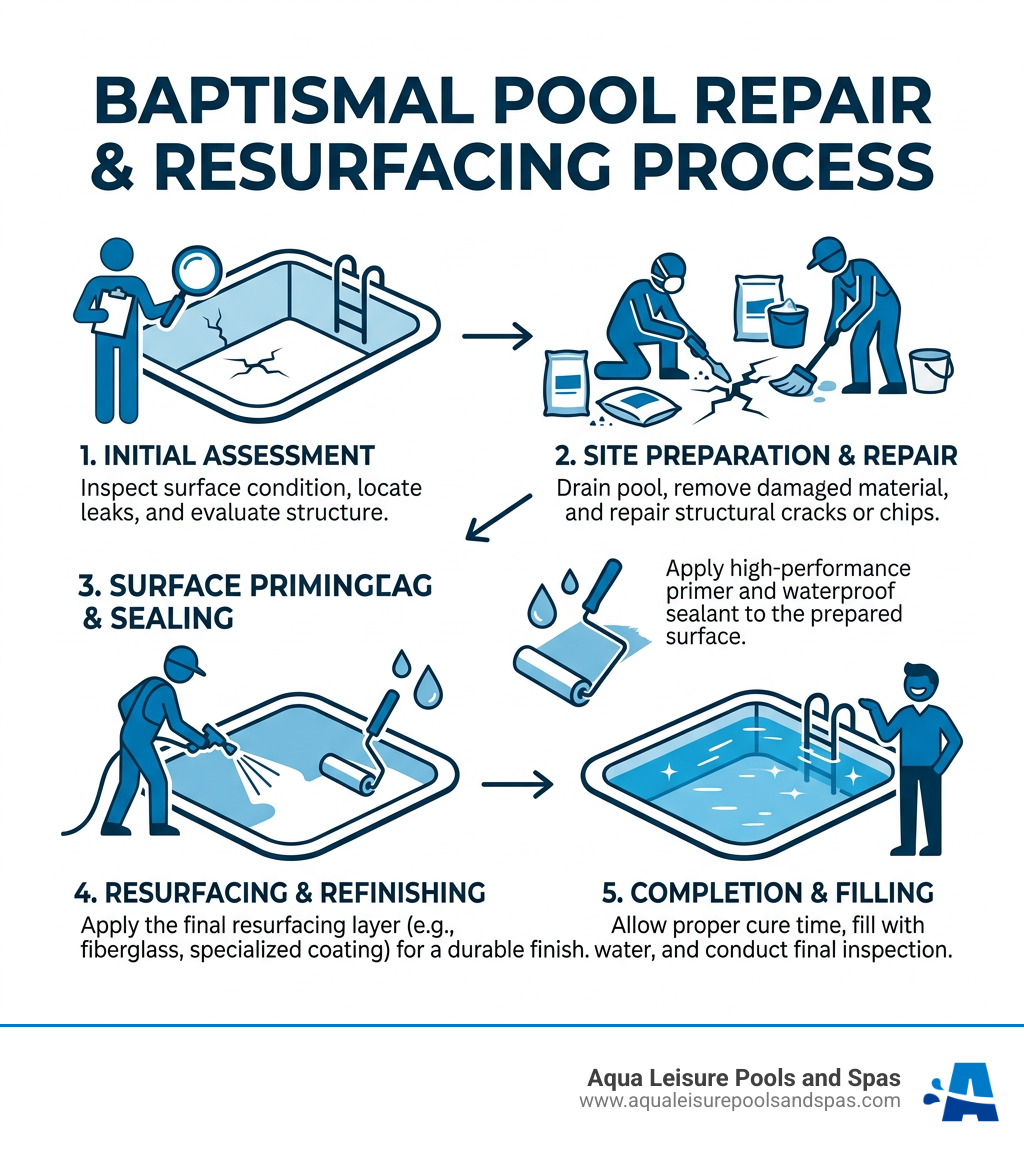
Baptismal pool repair typically involves one or more of the following approaches, depending on the type and severity of damage:
- Patching and spot repair – Fixing isolated cracks, chips, or holes in plaster, fiberglass, or tile
- Resurfacing or refinishing – Applying new coatings over the existing surface to restore appearance and seal minor leaks
- Fiberglass or GRP relining – Installing a new liner inside the existing pool structure for a durable, low-maintenance finish
- Custom vinyl liner installation – A long-lasting option (one church liner lasted 24 years) suited to pools with steps and handrails
- Full replacement – Reserved for severe structural failure; the most costly and disruptive option
A baptismal pool is more than a water feature. It’s one of the most spiritually significant spaces in a church — and one of the most overlooked when it comes to maintenance.
The problem? Most baptismal pools are built to last, but not to last forever.
Older pools are often made from concrete and tile. They look impressive at first. But grout deteriorates, tiles crack, and before long the pool is losing water — sometimes as fast as a foot per hour. Plaster surfaces can start peeling in as little as five to six years, even in relatively new pools.
That’s when churches face a tough question: repair or replace?
The good news is that full replacement is rarely necessary. In most cases, resurfacing or relining restores the pool to like-new condition at a fraction of the cost — often saving thousands of dollars. Most professional refinishing jobs can even be completed in a single day, so your congregation misses little to no scheduled worship time.
Whether your pool has a slow pool leak, peeling plaster, mineral staining, or cracks from years of foot traffic, there are proven, durable solutions available. This guide walks you through all of them.
Identifying Common Issues and Baptismal Pool Repair Solutions
When a church leader notices the water level in the baptistry is lower than it was on Saturday night, the first instinct might be a bit of panic. However, understanding the root cause of the damage is the first step toward a permanent fix. Most issues stem from the age of the structure, the materials used during original construction, or the frequency of use.
Common Causes of Damage
- Peeling Plaster: This often occurs in pools that are only 5-6 years old. If plaster begins to delaminate after just a year or two of service, it often suggests a deeper issue with the initial bond or the structural movement of the tank.
- Mineral Staining: Hard water and mineral deposits can leave unsightly brown or orange streaks on the floor and walls, making the pool look “grubby” even when the water is chemically balanced.
- Structural Cracks: High foot traffic on the steps and the floor of the pool can lead to stress cracks, especially in fiberglass or acrylic units. In concrete pools, shifting foundations can cause the shell to crack.
- Leaking Grout: In tiled pools, the grout is the weakest link. Over time, chemicals and water pressure erode the grout, allowing water to seep behind the tiles and into the surrounding building structure.
Refinishing vs. Full Replacement
Choosing between a repair and a total overhaul is often a matter of stewardship. Refinishing a baptismal pool typically saves a church about 1/3 of the cost of a full replacement. Beyond the financial savings, refinishing avoids the “construction nightmare” of demolition, which often involves tearing out walls, doors, and plumbing.
| Feature | Refinishing / Resurfacing | Full Replacement |
|---|---|---|
| Cost | Significantly lower (saves thousands) | High (includes demolition & delivery) |
| Downtime | 1-2 days (Ready for Sunday) | Weeks of construction |
| Disruption | Minimal (No structural changes) | Major (Dust, noise, plumbing moves) |
| Lifespan | 10-25 years depending on material | 20-30 years |
If the church is struggling with a disappearing water line, it is essential to look at finding leakage in swimming pool structures to determine if the leak is in the plumbing or the shell itself. Understanding the different types of pool leaks can help the maintenance team decide if a simple seal repair will suffice or if a full relining is required.
Signs Your Church Needs Professional Baptismal Pool Repair
It isn’t always a massive crack that signals trouble. Sometimes the signs are subtle, but ignoring them can lead to mold, structural rot in the church floor, or safety hazards for the congregation.
- Water Level Drops: If the pool loses more than a quarter-inch of water a day (excluding evaporation), there is a leak. Some churches have reported losing up to a foot of water per hour due to faulty valves or seepage.
- Algae Growth: If the surface has become porous or pitted, it becomes a breeding ground for bacteria and algae that standard cleaning cannot reach.
- Rust Spots: In older metal-framed or reinforced concrete pools, rust spots indicate that the internal structure is oxidizing and needs immediate attention.
- “Bug-like” Finish Chipping: Worn-out acrylic or fiberglass can develop dark chips that look like debris or insects on the bottom, which can be off-putting to those entering the water.
- Slippery Surfaces: A loss of texture on steps is a major liability. If the floor feels like ice, the original non-slip finish has worn away.
To protect the sanctuary, church staff should utilize inground pool leak detection methods to rule out underground pipe bursts. Learning how to spot and fix common pool leaks early can prevent a small drip from becoming a flood in the church basement or fellowship hall.
Modern Resurfacing and Refinishing Options
When the time comes for baptismal pool repair, several modern materials offer a “shell within a shell” solution that is often stronger than the original build.
- Fiberglass Relining: This is a popular choice for concrete and tile pools. A professional team applies layers of fiberglass matting and resin (often epoxy-polyester) directly over the old surface. This creates a seamless, leak-proof tank that requires almost no maintenance.
- GRP (Glass Reinforced Plastic) Sheets: For pools with difficult access, specialists can use prefabricated GRP sheets to reline the pool in place. This is particularly useful in historic churches where the baptistry is tucked into a tight corner.
- Custom Vinyl Liners: Surprisingly, a custom-fitted vinyl liner can be an incredible long-term solution. One real-world case noted a church liner lasting 24 years before needing replacement. These are tailored to fit steps and handrails perfectly.
- Specialized Coating Systems: Proprietary coatings, like TubPotion, use triple-adhesion technology. These aren’t just “paints”—they are industrial-grade finishes designed for constant submersion. They are much more durable than standard polyurethane or epoxy paints found at hardware stores.
Safety Upgrades and Non-Slip Treatments
Safety is paramount during a baptismal service. When performing a baptismal pool repair, it is the perfect time to bring the facility up to modern safety standards.
- VGB-Compliant Fittings: The Virginia Graeme Baker (VGB) Pool and Spa Safety Act is a federal law aimed at preventing suction entrapment. All baptismal pools should be outfitted with VGB-compliant suction covers and drains.
- Permanent Non-Skid Textures: Unlike temporary stickers that peel off, professional refinishers can apply a permanent, sand-like texture to the steps and the floor of the pool. This ensures that even when the surface is soapy or wet, the pastor and the candidate have firm footing.
- Stair and Railing Inspection: Repairs should include checking the anchors for entry rails. If the rails are wobbly, it can lead to accidents.
Long-Term Maintenance to Prevent Future Leaks
Once the baptismal pool repair is complete, the goal is to make that investment last for decades. Proper maintenance is the difference between a pool that lasts 5 years and one that lasts 25.
Water Chemistry and Temperature
- pH Balance: The ideal pH for a baptistry is between 7.2 and 7.6. This range is comfortable for the skin and eyes, but it also protects the pool surface. Water that is too acidic will “eat” at plaster and grout, while water that is too alkaline causes scale buildup.
- Temperature Control: Most churches aim for a water temperature of 90-92°F. It is vital to avoid overheating the water, as excessive heat can soften certain liners or cause coatings to blister over time.
- Sanitization: Use chlorine or bromine tablets as recommended for the specific pool material. It is a common mistake to use too much chemical in such a small volume of water, which can lead to bleaching of the finish.
For more insights on keeping the water crystal clear, church volunteers can review how possible pool problems solved apply to smaller baptismal tanks. There are also five pool problems you can avoid through simple weekly checks.
Best Practices for Baptismal Pool Repair and Upkeep
The most important maintenance tip for a church baptistry is often the simplest: drain it. Unlike a backyard swimming pool, a baptismal pool is often best kept empty when not in use for long periods.
- Drain and Clean After Use: After the service, the pool should be drained. Use a non-abrasive cleaner and a soft cloth to wipe down the walls. Avoid harsh chemicals like bleach, which can damage the finish; a simple vinegar solution often works best for removing water spots.
- Inspect Seals and Joints: Before every use, a quick visual inspection of the silicone seals and joints is necessary. If the silicone is cracking or peeling, it should be stripped and reapplied to prevent leaks into the subfloor.
- Annual Heater Service: The heating system is the heart of the baptistry’s comfort. Having a professional perform an expert pool heater and equipment repair or inspection once a year ensures the water is warm when it matters most.
- Use a Cover: A simple cover prevents debris from falling in and, more importantly, reduces humidity in the church sanctuary, which protects the organ, woodwork, and paint.
Choosing a Professional Service for Your Sanctuary
When a church in Northeastern Pennsylvania—whether in Scranton, Wilkes-Barre, or Tannersville—needs a baptismal pool repair, experience matters. This isn’t a job for a standard “bathtub painter.” Baptismal pools require submersion-rated materials and a deep understanding of structural integrity.
When selecting a professional, look for:
- Local Expertise: A company that understands the climate and construction styles of Pennsylvania churches.
- Structural Warranties: Reputable services often offer significant warranties, such as a 10-year limited structural warranty against leaks.
- In-House Technicians: Ensure the work isn’t being sub-contracted out to people who don’t specialize in church facilities.
- A Proven Track Record: Ask for examples of other churches they have serviced. Many professional refinishing jobs can be completed in just 4-5 hours, meaning the church is back in service by the following Sunday.
For churches in the Doylestown or Bloomsburg areas looking for guidance, the team at Aqua Leisure Pools and Spas is ready to help. As a one-stop shop for pool and spa needs, they understand that maintaining a sacred space requires a delicate touch and professional-grade results.
If you are ready to restore your church’s baptistry to its former glory, visit our pool showrooms in Dickson City, Wilkes-Barre, or Bartonsville to discuss the best materials and solutions for your specific needs. Your sanctuary deserves a pool that is as beautiful and enduring as the ceremonies held within it.
Posted by chris@enx2marketing.com in Pools