


Detailed Guide to Compare Inground Pool Vacuums

How to Choose a Pool Vacuum for Inground Pools
The best pool vacuum for inground pools depends on how much debris your pool collects and how hands-on you want to be. Choose a manual vacuum for low-cost spot cleaning and tight control. Choose a suction-side or pressure-side cleaner if you want to use your existing pool system. Choose a robotic cleaner for the most independent cleaning, especially if it can scrub the floor, walls, and waterline.
For most homeowners, the right choice comes down to four questions:
- Does your pool collect mostly leaves, fine dust, or algae?
- Do you need wall and waterline cleaning, not just floor cleaning?
- Do you want to spend time vacuuming, or set a cleaner on a schedule?
- Is your pump and filter system suited to power a suction-side cleaner?
A good vacuum does more than make the pool look tidy. It removes debris before it clouds the water, reduces strain on circulation equipment, and helps prevent algae from settling in hard-to-reach areas. Waterline cleaning matters, too, since this area can hold much of the bacteria, oils, and algae that build up in a pool.
This guide compares manual, suction-side, pressure-side, and robotic options so you can choose a cleaner that fits your pool, your maintenance routine, and your backyard downtime.
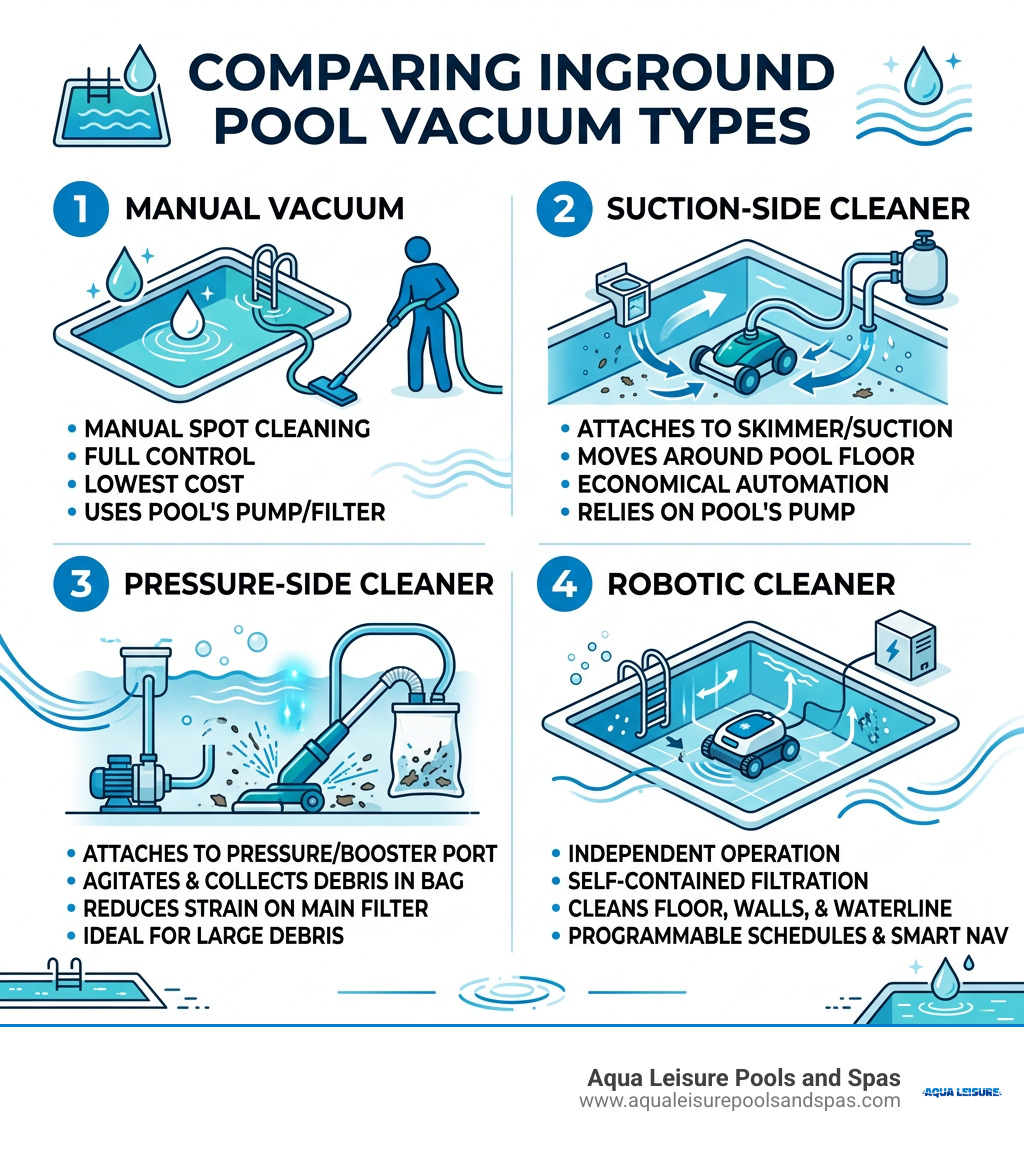
Choosing the Right Pool Vacuum for Inground Pools: Types and Performance
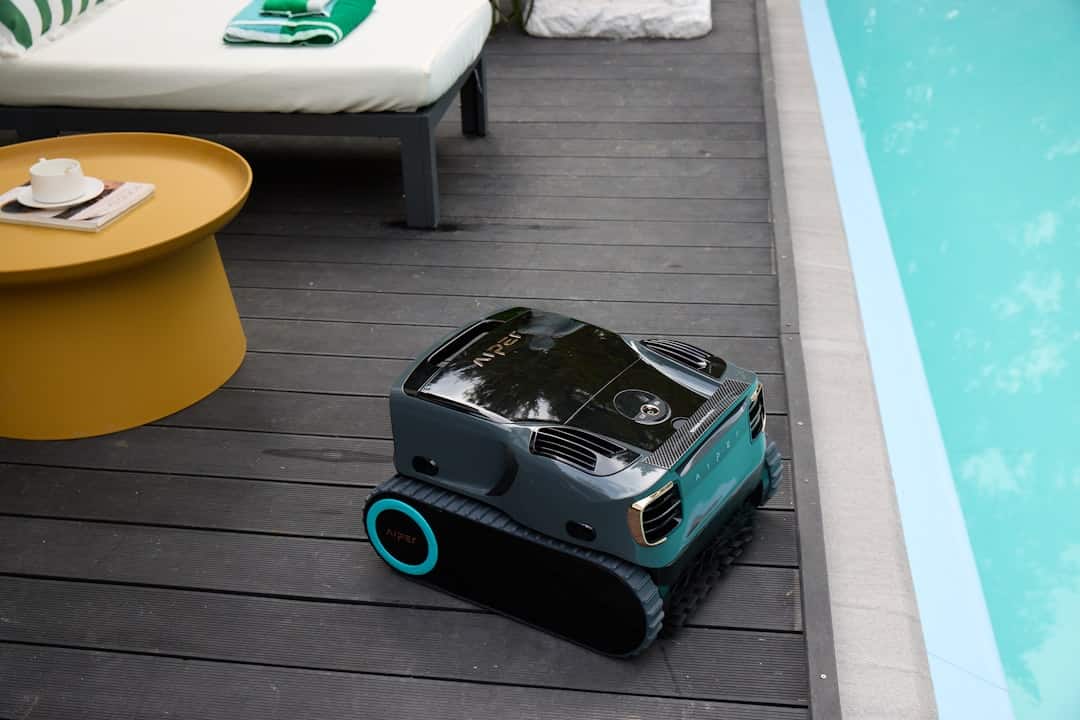
Maintaining pristine water clarity requires the right balance of filtration, circulation, and mechanical debris removal. Inground pools present unique challenges due to their larger gallon capacity, deep ends, steps, and intricate contours. Depending on how a cleaner operates, it will either rely on the pool’s primary circulation equipment or function completely independently.
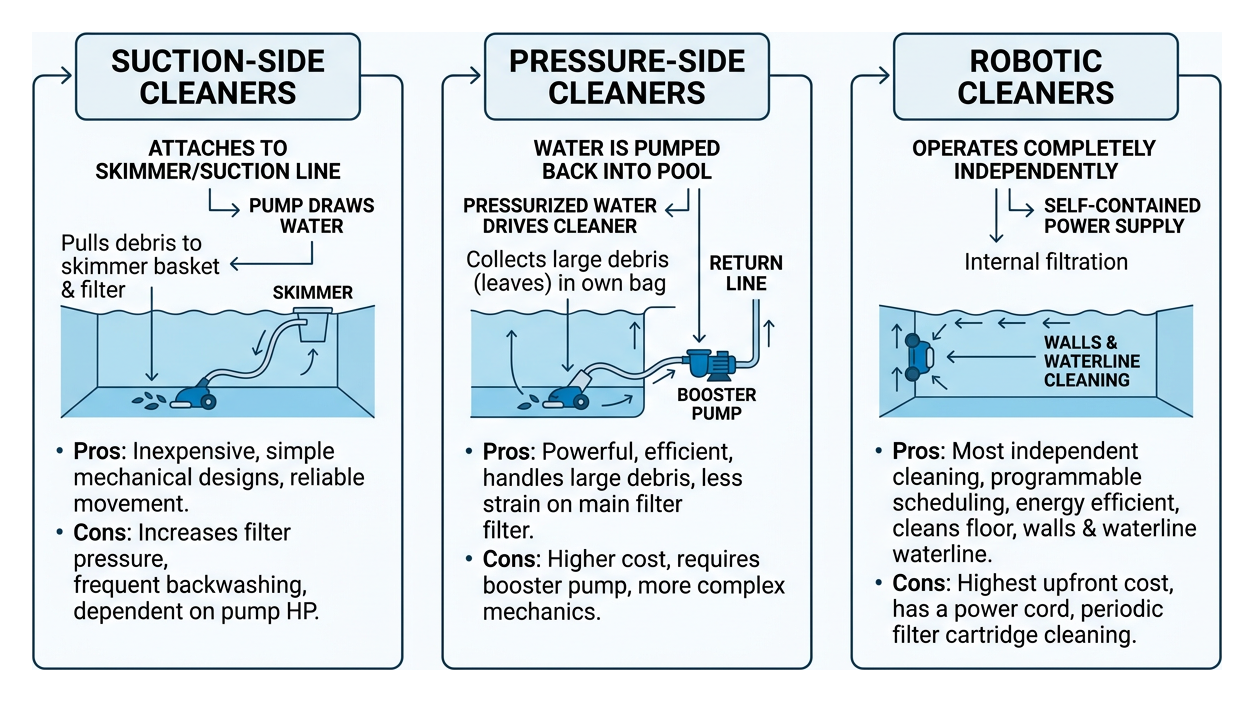
Suction-Side Cleaners
Suction-side cleaners attach directly to the pool skimmer or a dedicated suction line. As the primary pool pump draws water, the cleaner moves along the pool floor and walls, pulling dirt straight into the skimmer basket and main filter.
- Pros: Inexpensive, simple mechanical designs with few moving parts, reliable hydrodynamic movement.
- Cons: Increases pressure on the main filter system, requires frequent backwashing, and depends heavily on pump horsepower.
A dedicated unit like the PoolVac XL Automatic Suction Cleaner – Concrete Pools utilizes pre-programmed steering patterns to provide silent, systematic coverage across concrete surfaces without requiring an auxiliary booster pump.
Pressure-Side Cleaners
Pressure-side cleaners attach to the return side of the filtration system. Water forced back into the pool drives the cleaner’s wheels and powers a venturi water jet that pushes leaves and heavy silt into a dedicated debris bag.
- Pros: Keeps large leaves and heavy debris out of the pool filter, relieves skimmer burden, and enhances overall water circulation.
- Cons: Often requires a dedicated secondary booster pump, increasing upfront plumbing complexity and electricity consumption.
Independent Robotic Cleaners
Robotic cleaners operate entirely on low-voltage electricity, completely separate from the pool’s plumbing. Modern units feature dual direct-current (DC) brushless motors that consume up to 90% less energy than standard pool pumps running old-school hydraulic cleaners. Many top models can be found on curated collections like Best Robotic Pool Cleaners and major home improvement platforms like Pool Vacuums – The Home Depot.
Manual vs Automatic: Selecting a Pool Vacuum for Inground Pools
Manual vacuum systems consist of a weighted vacuum head, a telescopic pole, and a flexible vacuum hose connected to the skimmer.
Manual setups remain indispensable for targeted spot cleaning, post-storm leaf collection, and clearing out dead algae blooms after shocking the pool. While manual cleaning gives complete tactile control over tough algae spots on steps and swimouts, it demands substantial physical effort and time.
Homeowners seeking quick touch-ups often explore handheld vacuum options for spot-treating shallow ledges and stairs without dragging out full-length hoses. When comparing handheld equipment, it is essential to ensure the vacuum head material matches the interior finish:
- Concrete/Plaster: Requires wheeled heads that roll smoothly over textured surfaces.
- Vinyl Liner/Fiberglass: Demands brush-lined heads to prevent scratching or puncturing delicate pool membranes.
For routine weekly cleaning, an automatic or robotic cleaner eliminates hours of manual labor, freeing up time while keeping the pool constantly swim-ready.
Corded vs Cordless Robotics: The Best Pool Vacuum for Inground Pools
The robotic market features two main designs: corded units with floating swivel cables and battery-powered cordless units.
| Feature | Corded Robotic Cleaners | Cordless Battery Cleaners |
|---|---|---|
| Power Source | Continuous low-voltage floating cable | Lithium-ion rechargeable battery |
| Cleaning Runtime | Unlimited (continuous 2 to 3-hour cycles) | 60 to 180 minutes per charge |
| Suction Flow Rate | High continuous power (4,000+ to 8,500 GPH) | Moderate power (varies by battery charge) |
| Automation Level | True “set-and-forget” weekly smart timers | Requires manual removal & daily recharging |
| Safety Considerations | Safe low-voltage conversion | Potential battery overheating risks |
| Filtration Capacity | Extra-large top-loading baskets (up to 5L) | Compact internal dustbins (2.5L to 4L) |
Corded robotic cleaners remain the gold standard for full-sized inground pools. Because they plug into a standard GFCI outlet via a floating swivel cord, they provide commercial-grade suction power exceeding 4,000 to 8,500 gallons per hour (GPH). They support automated weekly timers that run cycles whether anyone is home or not.
By contrast, cordless battery-powered robots often run for 90 to 180 minutes before requiring a 3 to 5-hour charging session on the deck. While cordless models eliminate cord tangling, pulling a heavy, waterlogged robot out of the deep end after every single cycle turns automated cleaning into a daily chore.
For those considering cordless engineering, advanced options like the Scuba S1 Flagship In-Ground Pool Cleaner | Aiper, the Scuba S1 Pro Advanced In-Ground Pool Cleaner | Aiper (US), the Scuba S1 Pro Advanced In-Ground Pool Cleaner | Aiper (AU), and the Scuba X1 Essential In-Ground Pool Cleaner | Aiper demonstrate how modern battery units utilize obstacle-avoidance sensors and horizontal scrubbing modes.
To learn more about hands-free options, explore this automated robotic cleaners guide.
Essential Features: Waterline Scrubbing, Commercial Motors, and NanoFiltration
When investing in an automatic or robotic pool vacuum for an inground pool, look for these high-performance features:
- Active Waterline Scrubbing: More than 90% of bacteria, body oils, and algae thrive at the pool’s waterline. A cleaner must feature vertical climbing treads and lateral propulsion to scrub the scum line directly.
- Ultra-Fine NanoFiltration: Standard mesh filter baskets capture large leaves but let fine silt, pollen, and microscopic algae pass back into the pool. Pleated polyester NanoFilters trap micro-particles down to 1 to 3 microns, dramatically lowering water turbidity.
- Oversized Filter Baskets: Units equipped with XXL MaxBins offer over 400 square inches of filtration surface area and up to 225% more debris capacity than standard cleaners, making them ideal for heavily treed yards.
- Commercial-Grade DC Motors: Heavy-duty brushless motors deliver higher torque, withstand thousands of operating hours, and climb steep walls without stalling.
- Smart Gyroscopic Navigation: Onboard gyroscopes map the pool’s geometry in real time, preventing the cleaner from getting stuck on main drains or wandering in aimless circles.
Buyer’s Guide, Safety Pitfalls, and Maintenance Best Practices
Step-by-Step Guide to Operating Suction and Manual Vacuums
Operating a manual or suction-side cleaner correctly ensures strong suction while protecting your pump from taking in air.
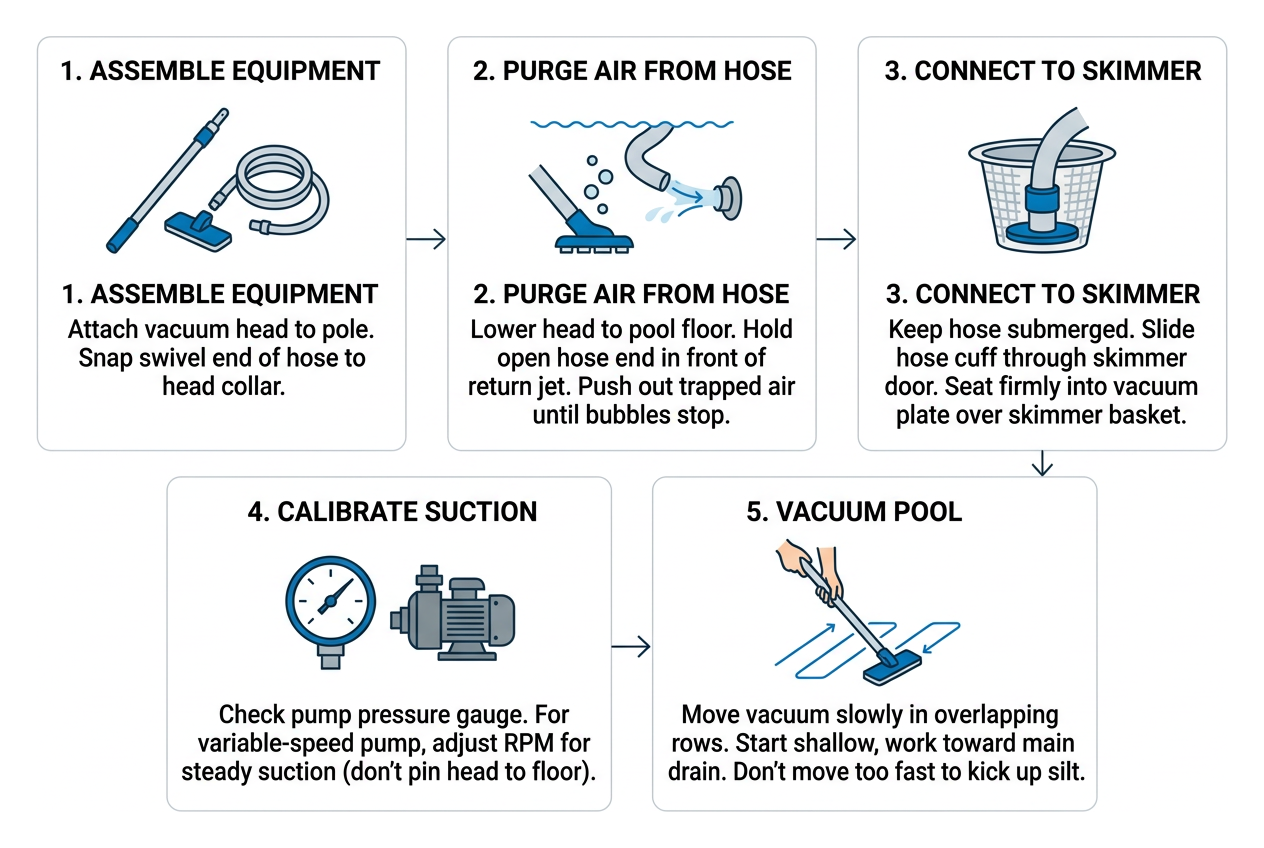
- Assemble the Equipment: Attach the vacuum head firmly to the telescopic pole and snap the swivel end of the hose onto the vacuum head collar.
- Purge All Air from the Hose: Lower the vacuum head to the pool floor. Hold the open end of the vacuum hose in front of a return jet. The rushing water will push all trapped air out through the head until bubbles stop surfacing.
- Connect to the Skimmer: Keep the hose submerged to prevent air ingestion. Slide the hose cuff through the skimmer door and seat it firmly into the vacuum plate over the skimmer basket. For durable connections, refer to this guide on proper vacuum hose connection.
- Calibrate the Suction: Check the pump pressure gauge. If using a variable-speed pump, adjust the RPM to achieve steady suction without pinning the vacuum head to the pool floor.
- Vacuum in Overlapping Linear Strokes: Move the vacuum pole slowly in overlapping rows, starting at the shallow end and working toward the main drain. Moving too fast will kick up fine silt into the water column.
- Post-Cleaning Cleanup: Turn off the pump, remove the hose, and empty the skimmer basket and pump strainer basket immediately. Incorporate this sequence into your routine pool maintenance to ensure water turnover runs smoothly. For a broader view of necessary equipment, check out these essential cleaning accessories.
Critical Mistakes to Avoid: Battery Recalls, Restocking Fees, and Fake Reviews
Navigating the pool cleaner market requires caution to avoid costly purchase mistakes:
- Lithium-Ion Fire Risks & Product Recalls: Cordless cleaners rely on high-capacity lithium batteries submerged in chemical water. Battery casing failures and charging faults have prompted federal safety actions. For example, the U.S. Consumer Product Safety Commission (CPSC) recalled 22,000 units of Aiper’s Elite Pro cordless pool cleaners due to battery overheating, sparking, and fire hazards. Always verify safety certifications (such as UL or ETL listings) before choosing a battery-powered cleaner.
- Hidden Restocking Fees: Online platforms and drop-shippers frequently charge restocking fees of 15% to 20% on opened pool cleaners. Test-running a unit in your pool voids standard return policies with many retailers. Always buy from authorized dealers with clear return terms.
- Manipulated Online Reviews: Many low-cost imported cleaners use incentivized reviews on third-party marketplaces. Use review-auditing tools like Fakespot to identify artificial ratings and stick to proven brands backed by multi-year manufacturer warranties.
Expert Maintenance Support and Finding the Best Deals
Keeping an inground pool sparkling clean requires high-performance equipment paired with professional maintenance and water balance.
Aqua Leisure Pools and Spas sells, installs, and maintains premium pool equipment across Northeastern Pennsylvania, with locations in Dickson City, Wilkes-Barre, Doylestown, and Bartonsville, serving communities throughout Scranton, Allentown, Bloomsburg, Tannersville, Beach Lake, and Lake Wallenpaupack.
Whether you are looking for an advanced robotic cleaner, planning custom inground pool solutions, or needing professional seasonal tune-ups, our specialists are here to assist.
Explore our comprehensive inground pool survival guide or visit your nearest local pool showrooms today to inspect top-tier cleaners and design your dream backyard oasis!
Posted by Aqua Leisure Pools & Spas in Pools