


Everything You Need to Know About Hot Tubs

What You Need to Know Before Buying a Hot Tub
Hot tubs are heated, jetted soaking pools designed for relaxation, hydrotherapy, and social enjoyment – right in your own backyard.
Here’s a quick overview to help you decide:
| Question | Quick Answer |
|---|---|
| What types exist? | Acrylic, portable/rotomolded, soft-sided (inflatable), and inground |
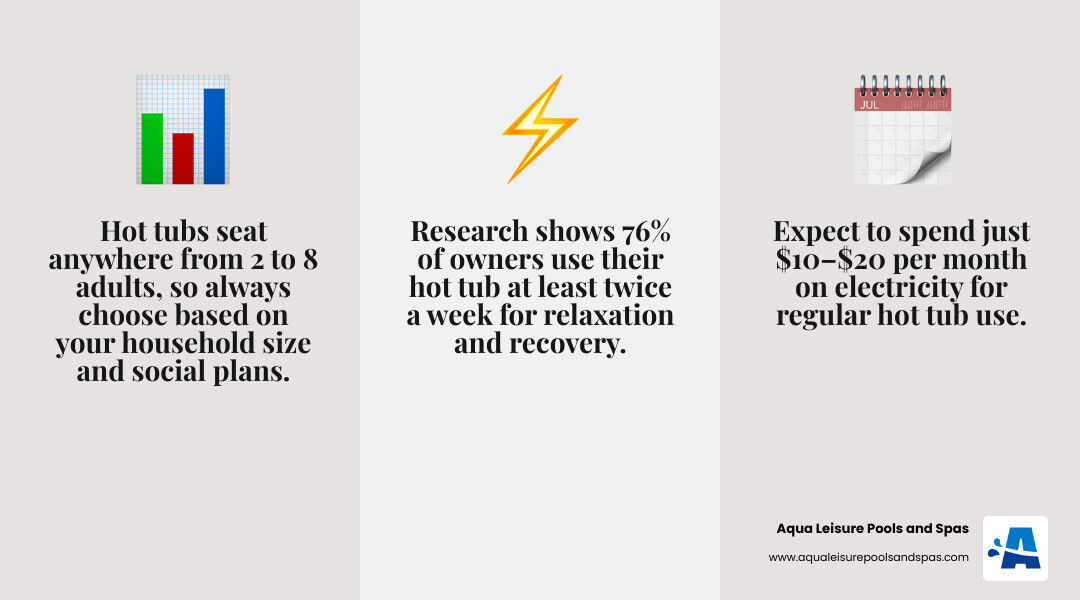
| How many people do they seat? | 2 to 8 adults depending on the model |
| What do they cost to run? | Typically $10-$20 per month in electricity |
| Are they hard to maintain? | No – most owners spend just minutes per week |
| How often will you use it? | Research shows 76% of owners soak at least twice a week |
| Who benefits most? | Anyone dealing with stress, muscle soreness, or wanting more quality time at home |
Whether you’re looking to unwind after a long day, ease sore muscles, or create a backyard space your family actually gathers in – a hot tub can do all of that. One owner described their spa as a “go-to place for physical and mental rejuvenation” – somewhere to talk, listen to music, and simply decompress together.
This guide covers everything: types, features, costs, installation, maintenance, and how to find the right model with confidence. For general background on hydrotherapy, it can help to understand why heat, buoyancy, and massage are such a powerful combination.
Common hot tubs vocab:
How to Compare Hot Tubs and Choose the Right Model
Choosing between various hot tubs can feel overwhelming, but it essentially comes down to how you plan to use the space. Are you looking for a romantic retreat for two, or a “hangout tub” that can accommodate the whole family? Size and seating capacity are the first hurdles to clear. While a 2-person model fits tight spaces, a 5-6 person spa is often the “sweet spot” for most households in Northeastern PA.
Beyond size, you must consider the “guts” of the machine. This includes the jet configurations, the type of insulation (which is vital for Pennsylvania winters), and the water care system. High-quality insulation doesn’t just keep the water warm; it protects the internal plumbing from freezing and keeps your monthly bills low. Before you sign on the dotted line, it is essential to learn how to buy a spa by understanding the difference between 110V “plug-and-play” models and 240V wired units, which offer more heating power and stronger jet performance. Knowing what to look for when shopping for a hot tub ensures you invest in a shell and cabinet that will last for decades, not just a few seasons.

Main Types of Hot Tubs: Acrylic, Portable, Soft-Sided, and Inground
Not all hot tubs are built the same way. The material of the shell determines the price, durability, and features available.
| Feature | Acrylic | Portable (Rotomolded) | Soft-Sided (Inflatable) | Inground Spa |
|---|---|---|---|---|
| Durability | High (20+ years) | Medium-High | Low (2-5 years) | Very High (30+ years) |
| Jet Power | Premium/Adjustable | Standard | Air bubbles only | Custom/Variable |
| Insulation | Full-foam/Excellent | Good | Poor | Dependent on build |
| Installation | Professional | DIY or Professional | DIY | Full Construction |
Acrylic hot tubs are the gold standard. They feature a reinforced shell, a wide array of massage jets, and sophisticated filtration. Portable or rotomolded spas are lighter and often more affordable, making them great for renters or those with smaller decks. Soft-sided models are the most budget-friendly but lack the hydrotherapy power and energy efficiency needed for year-round use in places like Scranton or Wilkes-Barre. Finally, inground spas (including “spools”) offer a seamless look that integrates into your landscaping, often boosting property value by up to 7%.
Hot Tubs by Size, Seating, and Features
Modern hot tubs offer more than just a place to sit. You can choose between “open seating” layouts, which allow for more movement and social interaction, or models with a dedicated lounger. A lounge seat is designed to cradle the body, providing a full-body massage from your neck down to your calves.
Key features to look for include:
- Captain Seats: Deep corner seats with dedicated neck and shoulder jets.
- Cool-Down Seats: A higher perch that allows you to sit partially out of the water if you get too warm.
- Waterfalls and Lighting: LED systems and water features create a sensory experience and aid in relaxation.
- Bluetooth Audio: Integrated speakers allow you to stream music or podcasts without worrying about your phone getting wet.
Don’t forget to look into hot tub accessories like cover lifters and steps, which make daily use much easier. If you are still confused about the terminology, our guide on hot tub vs jacuzzi vs spa can help clear things up.
Price Ranges, Financing, and Long-Term Ownership Costs
While we won’t list specific prices here, hot tubs generally fall into three tiers: entry-level, mid-range, and luxury. Many dealers, including Aqua Leisure Pools and Spas, offer financing options that allow for low monthly payments, making a high-end spa more accessible.
Long-term ownership costs include:
- Electricity: Well-insulated models in Pennsylvania typically cost $10–$20 a month.
- Water Care: Chemicals and minerals to keep the water balanced.
- Filters: These should be rinsed monthly and replaced annually.
- Cover Replacement: A good cover lasts 5–7 years; replacing it is vital for energy efficiency.
For more answers on budgeting and longevity, check out our spa frequently asked questions.
Benefits, Features, and Technology That Improve the Hot Tub Experience
Owning a hot tub is an investment in your well-being. Beyond the luxury, the benefits of using a spa extend to every part of your life. From better sleep to faster muscle recovery, the combination of heat, buoyancy, and massage (hydrotherapy) is a powerful tool for health.
Health, Relaxation, and Hydrotherapy Benefits
The health benefits of hydrotherapy in your hot tub are well-documented. For those suffering from arthritis or chronic back pain, the buoyancy of the water reduces body weight by about 90%, taking the pressure off tired joints.
Regular use can also:
- Reduce Stress and Anxiety: A 20-minute soak lowers cortisol levels.
- Improve Sleep: Raising your body temperature before bed helps you fall into a deeper sleep.
- Enhance Social Connection: It is the perfect “screen-free” zone for families to talk.
- Aid Athletic Recovery: Targeted jets help flush lactic acid from muscles after a workout.
To maximize these perks, consider planning the perfect spa day at home with your hot tub or reading the ultimate guide to hot tub health benefits.
Advanced Features: Smart Controls, Self-Cleaning, Infrared, and Energy Savings
The hot tubs of May 2026 are more technologically advanced than ever. One of the most exciting innovations is the integration of infrared and red light therapy within the spa. This technology provides targeted heat that penetrates deeper into the muscle tissue than water alone, offering superior pain relief.
Other modern features include:
- Smart Controls: Use a smartphone app to adjust the temperature, monitor energy usage, or turn on the jets before you even get home.
- Self-Cleaning Systems: High-end models now feature filtration systems that can clean 100% of the water every 15 minutes, removing debris down to the microscopic level.
- Salt Water Care: Many owners ask, “can spas use saltwater?” The answer is yes. Salt systems generate chlorine automatically, resulting in softer water that is gentler on the skin and eyes.
- Automated Dosing: Systems that monitor water chemistry hourly and dispense the exact amount of chemicals needed.
Efficiency is also a major focus. High-density full-foam insulation and custom-fit thermal covers ensure that your spa is always ready. But should your hot tub always be on? Generally, yes – keeping it at a consistent temperature is more energy-efficient than heating it from scratch every time you want to soak.
Installation, Maintenance, and Where to Buy Hot Tubs With Confidence
Proper planning is the difference between a relaxing oasis and a backyard headache. Before your hot tub arrives, you need a solid foundation. This is typically a 4-inch reinforced concrete pad, though some smaller models can sit on a reinforced deck or a specialized “spa pad.”
Installation and Site Planning Before You Buy
When planning your site, consider more than just where the tub fits.
- Backyard Access: Can a delivery crew get the spa to the spot? You’ll need a clear path with enough width and height clearance.
- Electrical Requirements: Most full-sized hot tubs require a dedicated 240V, 50-amp or 60-amp circuit installed by a licensed electrician.
- Privacy and Drainage: Think about your neighbors’ view and ensure the area around the tub drains away from the foundation.
- Service Access: Ensure there is at least 3 feet of clearance on the side containing the equipment panel so technicians can perform maintenance.
Whether you are in Doylestown or Dickson City, it is wise to explore hot tub options at Aqua Leisure and visit our local showrooms to speak with an expert about your specific backyard layout.
Maintenance Routines, Water Care Systems, and Trusted Shopping Resources
Maintaining a hot tub is significantly easier than it was a decade ago. With a “lazy owner’s” approach, you can keep your water pristine with just a few minutes of effort each week.
The Basic Routine:
- Weekly: Test the water with strips and adjust the pH and sanitizer levels.
- Monthly: Rinse the filters with a garden hose.
- Every 3–4 Months: You will need to drain and refill your hot tub water to prevent the buildup of total dissolved solids.
- As Needed: If the water looks cloudy, you may need to “shock” it. Just be careful not to over shock your spa, as this can damage the components.
For a deeper dive into chemistry, read about spa water chemistry or follow how to care for your hot tub for a step-by-step guide. If you want the easiest experience possible, the lazy owner’s guide to pristine spa water is a must-read.
When you’re ready to buy, look for a dealer with a long-standing reputation in Pennsylvania. Aqua Leisure Pools and Spas serves Doylestown, Wilkes-Barre, Scranton, and beyond, offering a one-stop shop for sales, installation, and long-term service. Visiting a showroom allows you to see the different sizes in person and even “wet test” a model to ensure the seats and jets feel right for your body.
With the right model and a little bit of planning, your backyard will soon become the favorite “room” in your home.
Posted by chris@enx2marketing.com in Pools